GRAINES Summer School, St Andrews, 7-10 June 2015

Category: News (Page 5 of 7)

Cultural Communication in the Habsburg Monarchy. The Case of Galicia-Silesia/Silesia-Galicia (1848-1914)

I am a PhD student and researcher at the University of Vienna (Doctoral program: Austrian Galicia and its Multicultural Heritage). My PhD project titled “Cultural Communication in the Habsburg Monarchy. The Case of Galicia-Silesia/Silesia-Galicia (1848-1914)” focuses on connections between Austrian Galicia and Austrian Silesia, specifically on associations (cultural and educational, mostly national orientated), migration (in the context of industrialization), family history (e.g. of national activists and their connections) and inter-regional communication in the muti-ethnic Galician–Austrian-Silesian border land from a trans-and intercultural perspective, with particular reference to the establishment of national movements and their impact on “everyday (cultural) hybridity” .

My main fields of interest are: inter-/trans-cultural communication, border regions and trans-border/interregional networks, cultural hybridity, migration, minorities, transnational history of Central Europe.

The text below is an example depiction of historical and socio-cultural phenomena, closely connected with transfer, networking and communication, that I am working on, in my project frame.

No Network – No Nation? A hybrid actor, a monolithic idea and inter-ethnic dynamics in the Galician – Austrian-Silesian border region

The Galician-Silesian border land was a multilingual (German, Polish, Czech, Silesian) and multi-religious (Catholic, Protestant, Jewish) transit region between two crown lands of the Habsburg Empire: the Austrian Galicia and Austrian Silesia. This border region made up a frame for a multiethnic, hybrid community on one hand and national movements (German, Polish, Czech, Silesian) on the other hand, from which the Polish movement draws special interest in this context. The emergence and highly complex mechanism of the Polish national network in the Silesian-Galician borderland can serve as a prime example of establishing a network through the interconnecting of actors (national activists), of ideas (primarily the idea of a nation) and of objects (e.g. newspapers).

Thanks to multiple strategies and a lot of effort Pawel Stalmach (1824 -1891) created the Polish national network between Silesia and Galicia from the very beginning, within the local multiethnic community. Stalmach was born in Austrian Silesia, went to a Czech primary school, then to a German secondary school, studied protestant theology in Bratislava where he decided to become Polish activist thanks to his Slovak friends. Shortly before his death, he converted to Catholicism to make the relationship to the catholic Galician Poles easier, bringing first Polish books to Silesia and establishing the first relationship with Polish people. As the first initiator and main actor of the Silesian-Galician Polish national relations, he created a fundamental network by organizing of associations, newspapers, festivals, schools etc., that played a crucial role in the establishment of Polish national movement in Silesia – he recognized that this approach was the only way to convince at least part of the hybrid local community to give up their multiethnic origins in favour of a monolithic national identity.


Homi K. Bhabha: The Location of Culture. London-New York 1994.

Chris Hann; Paul Robert Magocsi (ed.): Galicia. A Multicultured Land. Toronto 2005.

Pieter Judson: Guardians of the Nation: Activists on the Language Frontiers of Imperial Austria. Cambridge 2006.

Tomasz Kamusella: Silesia and Central European Nationalisms: The Emergence of National and Ethnic Groups in Prussian Silesia and Austrian Silesia 1848-1914. West Lafayette 2007.

Wolfgang Welsch: Transculturality: The Puzzling Form of Cultures Today. In: California Sociologist, 17&18 (1994/1995), pp.19-39.
Getting the Know-how for Mapping the Empire: Struve (1793‐1864), a Leading Astronomer of Tsarist Russia and his Scientific Network.

My Name is Martin Jeske and I am a PhD student at the department of East European History at the University of Basel (Switzerland), and a member of the Basel Graduate School of History (BGSH). I studied Human Geography, Cultural Sciences and East European History in Jena and Frankfurt/Oder (Germany), and also in Barnaul (Russian Federation). Prior to my studies at university I completed a professional training as a surveyor at the Thuringian survey ordnance in Gotha (Germany).

As one aspect of my recently started PhD thesis “Mapping an Empire. Territorialization, Cartography and Scientific Transfer in Tsarist Russia (1797-1919)” I research networks of European astronomers and mechanics to understand, how geodetic and astronomic methods and instruments found its way to the Russian Empire, which spaces could be mapped, and what the Russian progress could contribute to the European scientific development.
Permanent transnational exchanges between a great number of experts enabled the progress and standardization of cartography as a key tool for territorialization of European and colonial space in the 19th century. In order to reconstruct how those scientific ideas and objects had migrated and developed it is necessary to analyse who submitted what in which quality to whom and also how and when this happened.

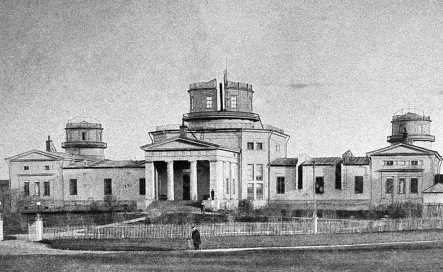
Ansicht_Pulkovo

Pulkovo Observatory

Finding a suitable narrative to arrange the complex connections is a challenge. My interest focuses on Friedrich Georg Wilhelm Struve (1793-1864), the leading astronomer of the Russian Empire in the first half of the 19th century. His European-wide network of astronomers and mechanics can be regarded as crucial for the development of geodesy as a basis for advanced topographic cartography in Russia.


Struve_Portrait_1844

F.G.W. Struve (1844)

I use the approach of scientific transfer (Wissenschaftstransfer), which describes the move from knowledge, research methods and technologies across state borders. With respect to cultural transfers (Kulturtransfers) between the Russian Empire and its neighbours, the approaches of histoire croisée and entangeled history seem to be also suitable because they allow the research of interactions on different national, regional, and imperial levels. The concept of histoire croisée demands a historiography, which focuses on the actors, their conflicts, and solution strategies. Biographic and prosopographic perspectives can be applied, to investigate the role of such actors in the process of transfers. To reconstruct and analyse their communication and networks, which were constitutive for the exchange process, the development of mediators within the scientific transfer is relevant. The methods of historical network research should be used to visualize those scientific networks.

References:

Aust, Martin; Vulpius, Ricarda; Miller, Aleksej (Hrsg.): Imperium inter Pares: Rol’ transferov v istorii Rossijskoj imperii (1700-1917), Moskva 2010.

Düring, Marten; Eumann, Ullrich: Historische Netzwerkforschung, Ein neuer Ansatz in den Geschichtswissenschaften, in: Geschichte und Gesellschaft, Zeitschrift für historische Sozialwissenschft, Jg. 39, H. 3, (2013), 369-390.

Schweiger, Hannes; Holmes, Deborah: Nationale Grenzen und ihre biographischen Überschreitungen, in: Fetz, Bernhard (Hrsg.): Die Biographie – Zur Grundlegung ihrer Theorie, Berlin [u.a.] 2009, 385-418.

Stegbauer, Christian ; Häussling, Roger (Hrsg.): Handbuch Netzwerkforschung, Schriftenreihe: Netzwerkforschung, Bd. 4, Wiesbaden 2010.

Werner, Michael; Zimmermann, Bénédicte: Vergleich, Transfer, Verflechtung, Der Ansatz der Histoire croisée und die Herausforderung des Transnationalen, in: Geschichte und Gesellschaft 28 (2002) Nr. 4, 607-636.

Drawing from Creole and Atlantic medical knowledge: the health service of the Saint-Domingue expedition (1802-1803)


My name is Pierre Nobi and I am a graduate student in my second year of Sciences Po Paris’s Master in history. My Bachelor was also at Sciences Po, and I spent a year in exchange at the University of Bath (UK). My current research focuses on the health service of the French expedition to Saint-Domingue (present-day Haïti) in 1802-1803. Traditionally, its presence in the historiography is reduced to a brief overview of the yellow fever epidemic that decimated the French army and a discussion on how big a factor it was to the failure of the expedition. Moving past military history’s fetishisation of this factor of defeat, I aim to uncover instead the various actors and medical practices of the health service, and examine it as a “colonial medical encounter” (Thoral, 2012).

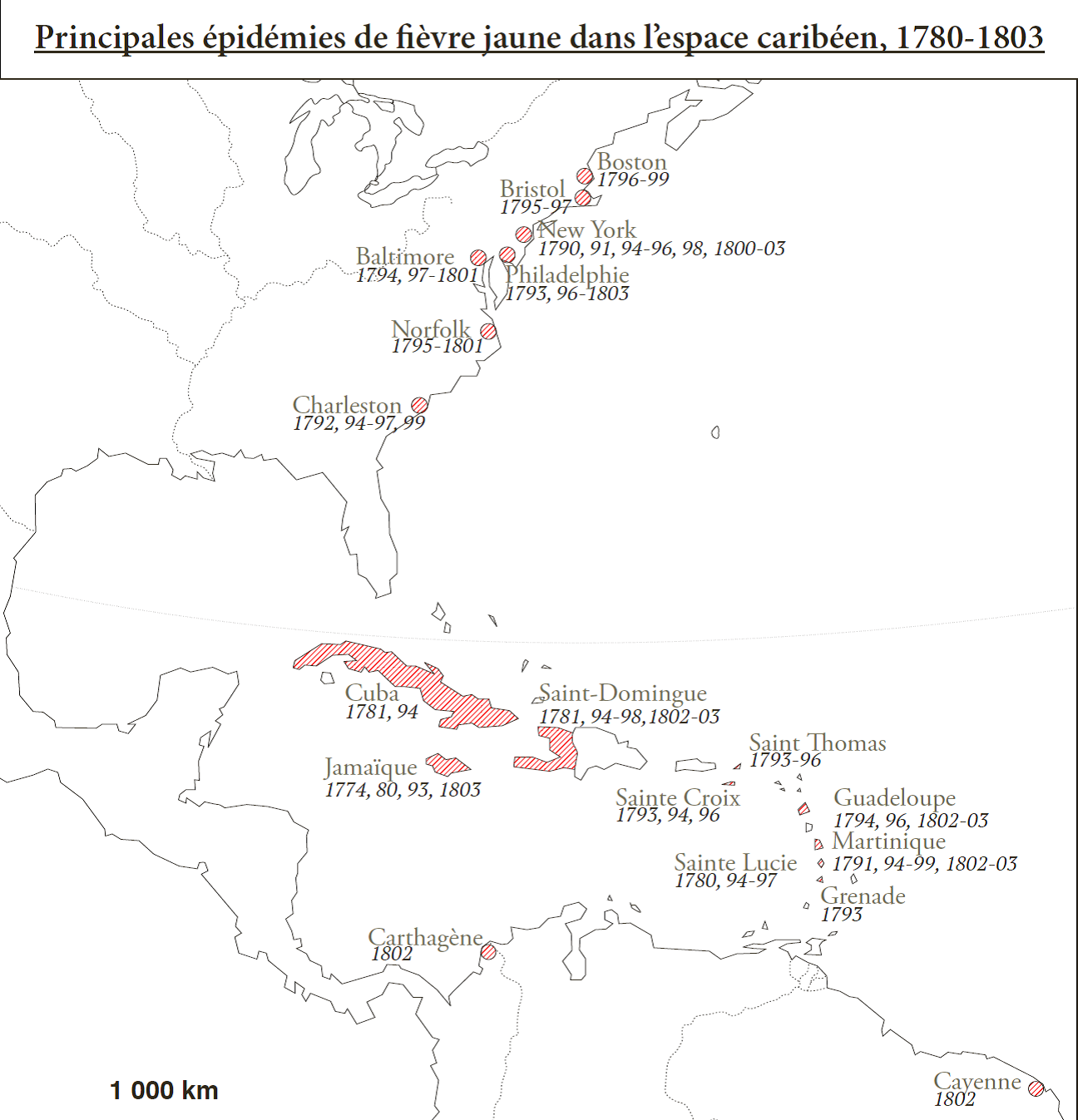
Thus, this health service must be replaced in the larger context of scientific developments in the colony of Saint-Domingue in the 18th century. I believe the geographical scope should be broadened too, as Saint-Domingue was at the heart of a well-connected Atlantic scientific world, and yellow fever epidemics plagued the whole of the West Indies, the Eastern coast of the United States and even Spain between the 1790s and the 1820s.

map yellow fever nobi

This map of the main epidemics in the Americas is still very much a work in progress


Transnational and network analysis are thus key approaches to my research, even though I still have much to learn about them, and thus I am looking forward to listening to your presentations and participating in the discussions. In my contribution to the summer school, I would like to present the two networks that the health officers turned to.


Creole network

While it is often described as if it were a homogeneous entity defined as metropolitan and military, the health service in fact incorporated numerous colonial physicians and surgeons, and consulted local botanists. Furthermore, while official healthcare was provided to soldiers in the colony’s hospitals, colonists and officers were often treated in their homes by women of colour. Health officers had the opportunity to witness, discuss and imitate this creole treatment. I am particularly interested in the process by which they appropriated this treatment and, much like the colonial physicians of the 18th century, “laid claim to the status of authors of new knowledge about American nature” (Murphy, 2011) by presenting these women as holders of a “vulgar” knowledge, leading to the “textual erasure” of their presence.

Atlantic network

The other network in which the health officers participated is the circulation of medical knowledge among physicians of the Atlantic world. French and British colonial physicians had already been sharing during the Seven Years’ war, but from the 1790s onward these exchanges boomed. Dominguan physicians emigrated during the Haitian Revolution and settled in the United States. They took part in the raging debate in America on the contagion of yellow fever, that also spread to much of the Atlantic world, and engaged the work of physicians from Britain and the West Indies. The health officers of the Saint-Domingue expedition inscribed their own research in this context, and they referred profusely to the opinion of American and British physicians. After the expedition, they presented themselves as American experts on yellow fever.


Bibliography

James Delbourgo and Nicholas Dew (eds.), Science and empire in the Atlantic world, New York, Routledge, 2008.

This edited volume is probably one of the key readings on history of science and colonization in the Atlantic. Delbourgo’ and Dew’s introduction, “The far side of the ocean”, lays the groundwork for the study of scientific journeys and research in the Atlantic, while the essays cover various geographic areas, such as Brazil, the United-States or Saint-Domingue. Susan Scott Parish’s essay “Diasporic African sources of Enlightenment knowledge” is also useful to understand the appropriation of African knowledge by colonial physicians.

Katherine Arner, « Making yellow fever American: the early American Republic, the British Empire and the geopolitics of disease in the Atlantic world », Atlantic Studies, 2010, vol. 7, no 4, p. 447‑471.

Katherine Arner’s work has many connections to my own research. This article retraces the connections of the yellow fever debate in the United States with a “multi-centered Atlantic world”, and examines the transnational networks of physicians involved. (Her recent PhD is more complete but also less easily accessible :  Katherine Arner, The malady of revolutions: yellow fever in the Atlantic world, 1793-1828, PhD dissertation, John Hopkins University, Baltimore, 2014.

Arner, Making yellow fever american

Erica Charters, « Colonial disease, translation and Enlightenment: Franco-British medicine and the Seven Years’ War » in Frans De Bruyn and Shaun Regan (eds.), The culture of the Seven Years’ War: empire, identity, and the arts in the eighteenth-century Atlantic world, Toronto, University of Toronto Press, 2014, p. 69‑90.

Erica Charters explores the networks of translations and citations of the medical publications of French and British colonial and naval physicians, which lays the ground for the connections of the 1790s and 1800s I am studying.

Charters, Colonial disease, translation and Enlightenment

James E. McClellan and François Regourd, The colonial machine: French science and overseas expansion in the Old Regime, Turhout, Brepols, DL 2011, 2011, 694 p.

This book, by the two main historians of science in Old Regime Saint-Domingue, explores the French scientific-technico-medical “colonial machine” and the various gears of its network – colonial physicians, metropolitan and colonial academies or botanical gardens, or the ministry of the navy and the colonies.

Kathleen Murphy, « Translating the vernacular: indigenous and African knowledge in the eighteenth-century British Atlantic », Atlantic Studies, 2011, vol. 8, no 1, p. 29‑48.

This article studies the process by which colonial physicians present themselves as the sole authors of the knowledge provided by Amerindian and African informants.

Murphy, Translating the vernacular

The Lyon International Sample Fair as a hub for business associations, 1916-1918

Lyon Fair organizational chartlyon fair


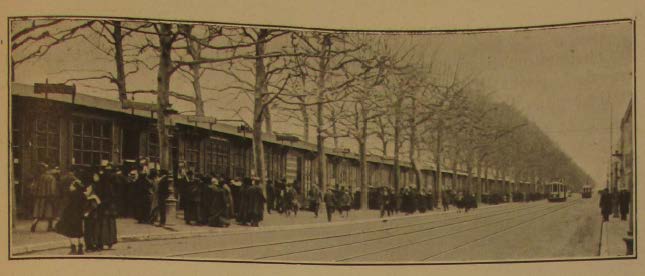
I would like to discuss an article-in-progress on the Lyon International Sample Fair during the First World War. This event was held for the first time in March 1916 and continued to convene every spring thereafter. This was the largest trade fair to be held on Allied soil during the war and it was the only one that welcomed both foreign exhibitors and buyers in substantial numbers.

While the Lyon fair initially facilitated trade in and out of Europe, by 1918 its primary function was not to support the movement of goods but rather to foster social and organizational relationships. In encouraging American firms to participate in the 1918 fair, the US consul in Lyon wrote: “It is of small moment whether or not they [exhibitors] can make contracts in view of conditions, but it is most important that they be put in touch with active buyers, and there is no better way than this.”

The First World War stimulated a remarkable proliferation of “sample fairs.” These were events where producers exhibited models and negotiated contracts for future delivery with wholesalers, commission agents and other intermediaries. While there had only been one sizeable sample fair in Europe prior to 1914, in Leipzig, there were more than thirty by 1921.

The Lyon fair, like most of the other new sample fairs, drew heavily on the financial and organizational resources of the local chamber of commerce. The Lyon Chamber of Commerce used its ties to foreign business associations and consular networks to recruit exhibitors and also to help support the execution of orders placed at the fair. During a period of flux when many firms were trying to replace longstanding relationships with suppliers and clients that had been disrupted by the war the fair was an attractive trade venue in large part because it offered a pool of potential trade partners who were generally vetted and backed by some kind of organizational guarantor, either formally or informally. In other words, the fair drew large crowds not merely because it offered a wide selection of products but also because it provided access to a large number trustworthy business networks.

Hubert Bonin, Catherine Hodeir, and Jean-François Kline eds., L’esprit économique impérial (1830-1970). Groupes de pression & réseaux du patronat colonial en France & dans l’empire, (Paris: Publications de la SFHOM, 2008).

This edited volume on elite organizations within the French empire analyzes many of the kinds of networks that operated at the Lyon fair. Many of the contributions highlight the role played by chambers of commerce and other business associations in the formation of distinct regional and municipal imperial economic systems and colonial cultures. I think that Lyon Chamber of Commerce welcomed foreign exhibitors at the Lyon Fair in part because they were trying to establish the city as an international gateway to certain trade networks within the French empire. However, the Lyon Fair had to compete with the Bordeaux Sample Fair, which was also established during the war. The Bordeaux Fair was smaller, but it was much more explicitly billed as a point of access to French imperial trade networks.

Phillip A. Dehne, On the far Western Front: Britain’s First World War in Latin America (Manchester: Manchester University press, 2010).

This work examines efforts on the part of British business associations and officials to restrict German commercial activity in Brazil, Argentina and Uruguay during the First World War. It illuminates the way transnational commercial networks responded to the disruption of international trade during the First World War. Like the local business association Dehne discusses, the Lyon Chamber of Commerce insisted that its activities were contributing to the broader “economic war” against the Central Powers. Dehne shows that the “economic war” had ramifications well beyond the formal restrictions established by the Allies because the temporary disruption of German foreign trade stimulated a flurry of private, often uncoordinated efforts to take over German commercial positions. It also produced a clearer delineation of national political allegiances within commercial communities.

Harald Batheit and Nina Schuldt, “Between Meat Grinders and Luminaries: International Trade Fairs as Temporary Clusters,” Regional Studies, Special Issue, Clusters in the Global Knowledge-based Economy: Knowledge Gatekeepers and Temporary Proximity, 42, 6 (Jan. 2008), 853-868.

I have found social scientists’ analyses of present-day trade shows useful as I have tried to think through the Lyon fair’s various social and organizational functions. Historians have generally analyzed twentieth-century trade fairs as marketing events or public spectacles. Batheit and Schuldt have shown that many activities happen trade shows beyond advertising and shopping. They have notably argued that trade shows offer lots of opportunities for informal and impromptu social interactions, which create an extremely rich information environment. They suggest this enables attendees to branch out from their established “clusters” of trade partners in relative security. This article helped me analyze the physical layout of the Lyon fair. The fair itself consisted in a collection of small, detached exhibition buildings. However, the organizers eventually began to offer common meeting spaces, social events and formal conferences, which would have allowed for a greater number of chance meetings.


Putting Anarchism in its Place: The Revolutionary Geographies of Elisée Reclus, Pëtr Kropotkin and their Circle, c. 1870 – 1914

Pascale Siegrist

In my PhD project, I look at a group of thinkers who happen to be both, anarchist activists and professional geographers. I am interested in the obvious question of how their political and their scientific projects are related – a claim they themselves make, but that proves rather tricky to retrace. If David Harvey insists that ‘the junction between geography and social theory […] is one of the crucial flashpoints for the crystallization of new conceptions of the world and new possibilities for active intervention’, nineteenth-century left-wing geographers only hint at how this could work.

In order to understand what links writings like these …

Anarchist Newspapers

(anarchist – and other radical – newspapers and pamphlets)

… to writings like these …

NGU Volumes

(the 19-volume Nouvelle Géographie Universelle, 1876 – 1894, by Elisée Reclus, to which most other members of the network contributed)

… I look at the correspondence between militants and scientists that I found in archives in Western Europe, Russia and the US. This allows me to retrace a network starting with the two undoubtedly most famous anarchist-geographers, a Russian and a Frenchman:

PAK and ER by Nadar

Reclus and Kropotkin closely collaborated with a group of radical intellectuals and scientists – I’ve tried to sketch the core of their circle as follows:

There is a very interesting spatial dimension to this network: while most of them knew each other personally and even lived together in the small village of Clarens on Lake Geneva for a short period, as exiles and explorers these were highly mobile agents who upheld their exchange across large distances. Although I have reservations as to the explanatory power of visualisations, understanding the structure and functioning of such a network might yield cues as to how anarchists bring together early French socialism, British evolutionary theory, Ritterian geography, Russian populism, and a considerable, often first-hand knowledge of the extra-European world.

A strong version of my argument would challenge standard accounts of both the history of geography (often portrayed as a tool of statecraft and imperialism and within a national context) as well as those of anarchism (the anarchist interest in space remains a rather short-lived phenomenon but happens at a crucial stage when anti-authoritarians are beginning to develop a self-consciously anarchist model of socialism in opposition to Marxism and its historical orientation).


Much like my protagonists, I’ve lived and studied in Switzerland, France, the United Kingdom and Russia. I am now based in Konstanz where I am an academic assistant and part of a Global History research group.


Literature

Since my main interest is with the circulation of ideas stemming from different contexts and travelling across large distances, I would like to draw attention to the collected volume by Samuel Moyn and Andrew Sartori (eds.), Global Intellectual History, New York, 2013. While Moyn and Sartori’s approach is very nuanced and they are careful to remind us not to mix up very different meanings of the term ‘global’, it might be helpful to confront their introduction with the critical review essay by Sanjay Subrahmanyam, ‘Global Intellectual History Beyond Hegel and Marx’, pp. 126-137, History and Theory (54), 2015 or an older critique of the supposedly unproblematic cross-cultural transmission of ideas: Pierre Bourdieu, ‘Les conditions sociales de la circulation internationale des idées’, pp. 3-8, Actes de la recherche en sciences sociales (145), 2002 (there’s also a slightly modified English translation: Pierre Bourdieu, ‘On the Social Conditions of the International Circulation of Ideas’, pp. 220-228 in: Richard Shusterman (ed.), Bourdieu: A Critical Reader, Oxford, 1999.)

Closer empirically to my specific topic – to give you an idea of the worldwide networks of anarchists, but also of an intriguing way of dealing with them – I would recommend Benedict Anderson, Under Three Flags. Anarchism and the Anti-Colonial Imagination, London and New York, 2005 (republished under the somewhat flashier title The Age of Globalization. Anarchists and the Anti-Colonial Imagination in 2013).

A slightly smaller geographical frame is covered by Sho Konishi, Anarchist Modernities. Cooperatism and Japanese-Russian Intellectual Relations in Modern Japan, Cambridge, Mass., 2013, which actually includes a discussion of some of the theorists I am working on – some individuals are part of multiple networks! – and offers a reading of anarchism as a formulation of an alternative vision of modernity.


The Left-Wing Terrorism and Political Violence in Western Europe in the 1970s

My name is Mikuláš Pešta, I am a PhD candidate at the Institute of World History at Charles University in Prague. I am currently studying as an exchange student at the University of Hamburg. During my undergraduate years, I studied one semester at the University of Bologna, where I have researched the subject of Italian Left-Wing terrorism. I also took part in the short-term exchange program at the University of Cologne and University of Regensburg.

My thesis deals with the European Left-wing terrorism in the 1970s and the 1980s, especially with its origins within the New Left movement, with specifics of the development in Germany and Italy and with the positions of the most influential terrorists organizations. My goal is to find and define common features of the European terrorism and its ideological background – reinterpretation of the Socialist and Anarchist thinkers, methods of the fight of the Latin American and Vietnamese guerrilla units, and disillusion of the Soviet way of fighting the capitalism.
The project focuses on the comparison of the terrorist movements in Germany and Italy, where the violent organizations were strongest. The goal is satisfyingly mapping the extent of the cooperation (or even the coordination of the plans) of the anti-state movements in Italy and the Federal Republic of Germany. The thesis will also include a comparison of the origins, structure, and functioning of the clandestine groups, as well as the analysis of their language, methods, aims, or the relations to the “Old Left”. I will try to answer the question to what extent the terrorists were directly influenced by a student-worker movement and if the escalation of the violence was inevitable consequence of it.

Studying the terrorist organizations brings many complications; as the illegal formations, they do not archive the documents concerning their functioning. The analysis will have to be carried out indirectly, especially from the governmental and police documents which relate to the terrorism, newspaper articles and other contemporary reflections of their functioning, and subjective sources, such as the memoirs or interviews with the terrorists themselves.

I would like to contribute to the GRAINES Summer School with the mechanics of the transnational influence and cooperation of the clandestine organizations and their role in the European New Left movement. My motivation to participate is mainly to deepen the general knowledge about the processes of transnational networks, especially the about the transfers of ideas and know-how.

Selected bibliography:

1968 in Europe. History of protest and activism 1956-1977, KLIMKE, M., SCHAROTH, J. (eds.), New York 2008

STERLING, C., The terror network. The secret war of internaional terrorism, New York 1981

ALEXANDER, Y., PLUCHINSKY, D., Europe’ Red Terrorists. The fighting communist organizations, London 1992

COLVIN, S., Ulrike Meinhof and West German Terrorism: language, violence and identity, New York 2009

TERHOEVEN, P., Deutscher Herbst in Europa. Der Linsterrorismus der siebziger Jahre als transnationales Phänomen, München 2014

Travel, correspondence and constitution of scientific knowledge in the modern era: Michel Adanson (1727-1806), French naturalist and academic

My PhD project, based on Michel Adanson’s scientific travels to Senegal (1748-1754), analyzes how scientific knowledge was shaped through correspondence – the written exchanges between a scientist in the field and his academic correspondent in the metropole.

From the 17th-18th century, scientists undertook trips to the French colonies and trading posts overseas. Their goal was to bring back new knowledge. In their endeavors, they had to rely on the support of the King (known as the “Protector of Science” Adanson, 1763). Another option was to be recruited by the French East India Company in order to travel and explore the trading areas. This was the case for Michel Adanson, naturalist and French academician. Nominated as correspondent of the Académie Royale des Sciences (Paris) in 1749 while he was in Senegal, Adanson periodically sent letters to his academic correspondents Réaumur and Bernard de Jussieu. These were not only reports of his daily activities, but also on his interactions in the contact zones.

Thus, my main interest in this research is to uncover the local systems of knowledge. While research on scientific travels has so far focused on the traveler and his collection, this study highlights his collaborators’ production of knowledge. Adanson’s correspondence allows these knowledge systems to be traced, since he mentions, at various points, his informants’ scientific contributions to his work and offers insights into their understanding.

Looking at correspondence in a transnational dimension, this investigative angle also contributes to the field of scientific epistolary studies. Until now, these studies have focused on the scholarly correspondence networks in the so-called “republic of science”. In addition to its elitist undertones, this approach confined the “public space of science” to the European geographical area. My project, contrary to this tradition, directs attention to the transnational dimension of scientific correspondence.

Ousmane Seydi is a PhD candidate at the University of Basel and member of the Basel Graduate School of History (BGSH). Before coming to Basel, I studied at the Université Cheikh Anta Diop in Dakar (Senegal), from where I hold a Master’s degree in history.

My contribution to the summer school will be to discuss the use of Michel Espagne’s notion de transfert culturel in the context of transnational research. In relation to the focus of the summer school, this is the reading which inspires me the most.

The notion of transfert culturel has the particularity to add to the concept of “circulation of knowledge” giving it a more complete sense. Transfert culturel takes into account not only the circulation of knowledge, but also the direction of changes related to the passage of knowledge from one space to another. One other key point in this short but very dense introduction is the idea that knowledge is always constructed through a contact, a move. Espagne’s notion allows me to transcend the illusion of the eighteenth-century scientific exclusivism. In fact, this encompasses the notion of a confluence of knowledge, by, in my case, pinpointing external cultural ideas that penetrated the travel writings of scientists. Employing Espagne’s approach thus allows me to identify the voices of Adanson’s Senegalese informants in his scientific writings.


Bibliography:

Espagne, Michel, “La notion de transfert culturel”. Revue Sciences/Lettres 2013/1. http://rsl.revues.org/219.

Kapil, Raj, Relocating modern science: circulation and the construction of knowledge in South Asia and Europe, 1650-1900, Houndmills and New york, Palgrave Macmilan, 2007.

Macleod, R., (ed.), Nature and empire: Science and the colonial entreprise, Osiris, seconde série, volume 15, 2000.

Krige, J., Kai-Henrik B., Global power knowledge: science and technology in international affairs, Osiris, seconde série, volume 21, 2006.

Green, E. M., “Plant knowledge at the Cape: A study in African and European collaboration”, International Journal of African Historical Studies, vol. 36, N°2,   2003, pp. 367-392


Sport, Ideology and Tradition

profimedia-0209969189-1200x684-1

My name is Tomas Vojacek, M.A student of modern history at Charles University in Prague. In my research, I deal with the sport as the phenomenon of the twentieth century and I am trying to analyze the socio-political dimension of sport in the context of the Cold War. I also work at the Olympic Studies Centre, which is a scientific part of the Czech Olympic Committee. I obtained my bachelor degree in History at Charles University in Prague, with one year exchange in Colchester (University of Essex). This April, I completed my research at the Olympic Archives in Lausanne in the framework of one year research grant awarded by Faculty of Arts.

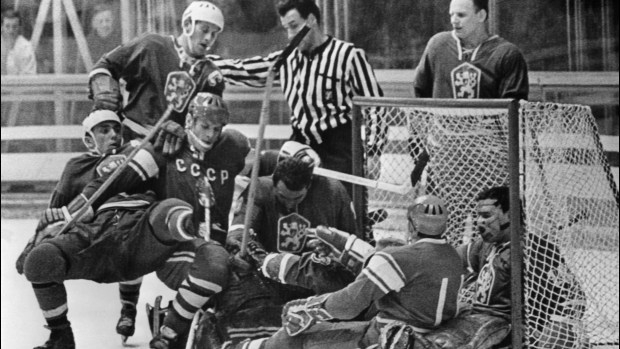
GRENOBLE, FRANCE - FEBRUARY 15:  Czech and Soviet ice hockey players are tangled in front of the Czech goal cage as the referee stops the play 15 February 1968 in Grenoble (French Alps) during the Winter Olympic match between the USSR and Czechoslovakia. The Czech team upset the defending Olympic champions 5-4.  (Photo credit should read STAFF/AFP/Getty Images)

GRENOBLE, FRANCE 

I partly dealt with the sport as a transnational phenomenon in my bachelor thesis The Miracle on the Ice (1980): A Contribution to the American-Soviet Sport Rivalry during the Cold War and I intend to expand this research within the framework of my dissertation: Sport, Ideology and National Identity in the Communist Czechoslovakia: Ice-Hockey in the Cold War Era 1956–1980. I also paid attention to transnational history in my study The Conquest of the Temple of the White Silence: British Sporting Traditions and Tennis as a National Sport, in which I focused on the transmission of the tennis tradition from the British Islands to the United States of America and its subsequent implementation.

My previous projects and planned dissertation are relevant to the study of networks, the theme of the Summer School. I presented a few cases in my article about the British tennis. To be more specific: the close cultural ties between Britain and the United States at the end of the nineteenth century helped to transfer the British tennis tradition on the opposite side of the Atlantic. Lawn Tennis, the sport of the British aristocratic circles, thanks to the extensive cultural exchange, became relatively soon a very popular sport in substantially more liberal United States.

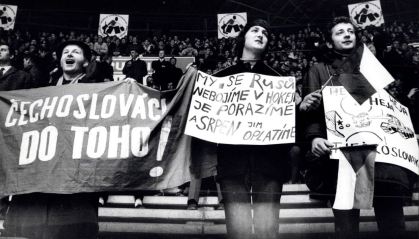
The transnational aspect should be also included in my dissertation project. After the communist coup of 1948, ideology became a part of every aspect of the sporting life in Czechoslovakia. It led politicians to use the sport for the ideological purposes. The socialist sportsmen, who beat their imperial counterparts, were celebrated by state officers as national heroes. Anyway, the most of these athletes had never accepted the role of the “ideological warriors”. For this reason a very important part of my research will be an analysis of the propagandistic dimension of the sport, including the contrast how were successful Czechoslovak sportsmen understood on the both sides of the Iron Curtain. My goal is answer the question if ideologization of the sport had created a mutual socialist identity within the Eastern Bloc or on the contrary sport helped shaping national identity against communist regime?

My motivation to participate in summer school is present my research to other scholars and students, who could be interested in this topic and especially to gain new experiences and perspectives on transnational history and networks.

Key Reading: WAIC, Marek (ed.), In the Shadow of Totalitarism: Sport and Olympic Movement in the „Visegrád Countries“ 1945–1989, Praha 2014.

The collection of studies devoted to sport in “Visegrád Countries”. All aspect (political, cultural, social) connected with sport are well analyzed by outstanding Czech historians from Faculty of Physical Education.

Bibliography:

TÚMA, Oldřich – PROZUMENSCHIKOV, Michail – SOARES, John – KRAMER, Mark, The (Inter-Communist) Cold War on Ice: Soviet-Czechoslovak Ice Hockey Politics, 1967-1969, in: HERSHBERG, G. James (ed.), Cold War International History Work Project Bulletin, no. 69, February 2004.

RIORDAN, James (ed.), Sport Under Communism: The U.S.S.R., Czechoslovakia, The G.D.R., China, Cuba, London 1981.

SOARES, John, Cold War, Hot Ice: International Ice Hockey, 1947–1980, in: Journal of Sport History, vol. 34, no. 2, Summer, 2007.

NENDEL, Jim, The Cold War: Emerging From the Ice at the 1956 Cortina d’Ampezzo Winter Olympic Games, in: The Global Nexus Engaged, University of Western Ontario, October, 2002.

EDELMAN, Robert, Serious Fun: A History of Spectator Sports in U.S.S.R., Oxford 1993.

HARGREAVES, John, Sport, Power and Culture: A Social and Historical Analysis of Popular Sports in Britain, Cambridge 1986.

Two Case Studies on the Role of Institutional Networks in Politics of Space during the Twentieth Century: Producing Szekler and Scottish Characterology

About me

Târgu Mureș/Marosvásárhely, 2015

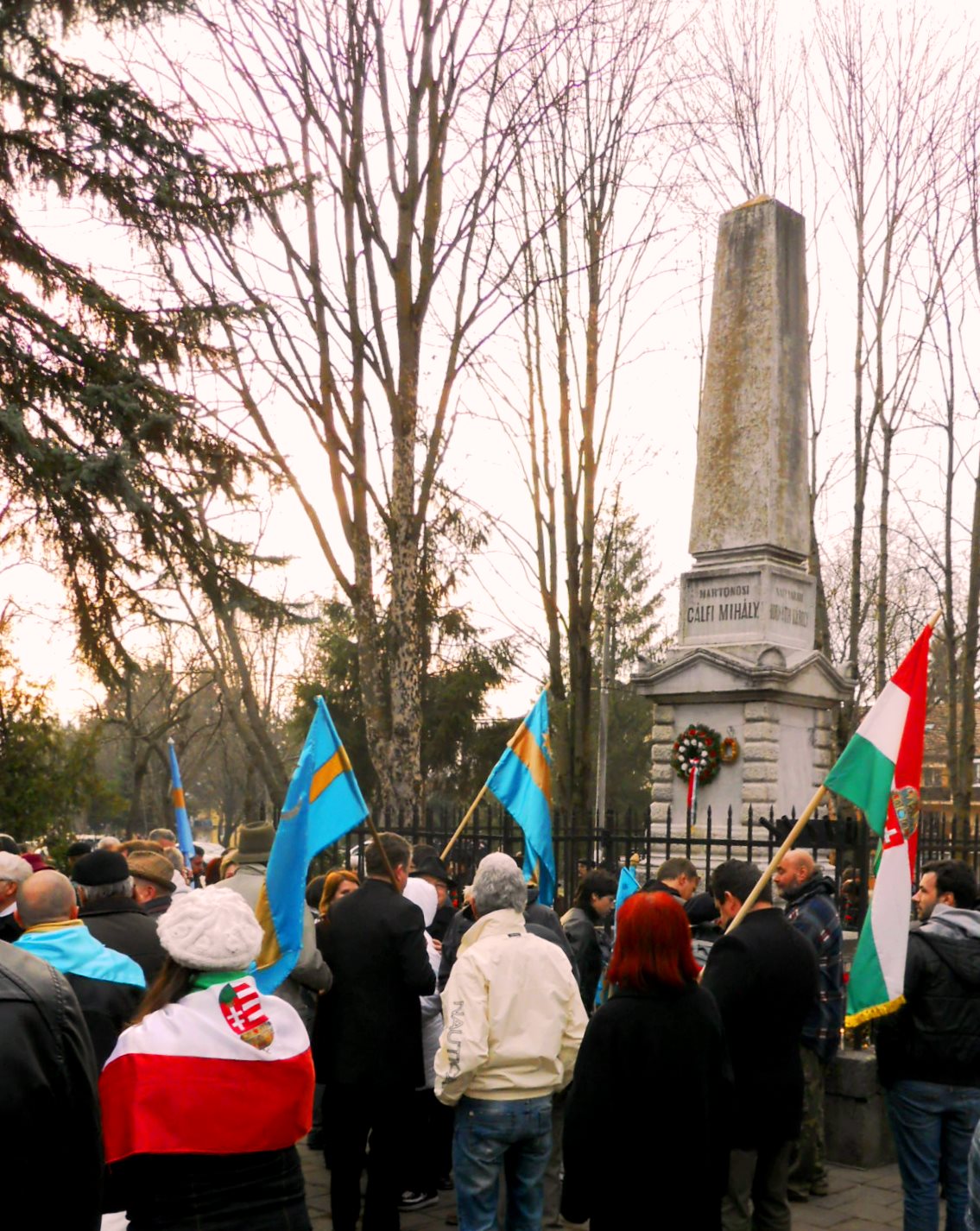
Târgu Mureș/Marosvásárhely, 2015: Commemoration of Szekler Martyrs Killed by Austrian Soldiers in 1854

I am first year predoctoral fellow of the Max Planck Institute for Human Development, Berlin and currently enrolled at the Technical University of Berlin. I also hold an MLitt (2011) from the University of St Andrews and an MA (2012) from the University of Bucharest, both in History. Generally, my PhD project concerns politics of space in mountainous regions during the twentieth century, especially the Hungarian-speaking enclave located in Transylvania, called the Szeklerland. Nevertheless, I plan to parallel similar uses of symbolic geographies in places like the Scottish Highlands, the Polish/Ukrainian Galicia and the Turkish Kurdistan. Very briefly, I argue that at the basis of local politics of space, such as claims for autonomy, lies an ideology of remoteness. According to this ideology, elements of isolated natural landscapes gain a moral value, providing a local meaning to politics. For more details on my preliminary outline: https://www.mpib-berlin.mpg.de/en/research/research-schools/imprs-moral-economies/projects/political-workings-of-the-ideology-of-remoteness


Summer school contribution

At the summer school I aim to present the role of Szekler and Scottish institutional networks, like museums and cultural associations, in the production of space imagery, as part of my doctoral research. Similarly to monuments and ceremonies, such institutions are instrumental in connecting a people to “their” land. A network-analysis perspective should illuminate the complex interactions between institutions that homogenize local characterologies.

Looking at the Transylvanian city of Cluj/Kolozsvár, Rogers Brubaker has argued that, there, Hungarian ethnicity is not territorialized. Rather, an “archipelago” of connected institutions – schools, universities, churches, literary circles – shapes Hungarian socializing in a life-world parallel to Romanian socializing. On these grounds, he implied a contrast between Cluj and the Szeklerland, where the local Hungarian-speaking community is historically rooted and strongly territorialized.

Nevertheless, I would argue that this “archipelago” is just as important in the Szeklerland, despite (or rather in addition to) its Hungarian-language territorial basis. Ever since the dissolution of Greater Hungary after WWI, Budapest supported an extensive institutional network aiming to rebuild the greater Hungarian nation, on a cultural and transnational level. Thus, up to the present, the Hungarian government has buttressed the Transylvanian Museum Association, churches and church figures, Hungarian political parties, the Association of Folk Literature, schools and universities. All these organizations furnish and represent the imagery of remoteness that enable Szekler elites to connect the Szekler people to the Szekler land.

Similarly, in Scotland, the National Trust for Scotland, the Celtic Twilight or museums like the National Museum of Scotland, although not benefiting from the support of a patron-state, like their Translyvanian counter-parts, continuously reshaped Scottish imagery – increasingly dependent on the myth of the Highlands. According to Cooke and McLean, archeological displays brought from the Celtic periphery to the Scottish Museum construct “a similarity of ways of life, in addition to constructing difference”, weaving “a symbolic thread that stretches back into prehistory, linking prehistoric Scots with the life experience of at least some contemporary Scots”.


Prospective gains from the summer school

Apart from interacting with all the participants and speakers –something I really look forward to – I hope to trace the process whereby the institutions outlined above developed such strikingly similar networks and features in the Szeklerland and Scotland. In other words, network-analysis should shed light on the transfers – of people, ideas and materials – from a common cultural baggage that assigned these institutions the mission of producing local imagery. Consequently, these bodies took part in the struggle to monopolize symbolic geographies, competing against or allied with outside forces. Whether Budapest, Bucharest or Edinburgh, centers of power continuously reshaped the function of these establishments, impacting the networks that linked them together in their endeavor to homogenize local characterology.


Suggested reading

Brubaker, Rogers; Feischmidt, Margit; Fox, John; Grancea, Liniana (2006). Nationalist Politics and Everyday Ethnicity in a Transylvanian Town. Princeton; Oxford: Princeton University Press.

This is a thorough study of contemporary inter- and intra-ethnic relationships concerning Hungarians and Romanians in the Transylvanian city of Cluj. Conducted over a period of 10 years, including extensive interviews, this research traces the main areas where ethnicity unfolds: workplaces, churches, public squares, politics, etc. Obviously, in investigating everyday ethnicity, it deals with networks; personal and institutional, national and transnational.


Bibliography

Cooke, Steven; McLean, Fiona (2002). “Picturing the Nation: The Celtic Periphery as Discursive Other in the Archaeological Displays of the Museum of Scotland”, Scottish Geographical Journal 118 (4), pp. 283–298.

Hitchins, Keith (2007). “Erdélyi Fiatalok: The Hungarian Village and Hungarian Identity in Transylvania in the 1930’s”, HStud 21 (1-2), 85-99.

Lorimer, Hayden (1999). “Ways of Seeing the Scottish Highlands: Marginality, Authenticity and the Curious Case of the Hebridean Blackhouse”, Journal of Historical Geography 25 (4), pp. 517–533.

Sturm, Tristan; Bauch, Nicholas (2010). “Nationalism and Geography: An Interview with Rogers Brubaker”, Geopolitics 15 (1), 185-196.

Török, Zsuzsanna (2001). “Planning the National Minority: Strategies of the Journal Hitel in Romania, 1935-44”, Nationalism and Ethnic Politics 7 (2), 57-74.

How to be a global player. The Basel Mission between faith, trade and internationalism, 1910 – 1925.

My name is Matthaeus Feigk, I’m a 2nd year PhD-candidate at the Basel Graduate School of History and the Institute for European Global Studies at the University of Basel. The research project I’m working on is entitled How to be a global player. The Basel Mission between faith, trade and internationalism. 1910 – 1925. I obtained my Bachelor as well as my Master degree at the University of Heidelberg (2013).

My PhD-project surveys the Basel Mission as a global stakeholder, respectively a participant in global networks during the investigation period from 1910 to 1925. This is from the World Missionary Conference in Edinburgh to the Basel Mission’s return to the mission areas it had lost during the First World War. Rooted in Germany as well as in Switzerland, the society had by 1900 become one of the largest German-speaking protestant missions. It did not only maintain mission areas from Western Africa to China but also operated through its trading company, which played a crucial role in the cocoa trade as well as in industrial weaving and brick manufacturing in India.

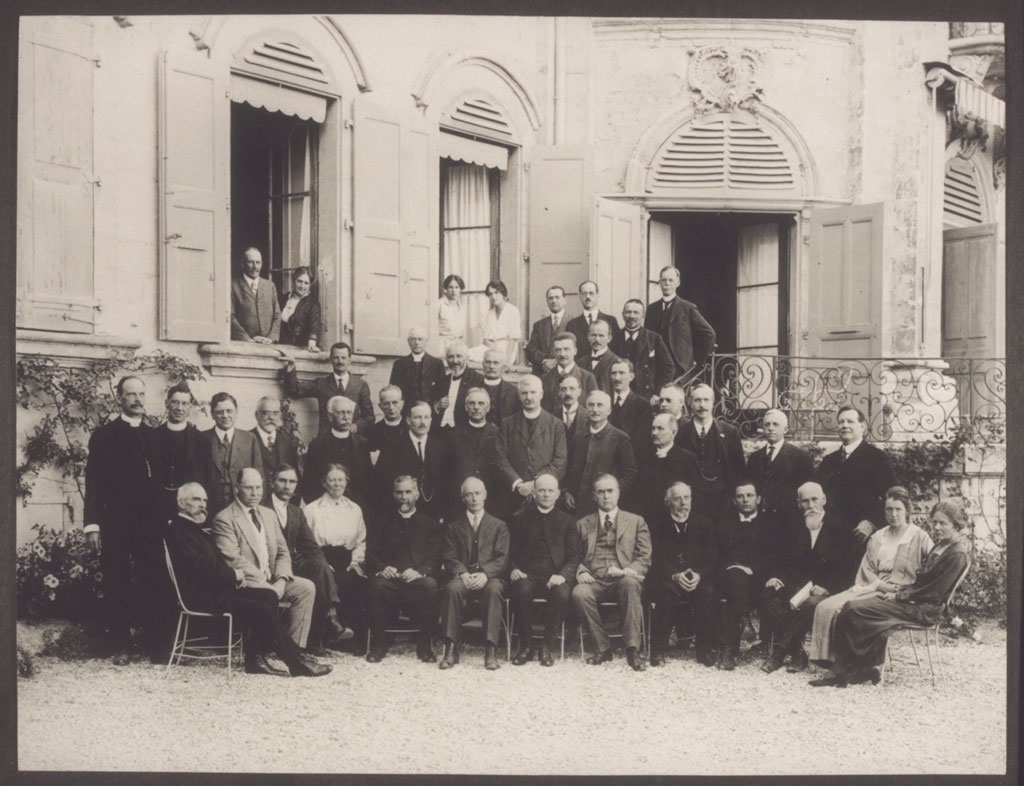
QS-30.033.0006

The international line-up of the missionary meeting at Crans, Switzerland, June 1920. Third row, second from right, with sun glasses: Friedrich Würz, Mission Inspector of the Basel Mission. BMA QS-30.033.0006.

Owing to its Pietist origins, the Basel Mission was from the start part of existing international networks in the protestant world. Numerous supporting associations in Switzerland and Germany contributed to the transnational Swiss-German organizational structure within the missionary society. Moreover, the Basel Mission maintained strong personal connections to German and British missionary circles as well as to Switzerland’s political and financial elites.

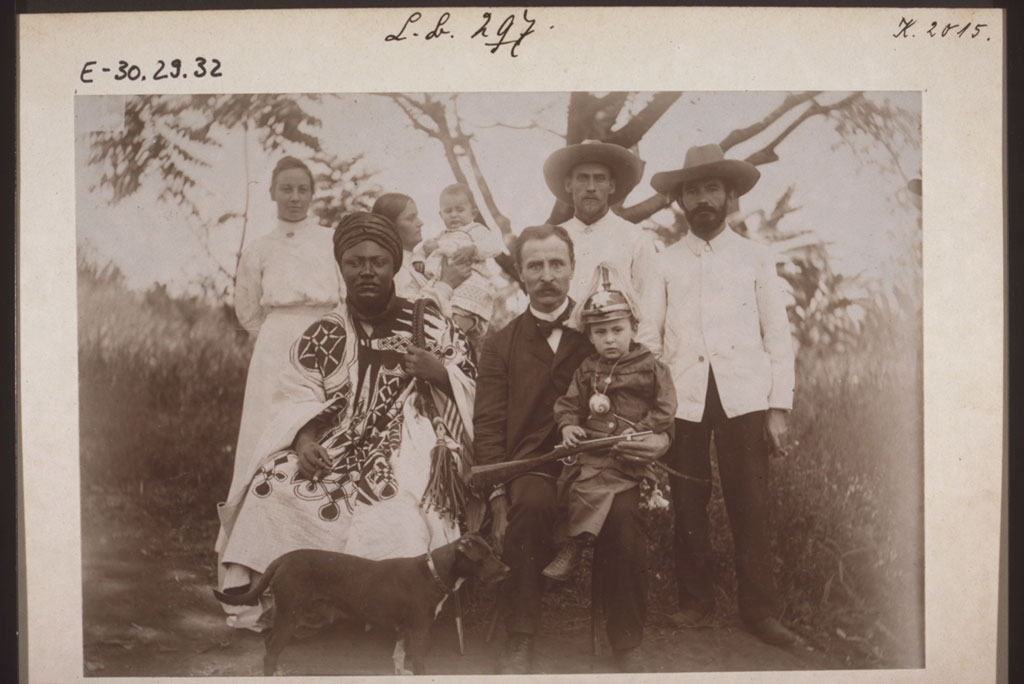
E-30.29.032

King Njoya of Bamun, Cameroon, with Basel missionaries in 1908. Note the little boy’s prussian spiked helmet! BMA E-30.29.032. (Also shown in Jenkins, Paul: A short History of the Basel Mission, Basel, 1989)

My project analyzes the role of this organization and its members in the protestant internationalism emerging in the late 19th and beginning 20th century. It is therefore based on an approach in social sciences, which emerged during the last decade and emphasizes the relevance of religious non-state agents and their networks in shaping a global civil society beyond religious frame-works. Consequently this is not a doctoral thesis situated in theology or the religious studies. I consider the Basel Mission to be a globally operating organization and a transnational organization in itself, connecting not only colony and metropolis, but also personal and institutional stakeholders within Europe and across the Atlantic ocean with religious, scientific, administrative or commercial background.
How did the Basel Mission use this contacts to overcome the crisis of the First World War? To what degree was the Basel Mission involved in the new surge of internationalization within the European missionary community after the war? Did interdependencies and mutual influences exist between religious and secular internationalism?

Readings being essential to my project are for example Rebekka Habermas: Mission im 19. Jahrhundert. Globale Netze des Religiösen („Mission in the 19th century. Global networks of the religious“) as well as Abigail Green and Vincent Viaene: Rethinking Religion and Globalization, in: Id. (eds.): Religious Internationals in the Modern World. Globalization and Faith Communities since 1750. Both texts point to the vast transnational spaces created by religious actors in general (Green and Viane) and by missionaries from the German-speaking countries in particular (Habermas) through correspondence, journeys and exchange forums and highlight their thereby emerging relevance for the history of internationalism.

My investigation allows to engage in research debates such as 1.) a methodological definition of the parameters reproducing a network 2.) the role of religious motivations in this context and interdependences with the non-religious sphere, and 3.) a widened perspective on Switzerland as a “colonial power without colonies” (Purtschert, 2012) as well as an important hosting country of international organizations.

Bibliography:

Abigail Green and Vincent Viaene: Rethinking Religion and Globalization, in: Id. (eds.): Religious Internationals in the Modern World. Globalization and Faith Communities since 1750. Basingstoke et. al. 2012, pp. 1-19.

Habermas, Rebekka: Mission im 19. Jahrhundert. Globale Netze des Religiösen, in: HZ 287 (2008), pp. 629‐679.

Mettele, Gisela: Weltbürgertum oder Gottesreich. Die Herrnhuter Brüdergemeine als globale Gemeinschaft 1727–1857. Göttingen 2009.

Purtschert, Patricia et al. (eds.): Postkoloniale Schweiz. Formen und Folgen eines Kolonialismus ohne Kolonien. Bielefeld 2012.

Sluga, Glenda: Internationalism in the Age of Nationalism. Philadelphia 2013.


« Older posts Newer posts »