GRAINES Summer School, St Andrews, 7-10 June 2015

Tag: network

Cultural Communication in the Habsburg Monarchy. The Case of Galicia-Silesia/Silesia-Galicia (1848-1914)

I am a PhD student and researcher at the University of Vienna (Doctoral program: Austrian Galicia and its Multicultural Heritage). My PhD project titled “Cultural Communication in the Habsburg Monarchy. The Case of Galicia-Silesia/Silesia-Galicia (1848-1914)” focuses on connections between Austrian Galicia and Austrian Silesia, specifically on associations (cultural and educational, mostly national orientated), migration (in the context of industrialization), family history (e.g. of national activists and their connections) and inter-regional communication in the muti-ethnic Galician–Austrian-Silesian border land from a trans-and intercultural perspective, with particular reference to the establishment of national movements and their impact on “everyday (cultural) hybridity” .

My main fields of interest are: inter-/trans-cultural communication, border regions and trans-border/interregional networks, cultural hybridity, migration, minorities, transnational history of Central Europe.

The text below is an example depiction of historical and socio-cultural phenomena, closely connected with transfer, networking and communication, that I am working on, in my project frame.

No Network – No Nation? A hybrid actor, a monolithic idea and inter-ethnic dynamics in the Galician – Austrian-Silesian border region

The Galician-Silesian border land was a multilingual (German, Polish, Czech, Silesian) and multi-religious (Catholic, Protestant, Jewish) transit region between two crown lands of the Habsburg Empire: the Austrian Galicia and Austrian Silesia. This border region made up a frame for a multiethnic, hybrid community on one hand and national movements (German, Polish, Czech, Silesian) on the other hand, from which the Polish movement draws special interest in this context. The emergence and highly complex mechanism of the Polish national network in the Silesian-Galician borderland can serve as a prime example of establishing a network through the interconnecting of actors (national activists), of ideas (primarily the idea of a nation) and of objects (e.g. newspapers).

Thanks to multiple strategies and a lot of effort Pawel Stalmach (1824 -1891) created the Polish national network between Silesia and Galicia from the very beginning, within the local multiethnic community. Stalmach was born in Austrian Silesia, went to a Czech primary school, then to a German secondary school, studied protestant theology in Bratislava where he decided to become Polish activist thanks to his Slovak friends. Shortly before his death, he converted to Catholicism to make the relationship to the catholic Galician Poles easier, bringing first Polish books to Silesia and establishing the first relationship with Polish people. As the first initiator and main actor of the Silesian-Galician Polish national relations, he created a fundamental network by organizing of associations, newspapers, festivals, schools etc., that played a crucial role in the establishment of Polish national movement in Silesia – he recognized that this approach was the only way to convince at least part of the hybrid local community to give up their multiethnic origins in favour of a monolithic national identity.


Homi K. Bhabha: The Location of Culture. London-New York 1994.

Chris Hann; Paul Robert Magocsi (ed.): Galicia. A Multicultured Land. Toronto 2005.

Pieter Judson: Guardians of the Nation: Activists on the Language Frontiers of Imperial Austria. Cambridge 2006.

Tomasz Kamusella: Silesia and Central European Nationalisms: The Emergence of National and Ethnic Groups in Prussian Silesia and Austrian Silesia 1848-1914. West Lafayette 2007.

Wolfgang Welsch: Transculturality: The Puzzling Form of Cultures Today. In: California Sociologist, 17&18 (1994/1995), pp.19-39.
Drawing from Creole and Atlantic medical knowledge: the health service of the Saint-Domingue expedition (1802-1803)


My name is Pierre Nobi and I am a graduate student in my second year of Sciences Po Paris’s Master in history. My Bachelor was also at Sciences Po, and I spent a year in exchange at the University of Bath (UK). My current research focuses on the health service of the French expedition to Saint-Domingue (present-day Haïti) in 1802-1803. Traditionally, its presence in the historiography is reduced to a brief overview of the yellow fever epidemic that decimated the French army and a discussion on how big a factor it was to the failure of the expedition. Moving past military history’s fetishisation of this factor of defeat, I aim to uncover instead the various actors and medical practices of the health service, and examine it as a “colonial medical encounter” (Thoral, 2012).

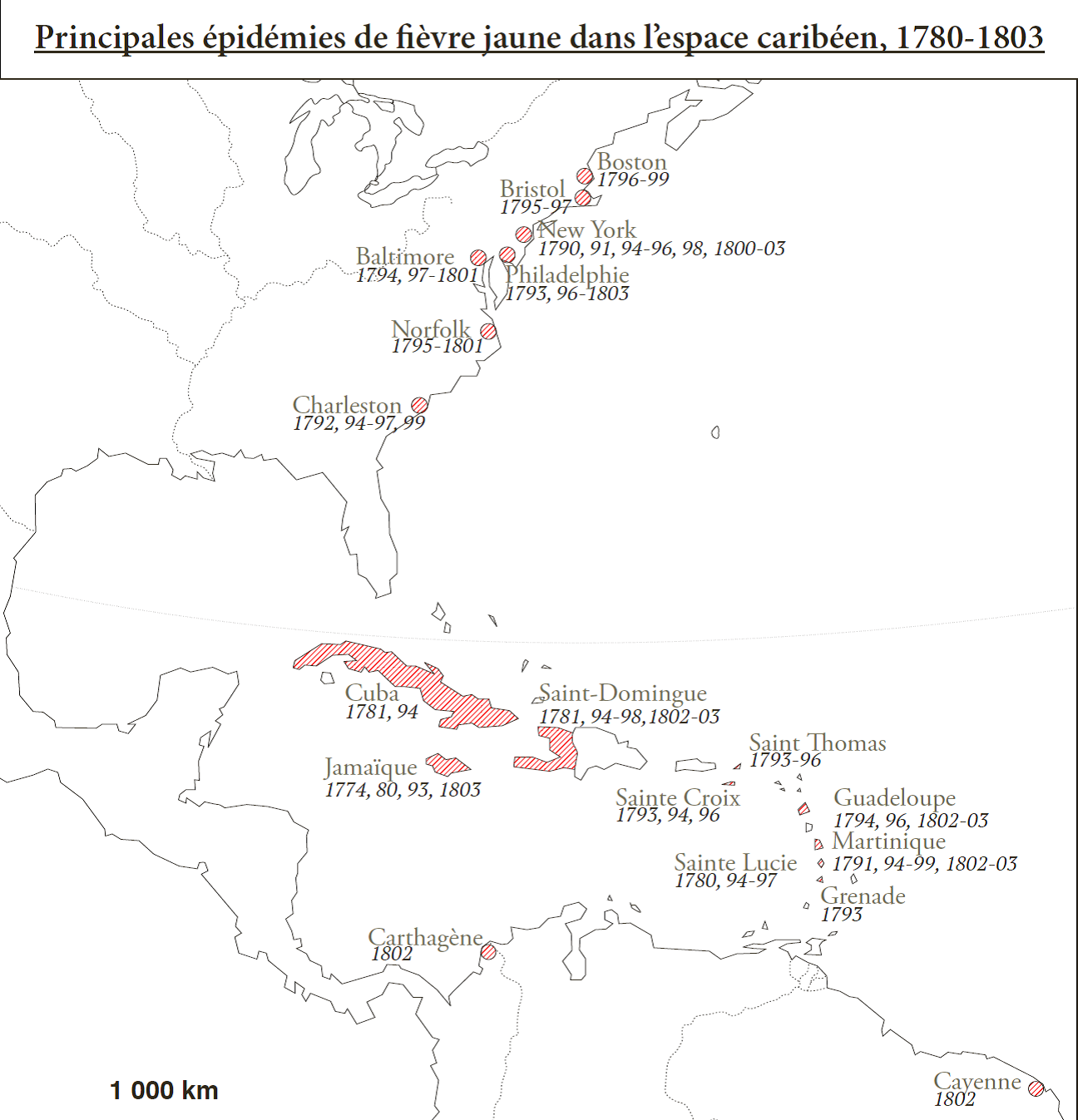
Thus, this health service must be replaced in the larger context of scientific developments in the colony of Saint-Domingue in the 18th century. I believe the geographical scope should be broadened too, as Saint-Domingue was at the heart of a well-connected Atlantic scientific world, and yellow fever epidemics plagued the whole of the West Indies, the Eastern coast of the United States and even Spain between the 1790s and the 1820s.

map yellow fever nobi

This map of the main epidemics in the Americas is still very much a work in progress


Transnational and network analysis are thus key approaches to my research, even though I still have much to learn about them, and thus I am looking forward to listening to your presentations and participating in the discussions. In my contribution to the summer school, I would like to present the two networks that the health officers turned to.


Creole network

While it is often described as if it were a homogeneous entity defined as metropolitan and military, the health service in fact incorporated numerous colonial physicians and surgeons, and consulted local botanists. Furthermore, while official healthcare was provided to soldiers in the colony’s hospitals, colonists and officers were often treated in their homes by women of colour. Health officers had the opportunity to witness, discuss and imitate this creole treatment. I am particularly interested in the process by which they appropriated this treatment and, much like the colonial physicians of the 18th century, “laid claim to the status of authors of new knowledge about American nature” (Murphy, 2011) by presenting these women as holders of a “vulgar” knowledge, leading to the “textual erasure” of their presence.

Atlantic network

The other network in which the health officers participated is the circulation of medical knowledge among physicians of the Atlantic world. French and British colonial physicians had already been sharing during the Seven Years’ war, but from the 1790s onward these exchanges boomed. Dominguan physicians emigrated during the Haitian Revolution and settled in the United States. They took part in the raging debate in America on the contagion of yellow fever, that also spread to much of the Atlantic world, and engaged the work of physicians from Britain and the West Indies. The health officers of the Saint-Domingue expedition inscribed their own research in this context, and they referred profusely to the opinion of American and British physicians. After the expedition, they presented themselves as American experts on yellow fever.


Bibliography

James Delbourgo and Nicholas Dew (eds.), Science and empire in the Atlantic world, New York, Routledge, 2008.

This edited volume is probably one of the key readings on history of science and colonization in the Atlantic. Delbourgo’ and Dew’s introduction, “The far side of the ocean”, lays the groundwork for the study of scientific journeys and research in the Atlantic, while the essays cover various geographic areas, such as Brazil, the United-States or Saint-Domingue. Susan Scott Parish’s essay “Diasporic African sources of Enlightenment knowledge” is also useful to understand the appropriation of African knowledge by colonial physicians.

Katherine Arner, « Making yellow fever American: the early American Republic, the British Empire and the geopolitics of disease in the Atlantic world », Atlantic Studies, 2010, vol. 7, no 4, p. 447‑471.

Katherine Arner’s work has many connections to my own research. This article retraces the connections of the yellow fever debate in the United States with a “multi-centered Atlantic world”, and examines the transnational networks of physicians involved. (Her recent PhD is more complete but also less easily accessible :  Katherine Arner, The malady of revolutions: yellow fever in the Atlantic world, 1793-1828, PhD dissertation, John Hopkins University, Baltimore, 2014.

Arner, Making yellow fever american

Erica Charters, « Colonial disease, translation and Enlightenment: Franco-British medicine and the Seven Years’ War » in Frans De Bruyn and Shaun Regan (eds.), The culture of the Seven Years’ War: empire, identity, and the arts in the eighteenth-century Atlantic world, Toronto, University of Toronto Press, 2014, p. 69‑90.

Erica Charters explores the networks of translations and citations of the medical publications of French and British colonial and naval physicians, which lays the ground for the connections of the 1790s and 1800s I am studying.

Charters, Colonial disease, translation and Enlightenment

James E. McClellan and François Regourd, The colonial machine: French science and overseas expansion in the Old Regime, Turhout, Brepols, DL 2011, 2011, 694 p.

This book, by the two main historians of science in Old Regime Saint-Domingue, explores the French scientific-technico-medical “colonial machine” and the various gears of its network – colonial physicians, metropolitan and colonial academies or botanical gardens, or the ministry of the navy and the colonies.

Kathleen Murphy, « Translating the vernacular: indigenous and African knowledge in the eighteenth-century British Atlantic », Atlantic Studies, 2011, vol. 8, no 1, p. 29‑48.

This article studies the process by which colonial physicians present themselves as the sole authors of the knowledge provided by Amerindian and African informants.

Murphy, Translating the vernacular

The Bouligny Family (1700 – 1830). Pablo Hernández Sau

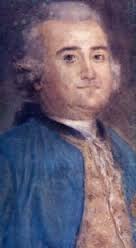
My name is Pablo Hernández Sau, 1st year PhD researcher at the Department of History and CivilizationFrancisco Bouligny Paret (Alicante, 1736 - New Orleans 1800). Brigadier in  the Spanish Regiment of Luisiana of European University Institute of Florence (EUI), where I have a research project entitled Interaction between “Levants”. The Bouligny family case and Mediterranean Social Networks in the 18th Century Global System. I obtained my bachelor degree in History at the Universidad Autonoma de Madrid (2007-2012), with one year Erasmus grant in M.E.T.U (Ankara), and a M.A in History at the Universidad Pablo de Olavide, Seville (2012-2014).
In the present moment, I am evolving a research focus in a family, the Bouligny family, between 1700 and 1830s. The Bouligny family members were settled in Marseille, Leghorn, Alicante, Madrid, Constantinople, New Orleans, Mexico, Naples, Granada, Barcelona, Valencia, Amsterdam, Stockholm and Copenhagen. A spread family whose social climbing took place between 1760 and 1800, so around the beginning of the 19th century, diverse Bouligny households inserted in local, regional and state socio-political realities on Madrid, New Orleans, Copenhagen, Paris or Corfu. However, at the same time they  developed cooperative actions along time and space.


There are some readings which are being basic in my research, especially those related to families studied from a global perspective. For instance, Emma Rothschild’s The Inner Life of Empires. An eighteenth century History or Francesca Trivellato’s The familiarity of strangersThe Sephardic Diaspora, Livorno, a Cross-cultural Trade in the Early Modern Period are excellent monographic studies about geographical spread and cooperative families.  In relation with this global perspective on family history research, I found quite important the reflections about the relation between macro- and micro- scales. This is the case of the Francesca Trivellato and Tony Andrade’s articles about ‘global microhistory’ or Bartolomé Yun Casalillas’ reflections about global history challenges.


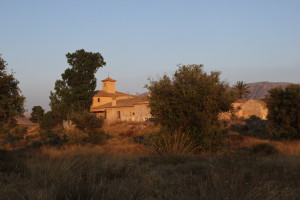
Lo Bolini (La Alcoraya, Spain)My P.h.D projects investigate the existence or not of ‘global families’ during the Early Modern Era by using the Bouligny social and family networks. This family which started as french emigrated merchants in the Spanish Mediterranean port of Alicante changed its location, work and social strata by holding administrative appointments from 1770s onwards and inserting its members in their respectives local realities. How did this take place? Can we see families as a new approach to understand history from a global perspective? Briefly, the objective of my P.h.D project is to understand the Bouligny family in its global context along the 18th century: their internal and external social links, their personal conception of the space, and the possibilities of the family history for global and transnational history.
 

My investigation on ‘global family’ concept allows to engage in different debates: firstly, the methodological difficulties of this study, specially how to relate micro- and macro- scale; secondly, the organic character of the family, in which multiple social realities coincided. Thirdly, the understanding of the role of commercial Diasporas in the developing of Early Modern global history, and their combination of formal and informal institutions and links. And last but not least, the insertion of Mediterranean commercial networks in the global flows and the self-conception of the Mediterranean Sea, which investigation is scarce at the present moment.


Bibliography:

Trivellato, Francesca. The familiarity of strangers:the Sephardic diaspora, Livorno, and cross-cultural trade in the early-modern period. Yale University Press. 2009

Rothschild, Emma The Inner Life of Empires. An eighteenth century history. Princeton University Press. 2011

Andrade, Tonio “A Chinese Farmer, Two African Boys, and a Warlord: Toward a Global Microhistory” Journal of World History v.21 – 4 (2010) pp. 573 -591

Trivellato, Francesca “Is there a future for Italian Microhistory in the Age of Global History?” Californian Italian Studies v.2 – 1 (2011)

Yun-Casalilla, Bartolomé “Localism, Global History and Transnational History. A Reflection from the Historian of Early Modern Europe” HISTORISK TIDSKRIFT. 127:4 (2007)


#5 Weeks to Go

5 more weeks to go and we will welcome you at St Andrews to the 3rd GRAINES summer school on the theme “Interconnected”. With the organisation well under way and practical elements safe in Giada’s hands, we would like to start focusing on content and programme from now on.

Under Programme you will have seen that we have a sort of “skeleton” programme with some more traditional fixtures of summer schools: a workshop led by St Andrews colleague, Professor Andrew Pettegree, on early modern news networks; a workshop & reading group by Professor Fabricio Prado on early modern Atlantic trade and economic networks; or a key note lecture by Professor Philipp Ther on neoliberal networks around 1989. There are a few more, though subject to minor changes.

However, in the spirit of our GRAINES summer schools in the past and in the vein of our Call for Participation, we would like to give you room and space to actively participate and shape the content of the summer school, to share your research, practices, approaches & thoughts with the group.

It was great to see in all applications the willingness to share and contribute. We have suggestions for presentations (more a bit later, but be prepared they will be at the shorter end) as well as contributions to writing & reading groups (again, the format will follow a bit later).

As a first step towards shaping the programme further, but also to allow you to start interacting before the actual physical summer school (we only have 3 days together), we would like to invite you this week to start with some “Homework” (and there is more to come).

This weeks “Homework” (ideally by Monday 11 May) is the following:

Homework

Homework

Write one Blog Post, around 600-800 on your project. You can of course go back to your abstract and slightly remodel & rewrite it (it can be shorter than 600 words, but please no longer than 1,000 words; please include up to 5 essential readings around network, transnational history that are key to your work – share what you read and what drives your research).

In your Blog ideally introduce your topic, yourself, your potential contribution during the summer school AND (in addition to your brief bibliography) pick your most influential reading (monograph, article – please add bibliographical details: author, title, year, journal, pages) and very briefly introduce it and why it is key to your work in terms of inspiration around networks.

How does this work? We have added you to the WordPress website as editors. Many of you may be familiar with all this, it is very straight forward. On the right hand side you find the Log-in. Log-in, go via Dashboard to Posts. Click “Add New”. Create a nice headline, title and off you go: Write or paste your contribution AND Publish. You can always go back and edit later.

On your selected key readings. These will be part of the selected bibliography, the Reader, for the summer school. We will pick a few key readings around workshops that ideally all of us will have read. Other ideas for reading will be simply shared and participants can chose according to interest and research focus.

If you have a PDF of a journal article, you can add it under “Media” (add Media) and create a link on your Blogpost. Or you can send it to us via graines.interconnected@gmail.com and we can upload it for you and make it available.

Never written a Blog Post before? Do not worry! Blog rules are some ideas (Rules!) or some ideas from a recent module we taught this term. The IDEA is that we all get to know each other and our research focus and interests before we actually get together at St Andrews. Once we have all your Blog Posts by Monday 11 May, you can start reading and, ideally, networking by commenting on other participants’ research.

Please do get in touch via the usual email above if anything is unclear or should you have any technical problems in accessing the WordPress site.

Thanks a lot. Best wishes on behalf of GRAINES and the local organisers,

Bernhard