
#Graines2015 – THE GROUP
GRAINES Summer School, St Andrews, 7-10 June 2015
#Graines2015 – THE GROUP

Pair Writing in Progress
Every event comes to an end – when they shouldn’t. The sun is still out, summer continues (a Scottish heat wave – if that is not an oxymoron), we are into Pair-Writing during the final afternoon and INTERCONNECTED is, sadly, coming to a close.
At the heart of our final session are the participants’ projects, sharing thoughts with a chosen partner, followed by writing and posting on our research, how INTERCONNECTED may have helped – or not.
From an organizers’s point of view, we hoped to have stimulated ideas in three different areas:
–socially, bringing people together and connecting them
 –intellectually, sharing ideas around transnational, global history, the role, study, research around networks and connections (which one comes first- Hen or Egg, the Social or Intellectual?, or the next)
–professionally and pedagogically, inspire some thoughts on teaching, collaboration, sharing in a learning or class room environment (not only summer schools come to and end – also PhDs – be aware there may be teaching ahead…)
It has been a great pleasure and privilege to work and cooperate for a few days with a group of Polish, Czech, French, even some English, German (well, and the Swiss and Austrians), semi Norwegians, Greeks or Brazilians on topics ranging from cartographic knowledge in the Russian Empire, to the expulsion and classification of populations in post-independence in African countries, the Alps, communication in Habsburg Galicia or a fair in Lyon, conservative Punks or ice hockey on both sides of the dividing iron curtain – and in fact much more.
This is of course not where a summer school has to end. Ideally, this summer camp was not only on historical, transnational networks but ideally we should take away social and intellectual connections and foster them. Ideally, ideas will keep spinning and feeding back into our work at a later stage.
The webpage and the graines.interconnected@gmail.com will remain open and food for thoughts what to do at the next 4th GRAINES summer school in Cologne 2016 are more than welcome.
A huge welcome and thanks to all for coming and the willingness to discuss, share, discuss, expose yourself to an unconference and pair-writing.
Thank you on behalf of the Graines Team and the St Andrews crew – with special thanks to Tadek and Giada, you have been wonderful.
We have posted our ideas. We have pitched the proposed unconference sessions to each other in a series of one minute “lightning talks” and the votes (4 per person) are in! Here is the set-up for the Unconference:

Here is the vote – Unconference ahead!
Early AM Offers
#1 for 9.15am Konrad Lawson – Maps that Communicate
A discussion session that focuses on thinking about the use of maps in historical scholarship. Beyond the basic map for identification, the, “Here is the geographical area or country that this article or section discusses,” map, what are some of the more or less effective ways to use maps to complement a historical argument? When is it better to use a map than plain tabular expression of data? Or some other visualisation? What are some things to avoid in creating or using maps? How should our texts engage with included maps? When geographically visualising flows or networks, what works and what doesn’t? If this session is chosen, I’ll bring two or three maps that do I think do this well, or not well, and encourage participants to (optionally) bring a map of their own choice for discussion. The goal is to exchange ideas about good practices.
#2 for 9.15am Martin Schaller – Hand-on Session on Digitised Sources
More and more memory institutions are digitizing their holdings and making them freely available. Simultaneously border transcending initiatives like DARIAH or CLARIN are working on infrastructures to provide digital tools for researchers in the humanities.
I would like to propose a collaborative hands-on session, in which we will have a look at multinational, multilingual digital source collections (like European Newspapers at The European Library or available collections in research.europeana.eu) and the technical challenges and limitations that influence our work with the available material. However I would like to propose to apply an historian’s point of view in order to critically examine the material’s usability for high-quality historical research. Thus the guiding questions will be: Do we, as historians, really need to become programmers, as Emmanuel Le Roy Ladurie famously claimed in 1968? Does the available data live up to the quality of “analogue sources” in terms of reliability and contextualization? In which way can we use digitized sources to help our research or in other words which tools are we missing? As a base for discussion I would like to propose the following reading: Ian Milligan, Mining the ‘Internet Graveyard’: Rethinking the Historians’ Toolkit, Journal of the Canadian Historical Association/Revue de la Société historique du Canada, 23, 2012.

Unconference – Casting votes British-style (civilised)
Late AM Offers
#1 for 11.15 Matt Ylitalo & Madeleine Dungy – Research Symposium
A session for participants to share and engage each other directly about their own current research projects in an open discussion.
#2 for 11.15am Martin Schaller, Petru Szedlaczek, Pablo Sau, Matthaeus Feigk – The Exploration of Appropriate Methods in Analysing Knowledge Transfers
This proposal suggests the exploration of appropriate methods in analyzing knowledge transfers. Simple biographies of agents involved in knowledge transfers seem not to be enough. Instead, a combination of perspectives could work. Might linking prosopography with networks reveal how groups reify over large areas? Or one should first define a group from an analytical perspective and then visualize the networks formed by different actors facing common challenges? Genealogy clearly impacts elites’ original socialization. But what motivates elites to connect professionally? One possible understanding of prosopography is offered by the Modern History Research Unit of the University of Oxford. In this reading, prosopography is a perspective that focuses on four established methods: biography, onomastics, genealogy and sociography (or how groups form). To what extent could this take on actors and networks provide a comprehensive framework for research dealing with knowledge transfer? In order to apply the prosopographic-network approach, one can concentrate for instance on one particular scientific community in Russia in the early 19th century. The University of Dorpat in Livonia is central to group formation among Russian astronomers. Looking at names reveals their Baltic origin. Genealogy reflects family ambitions in sons following fathers’ professional track. Finally, sociography shows how local relationships translate into imperial professional networks. At the same time, different networks – e.g. family, profession – influence the life-path, socializing and choices of individuals. How can one reconcile different layers of networks impacting the same agent? What is the hierarchy of competing networks and how is it connected to the overarching research question?
Afternoon Pair Writing
For the afternoon, keep thinking about a partner with whom you wish to team-up for the pair writing writing session.
The pair writing (based on an idea elaborated here) works in a similar way with the day one writing exercise. This time the theme for the pair writing exercise is: how did the summer school inform your own research? You will get 15 minutes to talk to your partner and think about an outline. You then get 30 minutes to write down your thoughts as a “driver” while your “observer” intervenes occasionally with suggestions, critique, or corrections. They can help you with new ideas should you get stuck. In a final 10 minutes you look over what you have written, make any final edits, and post the resulting written extracts on our website here. After a break, we will switch “drivers” and reverse the roles.

Practicing Pair Writing (end of day 1)
We have 7 proposals for the Unconference for the final day, Wednesay 10 June. This is looking good but we welcome submissions until latest 2pm today – post lunch time. This afternoon, following the workshop by Fabricio Prado, we will start preparing by
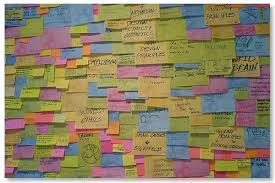
Unconference Ideas
-Round of Lightning Talks (max 2) by those who proposed workshops, reading groups, contributions
-Voting for Unconference Programme (each participant has four votes)
-Arrange setting and venues
-Konrad and Bernhard will sit down with the proposers and discuss potential set-ups
Tonight two alternative ways to enjoy and explore Scotland and the Kingdom of Fife.
Whisky Tasting
Either join our Luvians Whisky tasting, from Lowlands to Highlands, 8pm in Luvians Cafe, Market Street 84. See here:
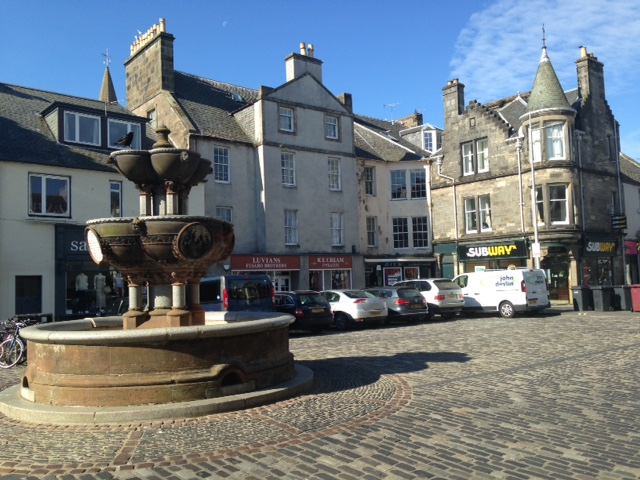
Whisky Tasting – Luvians Cafe, Market Street 84
Fish and Chips in the Coastal Village of Anstruther
Or join our local boy Konrad Lawson on the way out to the beautiful coastal village of Anstruther in the East Neuk region (the “Cinque Terre” of Scotland) with the award-winning local Fish’n Chips Shop, the “Anstruther Fish Bar” or one of the several excellent nearby competitors. To join this excursion, meet at the St Andrews Bus Station at 18.05. Bus no. 62 leaves 18.10pm from St Andrews Bus Station to Anstruther (the bus continues to Edinburgh). A roundtrip ticket to Anstruther is less than £8. So if you wish to hop on the bus with Konrad, be at the station for 6.05pm. Konrad will direct you to the bus back, which departs hourly: bus no. 95. The bus ride itself is a beautiful scenic ride along the coast, including the villages of Crail and Kingsbarns)
Enjoy:

Fish’n Chippies – Starting Locally
Working on the social movement of unemployed person we are interested discussing on the mapping of decision making, claim-making and the circulation of political ideas through this (trans)national networks. The general definition of social movements is, that they are networks that point towards the transformation of social issues as f.e. child care, women’s rights, ecological themes and also labour relations. Social movements are networks of individuals or organizations. Most of the time social movements are studied through these individuals, mobilizing networks. In my opinion this approach ignores a lot of the political content of the movements. But we think that applying a network and transnational approach can be very fruitful for the research on social movements. We would like to propose three entangled perspectives on such social movements by taking up the discussions on scale:
At first, we like to investigate the interorganizational networks of local, regional, national and transnational movements and organizations. How did individual and collective actors tried to get in contact with other social reformers in other European states or even on a global level? Can detect divergent agendas of social reform that were not translatable into the other context? How did trans-border circulations of concepts change while being circulated? The concrete actions can also transfer into more circulation of ideas, knowledge or even action-forms. Secondly, we like to narrow our focus on „assembly“ spaces, that means places like conferences rooms where social refomers met and debated their issues. Are is
specific cities that were relevant fort he gathering of actors, or not? Which conditions determined the selection of cities and places of meeting? One can for instance can think of language, or the centrality or leader figures/organizations as main influences for the selecting of certain places. As an example the unemployment movement in Switzerland has always chosen a central city in the middle of the language border (french/german) to decide over national problems concerning unemployed persons. Thirdly, we would like to ask how social movements were entangled with political spaces by taking into account a wider notion of public focusing on media or political areas Where political decisions are taken? Which spaces are chosen for this in social movements? In which spaces does the protest take place? In my project this is very visible through massive street protests on EU-summits from the mid 1990s on, which was the starting point for a transnationalization of the movement. It can be concrete spaces, but also virtual ones. The aim is to think of movements not as singular events, but of long-time prepared actions, depending from many conditions and influences. The spatial dimension therefore is crucial.
Alexander van Wickeren, Anina Zahn
One Week to go and we are looking forward to seeing you all here at St Andrews.
If you browse through the Programme and Reading you will see a few updates. On the Programme, we have now added venues and slightly changed times here and there. Also, we had to say goodbye (sadly) to the Eden Distillery Tour as it would have been too tight – but will make up with a local whisky tasting instead (at extra costs, but reasonable for what you get). We have added a few additional Reading suggestions – more general readings that we hope will relate to a number of the projects and interests. One or two may be added by Wednesday morning.
How to get started? On Sunday: Most of you will be travelling and will arrive at some point at St Andrews. Your residence McIntosh Hall is literally just across from the bus station, a 3-4 minute walk (cross City Road – be aware this is GB and people drive on the ‘wrong’ side of the road, keep left and walk up Abbotsford Crescent; you will see the large building). Check in and try to make the best of the day. The Old Course (the oldest in the world) is closed for golf but open for walks and strolls down to the beach. It is nice – even as a non-golfer. The cathedral is well-worth a visit (be aware: it is in ruins, but impressive). Have a swing into the Tourist Office on Market Street, they have nice Mp3 guided tours as well.
Where to meet? We would like to welcome you at 6pm at St John’s House. It is on South Street and will be our main venue for most of the summer school. St Andrews is tiny and it really is only a 5 min walk from McIntosh Hall. So if you do not make it Sunday, that is the place to be Monday morning. Sunday evening there will be refreshments and nibbles and hopefully we can make the best of the (currently nice, but chilly) St Andrews weather and St John’s Garden. Sunday evening, St John’s will be open 6-8pm. Late arrivals should find us in the Central after 8pm. As the name of the pub suggests: the Central is very central (Market Street, see map above, opposite to the Tourist Office).
What else is there to do? Not much. Ideally, do all the reading that relate to the key note and the different workshops and discussion groups. Even more ideally, dip into the suggested readings. Even more ideally, start interacting and leave a comment on other participants’ projects (I have seen the first comments coming up). Even more ideally, keep the Unconference in mind and come up with a suggestion.
As you see under Unconference, three proposals have already been posted. Please keep posting ideas, latest by Tuesday midday of the summer school. Ways to submit your ideas: just write a Post as most of you have done already, or a Comment, or just send it as an email to graines.interconnected@gmail.com and we can put it up for you.
That should be it. The weather has treated us nicely over the past few weeks – but it is Scotland (not Munich, Boston, or Florence in June; bring a woolly jumper, it is chilly). Questions are more than welcome any time. If we do not hear from you, have a save journey.
All the best from the organising GRAINES team.
We are getting closer – roughly 2.5 weeks to go and we will meet for INTERCONNECTED at St Andrews.
Thank you first of all for the fantastic posts on your projects, your interests and key readings. The quality of posts and projects is outstanding and we are very much looking forward to learning more with and from you here at St Andrews. It is a pleasure to see the willingness to share and add your views, expertise and voices. This is something we would like to transfer into the actual three days we will have together – and ideally beyond.
Now, as you see the core programme for Monday and Tuesday is pretty much set. We have a number of workshops where we will be working as a large group, though most workshops will have an element of smaller groups allowing for discussion and interaction built into it. We also have Philipp Ther’s key note lecture for Monday evening. Tuesday AM we decided to offer two alternative workshops, one by Roberto Sala related to databases, the other – more reading and discussion focused, by Ulrike Lindner on the movement of actors and ideas in imperial contexts. For all these workshops you find key readings under programme and / or readings. For some workshops, like the Monday AM by Andrew Pettegree & Arthur der Weduwen or by Roberto Sala on databases Tuesday AM there are additional tasks (see under programme and “play” with the USTC database and the www.lonsea.de).
The general idea is that we have most of Monday and Tuesday together as a larger group (though we will split up here and there), allowing us to learn together and discuss more general issues around networks, connections and their relation and relevance to transnational history.
Wednesday is kept open – deliberately so. This is the day we seek to organise around your expertise and around ideas stemming from the concept of an “unconference” during which we will break up into smaller groups. This is the day when we need your initiatives, your willingness to share, your offers to present (your topic, a text, an idea, a problem, a tool or piece of software). Some of you may have been to an “unconference”, for instance a THATCamp. If not feel free to browse the links for ideas.
On the general idea of an “unconference”: They are rather spontaneous, they are based on the idea of sharing & creating knowledge. They are open in their format of discussion group, reading groups, making and sharing. Roughly around 1.5hrs. There is also something they are NOT: they are not based on the more traditional format of panels and long papers, followed by Q&A. So, those of you who have kindly offered to present something, please bear this in mind. We will try to slot you into the unconference day but with short & sharp presentations (in the region of 7-10 mins MAXIMUM). Please do bear this in mind.
Our suggestion for “Homework 2.0” for the next 10-14 days is the following.

More Homework
1) Start READING what is on offer so far relating to the workshops.
2) Start PLAYING with USTC, lonsea.de or GIS for Historians if you wish to learn more on mapping and visualisation of networks. There (most likely) be a St Andrews-led contribution on this for the “unconference”.
3) (INTER-)CONNECT – Start or keep READING the project posts and around the suggested reading. Ideally, start making connections – intellectually connecting your project to any of the others, see similar problems or overlapping questions. From there, ideally, WRITE another POST or COMMENT that relates your project to another. It could be the start for a contribution to our “unconference day”.
4) SHARE AND CONTRIBUTE – Make yourself familiar with the ideas of an “unconference” and try to come up with a potential contribution for Wednesday. More on this HERE.
5) Finally, get started with your running regime for the early morning runs – 7am sharp it will be. (By the way: this was shot at St Andrews West Sands.)
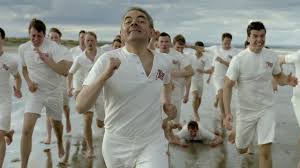
If he can do it – you can do it
This is (pretty much) it. Any questions and comments are welcome. We will let you know the precise venue and meeting for the Sunday evening drink in the coming days.
Best wishes from sunny St Andrews (today),
the GRAINES team
P.S. Follow, share, interconnect via Twitter #Graines2015
Summer Schools are intellectual, but also – ideally – social events. As we are nearing our summer school now and as your are making travel plans we would like to offer a GRAINES couch for those who wish to stay for a day but wish to keep the budget low.

GRAINES couch
If this is of interest, please do not hesitate to get in touch we will update this over the coming days under General Information. Jordan Girardin, PhD student at St Andrews and an “old” GRAINER, has kindly offered to host a guest (or two) in Edinburgh, near St Andrews Square, not too far off Waverley Station, c. 30mins to airport. Again, more to come under General Information.
As for the more social aspect but also for networking and an insight into our local economy, we would like to offer a tour to a recently opened micro-brewery, gin & whisky distillery for those interested early evening, Tuesday 8 June. Have a look at Eden.Mill. Eden.Mill is only a few miles out of St Andrews (by bus to Guardbridge) and one opportunity to spend the open evening. More information to come during the summer school.
5 more weeks to go and we will welcome you at St Andrews to the 3rd GRAINES summer school on the theme “Interconnected”. With the organisation well under way and practical elements safe in Giada’s hands, we would like to start focusing on content and programme from now on.
Under Programme you will have seen that we have a sort of “skeleton” programme with some more traditional fixtures of summer schools: a workshop led by St Andrews colleague, Professor Andrew Pettegree, on early modern news networks; a workshop & reading group by Professor Fabricio Prado on early modern Atlantic trade and economic networks; or a key note lecture by Professor Philipp Ther on neoliberal networks around 1989. There are a few more, though subject to minor changes.
However, in the spirit of our GRAINES summer schools in the past and in the vein of our Call for Participation, we would like to give you room and space to actively participate and shape the content of the summer school, to share your research, practices, approaches & thoughts with the group.
It was great to see in all applications the willingness to share and contribute. We have suggestions for presentations (more a bit later, but be prepared they will be at the shorter end) as well as contributions to writing & reading groups (again, the format will follow a bit later).
As a first step towards shaping the programme further, but also to allow you to start interacting before the actual physical summer school (we only have 3 days together), we would like to invite you this week to start with some “Homework” (and there is more to come).
This weeks “Homework” (ideally by Monday 11 May) is the following:

Homework
Write one Blog Post, around 600-800 on your project. You can of course go back to your abstract and slightly remodel & rewrite it (it can be shorter than 600 words, but please no longer than 1,000 words; please include up to 5 essential readings around network, transnational history that are key to your work – share what you read and what drives your research).
In your Blog ideally introduce your topic, yourself, your potential contribution during the summer school AND (in addition to your brief bibliography) pick your most influential reading (monograph, article – please add bibliographical details: author, title, year, journal, pages) and very briefly introduce it and why it is key to your work in terms of inspiration around networks.
How does this work? We have added you to the WordPress website as editors. Many of you may be familiar with all this, it is very straight forward. On the right hand side you find the Log-in. Log-in, go via Dashboard to Posts. Click “Add New”. Create a nice headline, title and off you go: Write or paste your contribution AND Publish. You can always go back and edit later.
On your selected key readings. These will be part of the selected bibliography, the Reader, for the summer school. We will pick a few key readings around workshops that ideally all of us will have read. Other ideas for reading will be simply shared and participants can chose according to interest and research focus.
If you have a PDF of a journal article, you can add it under “Media” (add Media) and create a link on your Blogpost. Or you can send it to us via graines.interconnected@gmail.com and we can upload it for you and make it available.
Never written a Blog Post before? Do not worry! Blog rules are some ideas (Rules!) or some ideas from a recent module we taught this term. The IDEA is that we all get to know each other and our research focus and interests before we actually get together at St Andrews. Once we have all your Blog Posts by Monday 11 May, you can start reading and, ideally, networking by commenting on other participants’ research.
Please do get in touch via the usual email above if anything is unclear or should you have any technical problems in accessing the WordPress site.
Thanks a lot. Best wishes on behalf of GRAINES and the local organisers,
Bernhard
© 2026 Interconnected – Actors, Objects, and Ideas on the Move
Theme by Anders Noren — Up ↑
Recent Comments