GRAINES Summer School, St Andrews, 7-10 June 2015

Tag: transnational

Travel, correspondence and constitution of scientific knowledge in the modern era: Michel Adanson (1727-1806), French naturalist and academic

My PhD project, based on Michel Adanson’s scientific travels to Senegal (1748-1754), analyzes how scientific knowledge was shaped through correspondence – the written exchanges between a scientist in the field and his academic correspondent in the metropole.

From the 17th-18th century, scientists undertook trips to the French colonies and trading posts overseas. Their goal was to bring back new knowledge. In their endeavors, they had to rely on the support of the King (known as the “Protector of Science” Adanson, 1763). Another option was to be recruited by the French East India Company in order to travel and explore the trading areas. This was the case for Michel Adanson, naturalist and French academician. Nominated as correspondent of the Académie Royale des Sciences (Paris) in 1749 while he was in Senegal, Adanson periodically sent letters to his academic correspondents Réaumur and Bernard de Jussieu. These were not only reports of his daily activities, but also on his interactions in the contact zones.

Thus, my main interest in this research is to uncover the local systems of knowledge. While research on scientific travels has so far focused on the traveler and his collection, this study highlights his collaborators’ production of knowledge. Adanson’s correspondence allows these knowledge systems to be traced, since he mentions, at various points, his informants’ scientific contributions to his work and offers insights into their understanding.

Looking at correspondence in a transnational dimension, this investigative angle also contributes to the field of scientific epistolary studies. Until now, these studies have focused on the scholarly correspondence networks in the so-called “republic of science”. In addition to its elitist undertones, this approach confined the “public space of science” to the European geographical area. My project, contrary to this tradition, directs attention to the transnational dimension of scientific correspondence.

Ousmane Seydi is a PhD candidate at the University of Basel and member of the Basel Graduate School of History (BGSH). Before coming to Basel, I studied at the Université Cheikh Anta Diop in Dakar (Senegal), from where I hold a Master’s degree in history.

My contribution to the summer school will be to discuss the use of Michel Espagne’s notion de transfert culturel in the context of transnational research. In relation to the focus of the summer school, this is the reading which inspires me the most.

The notion of transfert culturel has the particularity to add to the concept of “circulation of knowledge” giving it a more complete sense. Transfert culturel takes into account not only the circulation of knowledge, but also the direction of changes related to the passage of knowledge from one space to another. One other key point in this short but very dense introduction is the idea that knowledge is always constructed through a contact, a move. Espagne’s notion allows me to transcend the illusion of the eighteenth-century scientific exclusivism. In fact, this encompasses the notion of a confluence of knowledge, by, in my case, pinpointing external cultural ideas that penetrated the travel writings of scientists. Employing Espagne’s approach thus allows me to identify the voices of Adanson’s Senegalese informants in his scientific writings.


Bibliography:

Espagne, Michel, “La notion de transfert culturel”. Revue Sciences/Lettres 2013/1. http://rsl.revues.org/219.

Kapil, Raj, Relocating modern science: circulation and the construction of knowledge in South Asia and Europe, 1650-1900, Houndmills and New york, Palgrave Macmilan, 2007.

Macleod, R., (ed.), Nature and empire: Science and the colonial entreprise, Osiris, seconde série, volume 15, 2000.

Krige, J., Kai-Henrik B., Global power knowledge: science and technology in international affairs, Osiris, seconde série, volume 21, 2006.

Green, E. M., “Plant knowledge at the Cape: A study in African and European collaboration”, International Journal of African Historical Studies, vol. 36, N°2,   2003, pp. 367-392
 

Sport, Ideology and Tradition

profimedia-0209969189-1200x684-1

My name is Tomas Vojacek, M.A student of modern history at Charles University in Prague. In my research, I deal with the sport as the phenomenon of the twentieth century and I am trying to analyze the socio-political dimension of sport in the context of the Cold War. I also work at the Olympic Studies Centre, which is a scientific part of the Czech Olympic Committee. I obtained my bachelor degree in History at Charles University in Prague, with one year exchange in Colchester (University of Essex). This April, I completed my research at the Olympic Archives in Lausanne in the framework of one year research grant awarded by Faculty of Arts.

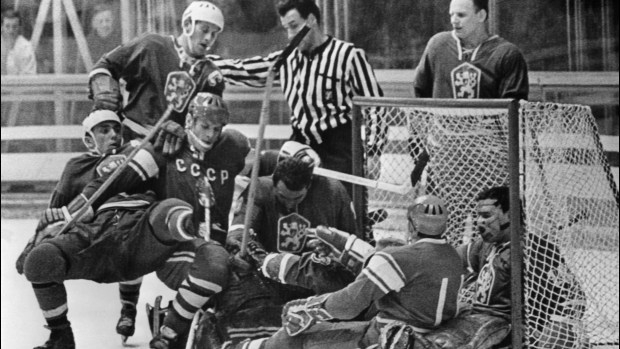
GRENOBLE, FRANCE - FEBRUARY 15:  Czech and Soviet ice hockey players are tangled in front of the Czech goal cage as the referee stops the play 15 February 1968 in Grenoble (French Alps) during the Winter Olympic match between the USSR and Czechoslovakia. The Czech team upset the defending Olympic champions 5-4.  (Photo credit should read STAFF/AFP/Getty Images)

GRENOBLE, FRANCE 

I partly dealt with the sport as a transnational phenomenon in my bachelor thesis The Miracle on the Ice (1980): A Contribution to the American-Soviet Sport Rivalry during the Cold War and I intend to expand this research within the framework of my dissertation: Sport, Ideology and National Identity in the Communist Czechoslovakia: Ice-Hockey in the Cold War Era 1956–1980. I also paid attention to transnational history in my study The Conquest of the Temple of the White Silence: British Sporting Traditions and Tennis as a National Sport, in which I focused on the transmission of the tennis tradition from the British Islands to the United States of America and its subsequent implementation.

My previous projects and planned dissertation are relevant to the study of networks, the theme of the Summer School. I presented a few cases in my article about the British tennis. To be more specific: the close cultural ties between Britain and the United States at the end of the nineteenth century helped to transfer the British tennis tradition on the opposite side of the Atlantic. Lawn Tennis, the sport of the British aristocratic circles, thanks to the extensive cultural exchange, became relatively soon a very popular sport in substantially more liberal United States.

The transnational aspect should be also included in my dissertation project. After the communist coup of 1948, ideology became a part of every aspect of the sporting life in Czechoslovakia. It led politicians to use the sport for the ideological purposes. The socialist sportsmen, who beat their imperial counterparts, were celebrated by state officers as national heroes. Anyway, the most of these athletes had never accepted the role of the “ideological warriors”. For this reason a very important part of my research will be an analysis of the propagandistic dimension of the sport, including the contrast how were successful Czechoslovak sportsmen understood on the both sides of the Iron Curtain. My goal is answer the question if ideologization of the sport had created a mutual socialist identity within the Eastern Bloc or on the contrary sport helped shaping national identity against communist regime?

My motivation to participate in summer school is present my research to other scholars and students, who could be interested in this topic and especially to gain new experiences and perspectives on transnational history and networks.

Key Reading: WAIC, Marek (ed.), In the Shadow of Totalitarism: Sport and Olympic Movement in the „Visegrád Countries“ 1945–1989, Praha 2014.

The collection of studies devoted to sport in “Visegrád Countries”. All aspect (political, cultural, social) connected with sport are well analyzed by outstanding Czech historians from Faculty of Physical Education.

Bibliography:

TÚMA, Oldřich – PROZUMENSCHIKOV, Michail – SOARES, John – KRAMER, Mark, The (Inter-Communist) Cold War on Ice: Soviet-Czechoslovak Ice Hockey Politics, 1967-1969, in: HERSHBERG, G. James (ed.), Cold War International History Work Project Bulletin, no. 69, February 2004.

RIORDAN, James (ed.), Sport Under Communism: The U.S.S.R., Czechoslovakia, The G.D.R., China, Cuba, London 1981.

SOARES, John, Cold War, Hot Ice: International Ice Hockey, 1947–1980, in: Journal of Sport History, vol. 34, no. 2, Summer, 2007.

NENDEL, Jim, The Cold War: Emerging From the Ice at the 1956 Cortina d’Ampezzo Winter Olympic Games, in: The Global Nexus Engaged, University of Western Ontario, October, 2002.

EDELMAN, Robert, Serious Fun: A History of Spectator Sports in U.S.S.R., Oxford 1993.

HARGREAVES, John, Sport, Power and Culture: A Social and Historical Analysis of Popular Sports in Britain, Cambridge 1986.

How to be a global player. The Basel Mission between faith, trade and internationalism, 1910 – 1925.

My name is Matthaeus Feigk, I’m a 2nd year PhD-candidate at the Basel Graduate School of History and the Institute for European Global Studies at the University of Basel. The research project I’m working on is entitled How to be a global player. The Basel Mission between faith, trade and internationalism. 1910 – 1925. I obtained my Bachelor as well as my Master degree at the University of Heidelberg (2013).

My PhD-project surveys the Basel Mission as a global stakeholder, respectively a participant in global networks during the investigation period from 1910 to 1925. This is from the World Missionary Conference in Edinburgh to the Basel Mission’s return to the mission areas it had lost during the First World War. Rooted in Germany as well as in Switzerland, the society had by 1900 become one of the largest German-speaking protestant missions. It did not only maintain mission areas from Western Africa to China but also operated through its trading company, which played a crucial role in the cocoa trade as well as in industrial weaving and brick manufacturing in India.

QS-30.033.0006

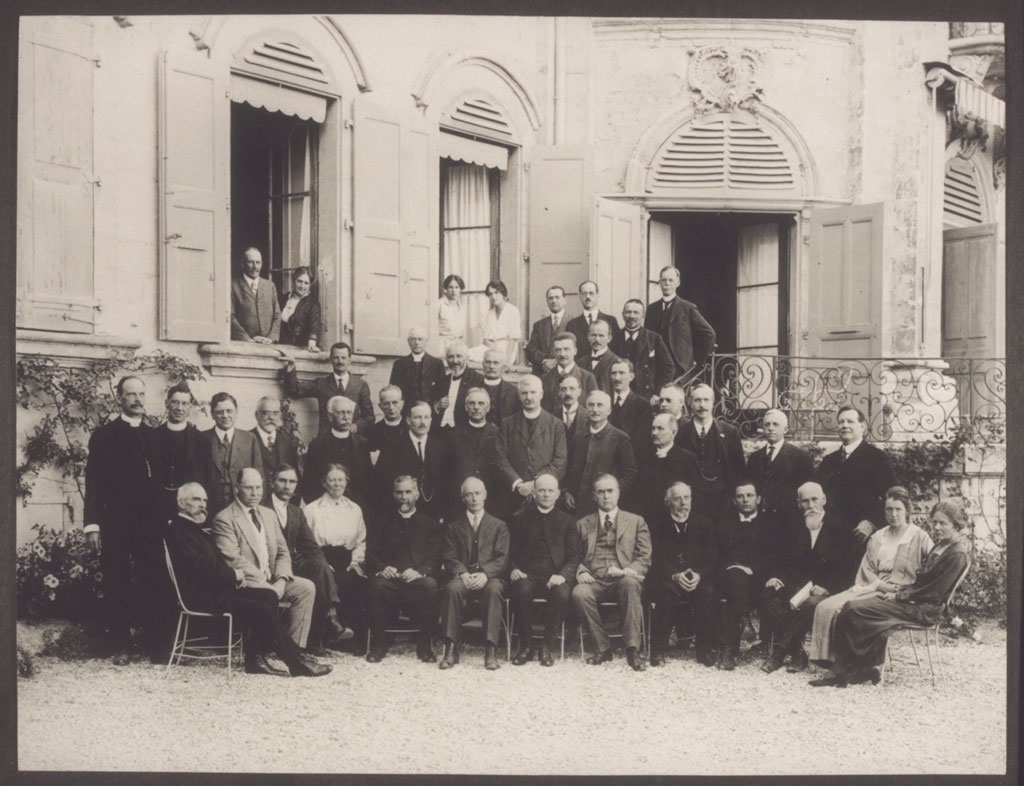
The international line-up of the missionary meeting at Crans, Switzerland, June 1920. Third row, second from right, with sun glasses: Friedrich Würz, Mission Inspector of the Basel Mission. BMA QS-30.033.0006.

Owing to its Pietist origins, the Basel Mission was from the start part of existing international networks in the protestant world. Numerous supporting associations in Switzerland and Germany contributed to the transnational Swiss-German organizational structure within the missionary society. Moreover, the Basel Mission maintained strong personal connections to German and British missionary circles as well as to Switzerland’s political and financial elites.

E-30.29.032

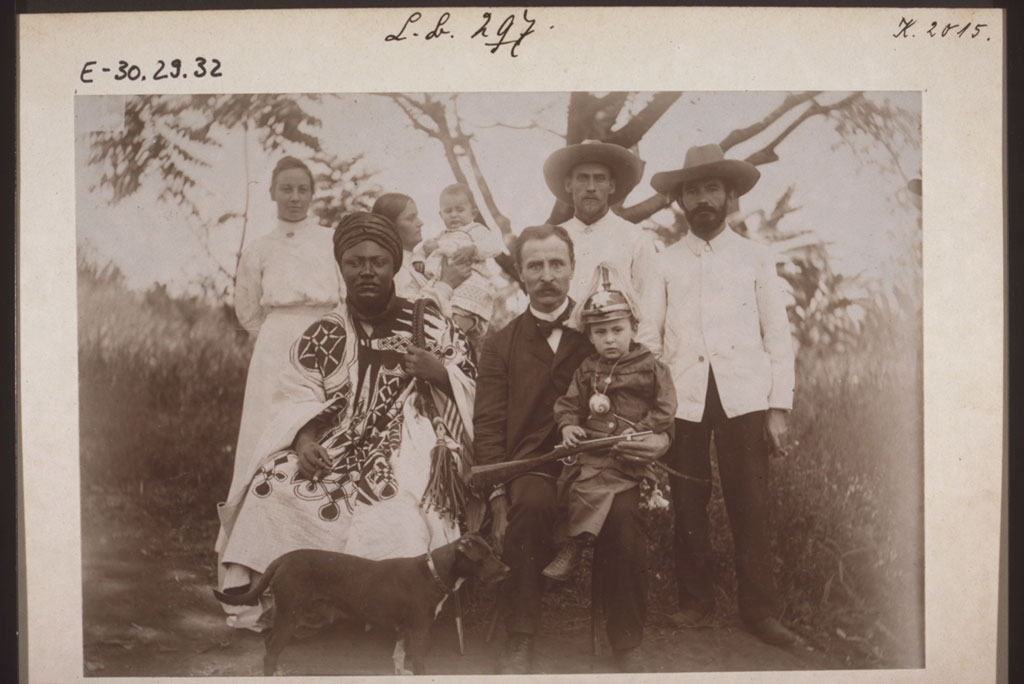
King Njoya of Bamun, Cameroon, with Basel missionaries in 1908. Note the little boy’s prussian spiked helmet! BMA E-30.29.032. (Also shown in Jenkins, Paul: A short History of the Basel Mission, Basel, 1989)

My project analyzes the role of this organization and its members in the protestant internationalism emerging in the late 19th and beginning 20th century. It is therefore based on an approach in social sciences, which emerged during the last decade and emphasizes the relevance of religious non-state agents and their networks in shaping a global civil society beyond religious frame-works. Consequently this is not a doctoral thesis situated in theology or the religious studies. I consider the Basel Mission to be a globally operating organization and a transnational organization in itself, connecting not only colony and metropolis, but also personal and institutional stakeholders within Europe and across the Atlantic ocean with religious, scientific, administrative or commercial background.
How did the Basel Mission use this contacts to overcome the crisis of the First World War? To what degree was the Basel Mission involved in the new surge of internationalization within the European missionary community after the war? Did interdependencies and mutual influences exist between religious and secular internationalism?

Readings being essential to my project are for example Rebekka Habermas: Mission im 19. Jahrhundert. Globale Netze des Religiösen („Mission in the 19th century. Global networks of the religious“) as well as Abigail Green and Vincent Viaene: Rethinking Religion and Globalization, in: Id. (eds.): Religious Internationals in the Modern World. Globalization and Faith Communities since 1750. Both texts point to the vast transnational spaces created by religious actors in general (Green and Viane) and by missionaries from the German-speaking countries in particular (Habermas) through correspondence, journeys and exchange forums and highlight their thereby emerging relevance for the history of internationalism.

My investigation allows to engage in research debates such as 1.) a methodological definition of the parameters reproducing a network 2.) the role of religious motivations in this context and interdependences with the non-religious sphere, and 3.) a widened perspective on Switzerland as a “colonial power without colonies” (Purtschert, 2012) as well as an important hosting country of international organizations.

Bibliography:

Abigail Green and Vincent Viaene: Rethinking Religion and Globalization, in: Id. (eds.): Religious Internationals in the Modern World. Globalization and Faith Communities since 1750. Basingstoke et. al. 2012, pp. 1-19.

Habermas, Rebekka: Mission im 19. Jahrhundert. Globale Netze des Religiösen, in: HZ 287 (2008), pp. 629‐679.

Mettele, Gisela: Weltbürgertum oder Gottesreich. Die Herrnhuter Brüdergemeine als globale Gemeinschaft 1727–1857. Göttingen 2009.

Purtschert, Patricia et al. (eds.): Postkoloniale Schweiz. Formen und Folgen eines Kolonialismus ohne Kolonien. Bielefeld 2012.

Sluga, Glenda: Internationalism in the Age of Nationalism. Philadelphia 2013.