The Bouligny family (1700-1830) was a family characterized by its trans-imperial relations among the French, Spanish, Ottoman and Swedish empires. Their social relations mixed diverse kind of links, giving place to different kind of networks which mixed in the same social institution, the family.
To research the Boulignys as a ‘global family’, I have been thinking and discussing about how to analyse the overlapping of networks. I realized that I should not think of them as differentiated layers but instead of this focus on precise moments in which these networks ‘clashed’ or contacted. For instance, if I want to understand how the Bouligny family worked as an entity in the global processes of commercialization and militarization during the 1750s to 1770s, it is a good idea to analyze those individuals who were at the same time in both networks, analyzing how this affected both spheres of the family.
From the unconference discussion about prosopography and networks, one of the main points which I get was that even though prosopography offers a huge amount of information, it is difficult to process it. Instead of analyzing complete network, it is better to have a general overview and then zoom in on specific actors and actions. Therefore, I will choose the intersection of the networks, with the aim of understanding the family as a complex active entity in global processes. This helps me to realize that reconstructing the Bouligny family’s networks is not an end in itself, but a tool to dig into my research question and primary sources.
Another thing that I will bring to my research after this summer school are the questions related with temporality and visualization. We have been dealing with diverse questions and discussions around how to work with short-term periods, but how to work with long-term periods such as the Bouligny family? For the moment, visualization is only a screenshot at a specific time and it does not help me to capture the evolution of my research. In relation with it, how important is visualization for my research? Visualization should not be a simple esthetical element but a tool for the research.
In conclusion, after this summer school, I intend to incorporate what I learned into the tools that I have already used in order to make more efficient my data base and my visualization software.

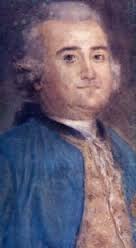 of European University Institute of Florence (EUI), where I have a research project entitled Interaction between “Levants”. The Bouligny family case and Mediterranean Social Networks in the 18th Century Global System. I obtained my bachelor degree in History at the Universidad Autonoma de Madrid (2007-2012), with one year Erasmus grant in M.E.T.U (Ankara), and a M.A in History at the Universidad Pablo de Olavide, Seville (2012-2014).
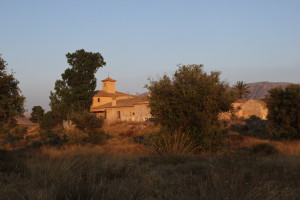 My P.h.D projects investigate the existence or not of ‘global families’ during the Early Modern Era by using the Bouligny social and family networks. This family which started as french emigrated merchants in the Spanish Mediterranean port of Alicante changed its location, work and social strata by holding administrative appointments from 1770s onwards and inserting its members in their respectives local realities. How did this take place? Can we see families as a new approach to understand history from a global perspective? Briefly, the objective of my P.h.D project is to understand the Bouligny family in its global context along the 18th century: their internal and external social links, their personal conception of the space, and the possibilities of the family history for global and transnational history.
Recent Comments