My doctoral thesis focuses on the institutional policies and practices of child placement between 1945 and 1980 in the German part of Switzerland. With respect to its legal, social and academic contexts, the research question is how outplacement functioned in care homes and foster families in Switzerland between 1945 and 1980. The objective is to analyse the placement policies, the practices of exemplary care homes, and the role of medical expertise in the decision process. The issue of outplacement in Switzerland ties into newer research in contemporary history and social sciences, which emphasize the exclusionary effects of modern welfare states. It should be noted that there are different perceptions of what is a welfare state and that the concept of the welfare state is itself subject to historical change. Traditional research emphasizes the importance of nation and the nation building process for the differentiation of the welfare state. Newer research focuses increasingly on the „new spatial politics of social protection“, which break down national boundaries. This innovative perspective in the historiography of the welfare state is closely linked to recent research in historically-informed sociology and political science on the influence of federalism for the development of the Swiss welfare state. Characteristic for the welfare state of Switzerland is its highly federalized system, in which welfare, education, and legal policy is largely a cantonal responsibility. It is only in specific cases, albeit an increasing numbers, that national rules and regulations are imposed. This federalist structure result on cantonal level in a difference conception of welfare, education and legal frameworks, what emphasizes the importance of the regional dimension of the politics of the welfare state.
Here I would like to focus on outplacement as an instrument of the development of welfare state. Under consideration of what Raphael Lutz calls „Verwissenschaftlichung“ (scientization) of the social“, I argue that an important part for the development of the modern welfare state has been social policy. In particular, the post-war period addresses changes not only in social policy but also in the care home sector. These changes are systemically linked to the accelerated social and institutional change after 1948, accompanied by the expansion of the welfare state. My research will focus empiricaly on two cantons „Kanton Basel-Stadt“ and the canton of Appenzell Innerrhoden in orde to locate the networks of outplacement in these two cantons. Besides a descriptive view on the involved networks, I pursue an actor-orientated perspective, in order to analyses how the various actors are connected, which are their influence on the outplacement-policy and -practices and how their institutional mechanism functioned. .Stressing that the acquisition and transmission of social knowledge is based on academy, institutions and practices equally, I will emphasize the importance of analysis networks. Theoretically I take Michel Foucault and Bruno Latour into account in order to discuss whether the connection of the notion of dispositiv and the actor-network theory is possible or not.
In 2014 I earned my Master`s Degree in history at the University of Zurich with the master thesis „The Taubstummenanstalt (school for the deaf-mute) Hohenrain. Deafness and the Construction of Otherness (1847-1942)“. Since July 2014 I am employed as a research assistant in the Sinergia-Project „Placing Children in Care. Child Welfare in Switzerland (1940-1990)“ and I am as well a member of the Basel Graduated School of History. My motivation to participate in the summer school is to gain a new perspective on networks and transnational history.
My key-lectures are as follows:
Hubig, Christoph: Dispositiv als Kategorie, in: Internationale Zeitschrift für Philosophie, 1994, S. 34-47.
Latour, Bruno: Reassembling the social. An introduction to actor-network-theory, Oxford 2007.
Lessenich, Stephan, Die Neuerfindung des Sozialen. Der Sozialstaat im flexiblen Kapitalismus, Bielefeld 2008.
Raphael, Lutz: Die Verwissenschaftlichung des Sozialen als methodische und konzeptionelle Herausforderung für eine Sozialgeschichte des 20. Jahrhunderts, in: Geschichte und Gesellschaft 22, 1996, S. 165-193.
Schulz-Schaeffer, Ingo: Akteur-Netzwerk-Theorie. Zur Koevolution von Gesellschaft, Natur und Technik, in: Johannes Weyer, Soziale Netzwerke: Konzepte und Methoden der sozialwissenschaftlichen Netzwerkforschung, München 2000, S. 187-210.

 of European University Institute of Florence (EUI), where I have a research project entitled Interaction between “Levants”. The Bouligny family case and Mediterranean Social Networks in the 18th Century Global System. I obtained my bachelor degree in History at the Universidad Autonoma de Madrid (2007-2012), with one year Erasmus grant in M.E.T.U (Ankara), and a M.A in History at the Universidad Pablo de Olavide, Seville (2012-2014).
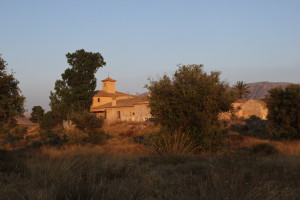 My P.h.D projects investigate the existence or not of ‘global families’ during the Early Modern Era by using the Bouligny social and family networks. This family which started as french emigrated merchants in the Spanish Mediterranean port of Alicante changed its location, work and social strata by holding administrative appointments from 1770s onwards and inserting its members in their respectives local realities. How did this take place? Can we see families as a new approach to understand history from a global perspective? Briefly, the objective of my P.h.D project is to understand the Bouligny family in its global context along the 18th century: their internal and external social links, their personal conception of the space, and the possibilities of the family history for global and transnational history.


Recent Comments