GRAINES Summer School, St Andrews, 7-10 June 2015

Month: May 2015 (Page 2 of 3)

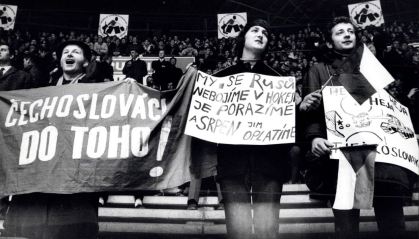
Sport, Ideology and Tradition

profimedia-0209969189-1200x684-1

My name is Tomas Vojacek, M.A student of modern history at Charles University in Prague. In my research, I deal with the sport as the phenomenon of the twentieth century and I am trying to analyze the socio-political dimension of sport in the context of the Cold War. I also work at the Olympic Studies Centre, which is a scientific part of the Czech Olympic Committee. I obtained my bachelor degree in History at Charles University in Prague, with one year exchange in Colchester (University of Essex). This April, I completed my research at the Olympic Archives in Lausanne in the framework of one year research grant awarded by Faculty of Arts.
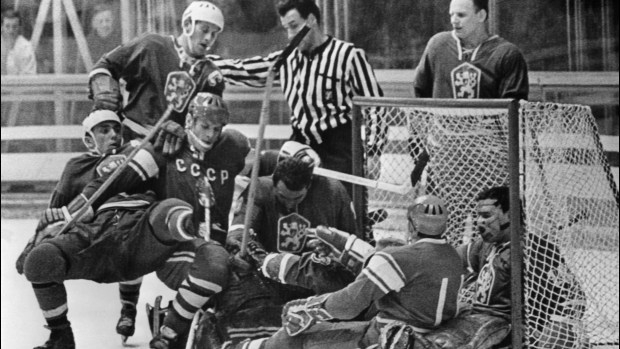
GRENOBLE, FRANCE - FEBRUARY 15:  Czech and Soviet ice hockey players are tangled in front of the Czech goal cage as the referee stops the play 15 February 1968 in Grenoble (French Alps) during the Winter Olympic match between the USSR and Czechoslovakia. The Czech team upset the defending Olympic champions 5-4.  (Photo credit should read STAFF/AFP/Getty Images)

GRENOBLE, FRANCE 

I partly dealt with the sport as a transnational phenomenon in my bachelor thesis The Miracle on the Ice (1980): A Contribution to the American-Soviet Sport Rivalry during the Cold War and I intend to expand this research within the framework of my dissertation: Sport, Ideology and National Identity in the Communist Czechoslovakia: Ice-Hockey in the Cold War Era 1956–1980. I also paid attention to transnational history in my study The Conquest of the Temple of the White Silence: British Sporting Traditions and Tennis as a National Sport, in which I focused on the transmission of the tennis tradition from the British Islands to the United States of America and its subsequent implementation.

My previous projects and planned dissertation are relevant to the study of networks, the theme of the Summer School. I presented a few cases in my article about the British tennis. To be more specific: the close cultural ties between Britain and the United States at the end of the nineteenth century helped to transfer the British tennis tradition on the opposite side of the Atlantic. Lawn Tennis, the sport of the British aristocratic circles, thanks to the extensive cultural exchange, became relatively soon a very popular sport in substantially more liberal United States.

The transnational aspect should be also included in my dissertation project. After the communist coup of 1948, ideology became a part of every aspect of the sporting life in Czechoslovakia. It led politicians to use the sport for the ideological purposes. The socialist sportsmen, who beat their imperial counterparts, were celebrated by state officers as national heroes. Anyway, the most of these athletes had never accepted the role of the “ideological warriors”. For this reason a very important part of my research will be an analysis of the propagandistic dimension of the sport, including the contrast how were successful Czechoslovak sportsmen understood on the both sides of the Iron Curtain. My goal is answer the question if ideologization of the sport had created a mutual socialist identity within the Eastern Bloc or on the contrary sport helped shaping national identity against communist regime?

My motivation to participate in summer school is present my research to other scholars and students, who could be interested in this topic and especially to gain new experiences and perspectives on transnational history and networks.

Key Reading: WAIC, Marek (ed.), In the Shadow of Totalitarism: Sport and Olympic Movement in the „Visegrád Countries“ 1945–1989, Praha 2014.

The collection of studies devoted to sport in “Visegrád Countries”. All aspect (political, cultural, social) connected with sport are well analyzed by outstanding Czech historians from Faculty of Physical Education.

Bibliography:

TÚMA, Oldřich – PROZUMENSCHIKOV, Michail – SOARES, John – KRAMER, Mark, The (Inter-Communist) Cold War on Ice: Soviet-Czechoslovak Ice Hockey Politics, 1967-1969, in: HERSHBERG, G. James (ed.), Cold War International History Work Project Bulletin, no. 69, February 2004.

RIORDAN, James (ed.), Sport Under Communism: The U.S.S.R., Czechoslovakia, The G.D.R., China, Cuba, London 1981.

SOARES, John, Cold War, Hot Ice: International Ice Hockey, 1947–1980, in: Journal of Sport History, vol. 34, no. 2, Summer, 2007.

NENDEL, Jim, The Cold War: Emerging From the Ice at the 1956 Cortina d’Ampezzo Winter Olympic Games, in: The Global Nexus Engaged, University of Western Ontario, October, 2002.

EDELMAN, Robert, Serious Fun: A History of Spectator Sports in U.S.S.R., Oxford 1993.

HARGREAVES, John, Sport, Power and Culture: A Social and Historical Analysis of Popular Sports in Britain, Cambridge 1986.
Two Case Studies on the Role of Institutional Networks in Politics of Space during the Twentieth Century: Producing Szekler and Scottish Characterology

About me

Târgu Mureș/Marosvásárhely, 2015

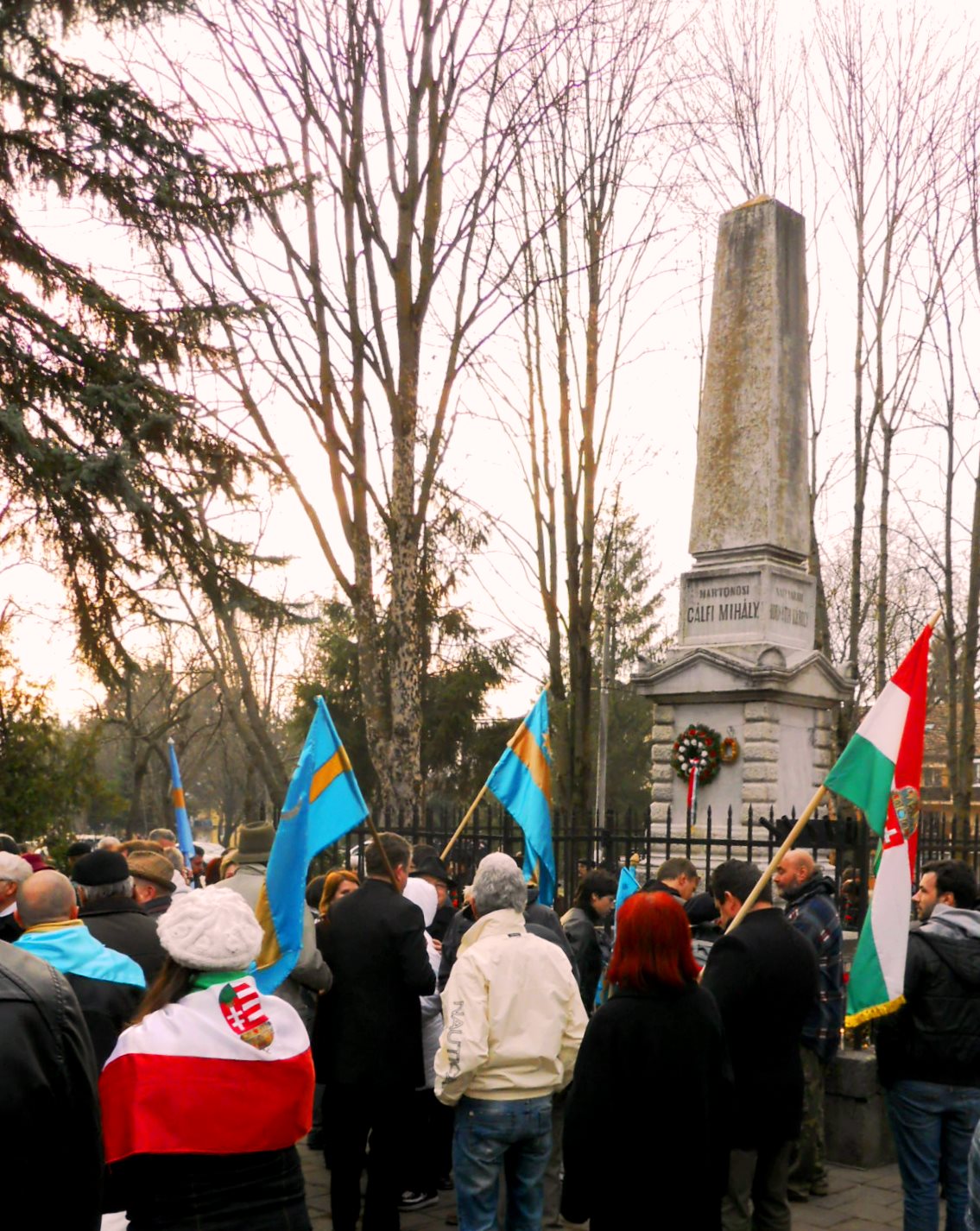
Târgu Mureș/Marosvásárhely, 2015: Commemoration of Szekler Martyrs Killed by Austrian Soldiers in 1854

I am first year predoctoral fellow of the Max Planck Institute for Human Development, Berlin and currently enrolled at the Technical University of Berlin. I also hold an MLitt (2011) from the University of St Andrews and an MA (2012) from the University of Bucharest, both in History. Generally, my PhD project concerns politics of space in mountainous regions during the twentieth century, especially the Hungarian-speaking enclave located in Transylvania, called the Szeklerland. Nevertheless, I plan to parallel similar uses of symbolic geographies in places like the Scottish Highlands, the Polish/Ukrainian Galicia and the Turkish Kurdistan. Very briefly, I argue that at the basis of local politics of space, such as claims for autonomy, lies an ideology of remoteness. According to this ideology, elements of isolated natural landscapes gain a moral value, providing a local meaning to politics. For more details on my preliminary outline: https://www.mpib-berlin.mpg.de/en/research/research-schools/imprs-moral-economies/projects/political-workings-of-the-ideology-of-remoteness


Summer school contribution

At the summer school I aim to present the role of Szekler and Scottish institutional networks, like museums and cultural associations, in the production of space imagery, as part of my doctoral research. Similarly to monuments and ceremonies, such institutions are instrumental in connecting a people to “their” land. A network-analysis perspective should illuminate the complex interactions between institutions that homogenize local characterologies.

Looking at the Transylvanian city of Cluj/Kolozsvár, Rogers Brubaker has argued that, there, Hungarian ethnicity is not territorialized. Rather, an “archipelago” of connected institutions – schools, universities, churches, literary circles – shapes Hungarian socializing in a life-world parallel to Romanian socializing. On these grounds, he implied a contrast between Cluj and the Szeklerland, where the local Hungarian-speaking community is historically rooted and strongly territorialized.

Nevertheless, I would argue that this “archipelago” is just as important in the Szeklerland, despite (or rather in addition to) its Hungarian-language territorial basis. Ever since the dissolution of Greater Hungary after WWI, Budapest supported an extensive institutional network aiming to rebuild the greater Hungarian nation, on a cultural and transnational level. Thus, up to the present, the Hungarian government has buttressed the Transylvanian Museum Association, churches and church figures, Hungarian political parties, the Association of Folk Literature, schools and universities. All these organizations furnish and represent the imagery of remoteness that enable Szekler elites to connect the Szekler people to the Szekler land.

Similarly, in Scotland, the National Trust for Scotland, the Celtic Twilight or museums like the National Museum of Scotland, although not benefiting from the support of a patron-state, like their Translyvanian counter-parts, continuously reshaped Scottish imagery – increasingly dependent on the myth of the Highlands. According to Cooke and McLean, archeological displays brought from the Celtic periphery to the Scottish Museum construct “a similarity of ways of life, in addition to constructing difference”, weaving “a symbolic thread that stretches back into prehistory, linking prehistoric Scots with the life experience of at least some contemporary Scots”.


Prospective gains from the summer school

Apart from interacting with all the participants and speakers –something I really look forward to – I hope to trace the process whereby the institutions outlined above developed such strikingly similar networks and features in the Szeklerland and Scotland. In other words, network-analysis should shed light on the transfers – of people, ideas and materials – from a common cultural baggage that assigned these institutions the mission of producing local imagery. Consequently, these bodies took part in the struggle to monopolize symbolic geographies, competing against or allied with outside forces. Whether Budapest, Bucharest or Edinburgh, centers of power continuously reshaped the function of these establishments, impacting the networks that linked them together in their endeavor to homogenize local characterology.


Suggested reading

Brubaker, Rogers; Feischmidt, Margit; Fox, John; Grancea, Liniana (2006). Nationalist Politics and Everyday Ethnicity in a Transylvanian Town. Princeton; Oxford: Princeton University Press.

This is a thorough study of contemporary inter- and intra-ethnic relationships concerning Hungarians and Romanians in the Transylvanian city of Cluj. Conducted over a period of 10 years, including extensive interviews, this research traces the main areas where ethnicity unfolds: workplaces, churches, public squares, politics, etc. Obviously, in investigating everyday ethnicity, it deals with networks; personal and institutional, national and transnational.


Bibliography

Cooke, Steven; McLean, Fiona (2002). “Picturing the Nation: The Celtic Periphery as Discursive Other in the Archaeological Displays of the Museum of Scotland”, Scottish Geographical Journal 118 (4), pp. 283–298.

Hitchins, Keith (2007). “Erdélyi Fiatalok: The Hungarian Village and Hungarian Identity in Transylvania in the 1930’s”, HStud 21 (1-2), 85-99.

Lorimer, Hayden (1999). “Ways of Seeing the Scottish Highlands: Marginality, Authenticity and the Curious Case of the Hebridean Blackhouse”, Journal of Historical Geography 25 (4), pp. 517–533.

Sturm, Tristan; Bauch, Nicholas (2010). “Nationalism and Geography: An Interview with Rogers Brubaker”, Geopolitics 15 (1), 185-196.

Török, Zsuzsanna (2001). “Planning the National Minority: Strategies of the Journal Hitel in Romania, 1935-44”, Nationalism and Ethnic Politics 7 (2), 57-74.

How to be a global player. The Basel Mission between faith, trade and internationalism, 1910 – 1925.

My name is Matthaeus Feigk, I’m a 2nd year PhD-candidate at the Basel Graduate School of History and the Institute for European Global Studies at the University of Basel. The research project I’m working on is entitled How to be a global player. The Basel Mission between faith, trade and internationalism. 1910 – 1925. I obtained my Bachelor as well as my Master degree at the University of Heidelberg (2013).

My PhD-project surveys the Basel Mission as a global stakeholder, respectively a participant in global networks during the investigation period from 1910 to 1925. This is from the World Missionary Conference in Edinburgh to the Basel Mission’s return to the mission areas it had lost during the First World War. Rooted in Germany as well as in Switzerland, the society had by 1900 become one of the largest German-speaking protestant missions. It did not only maintain mission areas from Western Africa to China but also operated through its trading company, which played a crucial role in the cocoa trade as well as in industrial weaving and brick manufacturing in India.

QS-30.033.0006

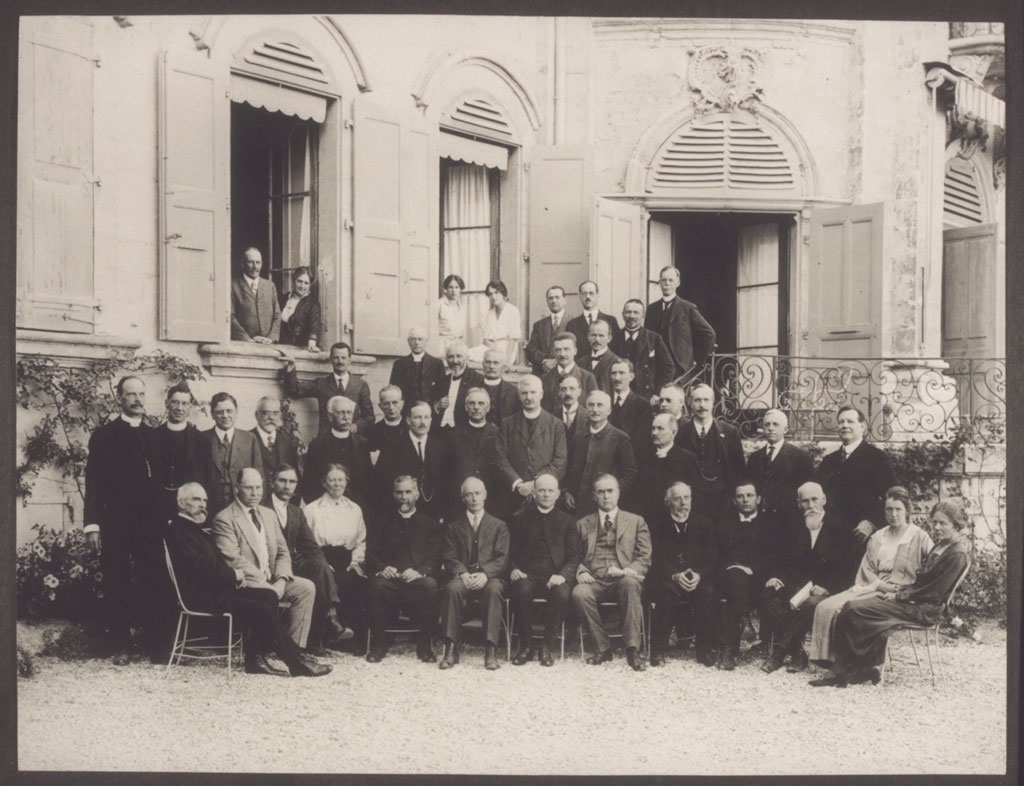
The international line-up of the missionary meeting at Crans, Switzerland, June 1920. Third row, second from right, with sun glasses: Friedrich Würz, Mission Inspector of the Basel Mission. BMA QS-30.033.0006.

Owing to its Pietist origins, the Basel Mission was from the start part of existing international networks in the protestant world. Numerous supporting associations in Switzerland and Germany contributed to the transnational Swiss-German organizational structure within the missionary society. Moreover, the Basel Mission maintained strong personal connections to German and British missionary circles as well as to Switzerland’s political and financial elites.

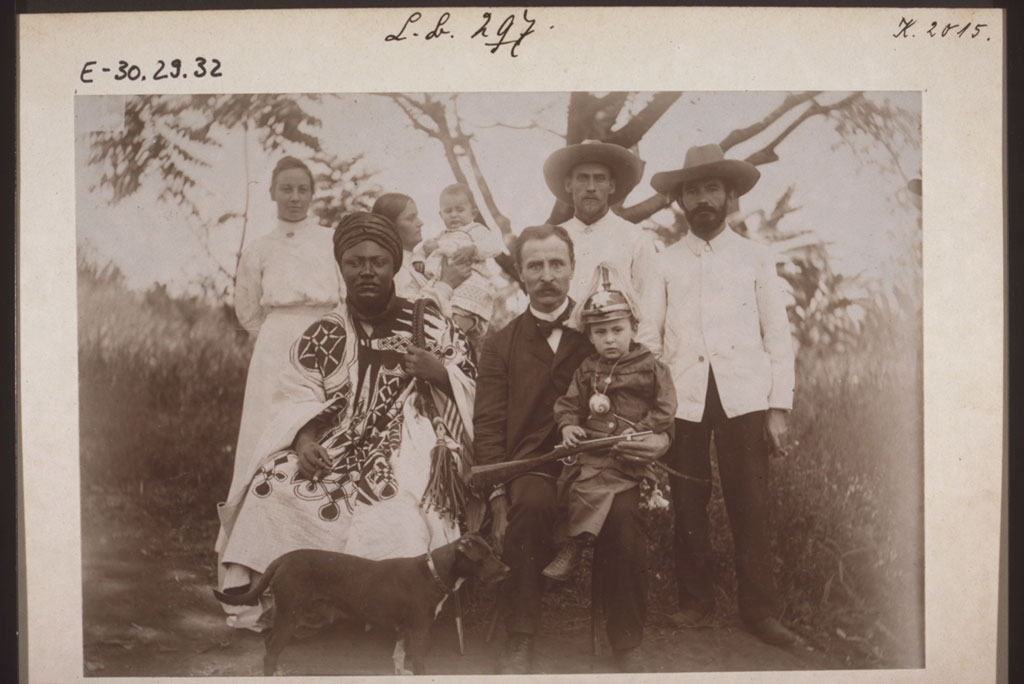
E-30.29.032

King Njoya of Bamun, Cameroon, with Basel missionaries in 1908. Note the little boy’s prussian spiked helmet! BMA E-30.29.032. (Also shown in Jenkins, Paul: A short History of the Basel Mission, Basel, 1989)

My project analyzes the role of this organization and its members in the protestant internationalism emerging in the late 19th and beginning 20th century. It is therefore based on an approach in social sciences, which emerged during the last decade and emphasizes the relevance of religious non-state agents and their networks in shaping a global civil society beyond religious frame-works. Consequently this is not a doctoral thesis situated in theology or the religious studies. I consider the Basel Mission to be a globally operating organization and a transnational organization in itself, connecting not only colony and metropolis, but also personal and institutional stakeholders within Europe and across the Atlantic ocean with religious, scientific, administrative or commercial background.
How did the Basel Mission use this contacts to overcome the crisis of the First World War? To what degree was the Basel Mission involved in the new surge of internationalization within the European missionary community after the war? Did interdependencies and mutual influences exist between religious and secular internationalism?

Readings being essential to my project are for example Rebekka Habermas: Mission im 19. Jahrhundert. Globale Netze des Religiösen („Mission in the 19th century. Global networks of the religious“) as well as Abigail Green and Vincent Viaene: Rethinking Religion and Globalization, in: Id. (eds.): Religious Internationals in the Modern World. Globalization and Faith Communities since 1750. Both texts point to the vast transnational spaces created by religious actors in general (Green and Viane) and by missionaries from the German-speaking countries in particular (Habermas) through correspondence, journeys and exchange forums and highlight their thereby emerging relevance for the history of internationalism.

My investigation allows to engage in research debates such as 1.) a methodological definition of the parameters reproducing a network 2.) the role of religious motivations in this context and interdependences with the non-religious sphere, and 3.) a widened perspective on Switzerland as a “colonial power without colonies” (Purtschert, 2012) as well as an important hosting country of international organizations.

Bibliography:

Abigail Green and Vincent Viaene: Rethinking Religion and Globalization, in: Id. (eds.): Religious Internationals in the Modern World. Globalization and Faith Communities since 1750. Basingstoke et. al. 2012, pp. 1-19.

Habermas, Rebekka: Mission im 19. Jahrhundert. Globale Netze des Religiösen, in: HZ 287 (2008), pp. 629‐679.

Mettele, Gisela: Weltbürgertum oder Gottesreich. Die Herrnhuter Brüdergemeine als globale Gemeinschaft 1727–1857. Göttingen 2009.

Purtschert, Patricia et al. (eds.): Postkoloniale Schweiz. Formen und Folgen eines Kolonialismus ohne Kolonien. Bielefeld 2012.

Sluga, Glenda: Internationalism in the Age of Nationalism. Philadelphia 2013.


Outplacement practices in the German-speaking part of Switzerland (1945-1980).

My doctoral thesis focuses on the institutional policies and practices of child placement between 1945 and 1980 in the German part of Switzerland. With respect to its legal, social and academic contexts, the research question is how outplacement functioned in care homes and foster families in Switzerland between 1945 and 1980. The objective is to analyse the placement policies, the practices of exemplary care homes, and the role of medical expertise in the decision process. The issue of outplacement in Switzerland ties into newer research in contemporary history and social sciences, which emphasize the exclusionary effects of modern welfare states. It should be noted that there are different perceptions of what is a welfare state and that the concept of the welfare state is itself subject to historical change. Traditional research emphasizes the importance of nation and the nation building process for the differentiation of the welfare state. Newer research focuses increasingly on the „new spatial politics of social protection“, which break down national boundaries. This innovative perspective in the historiography of the welfare state is closely linked to recent research in historically-informed sociology and political science on the influence of federalism for the development of the Swiss welfare state. Characteristic for the welfare state of Switzerland is its highly federalized system, in which welfare, education, and legal policy is largely a cantonal responsibility. It is only in specific cases, albeit an increasing numbers, that national rules and regulations are imposed. This federalist structure result on cantonal level in a difference conception of welfare, education and legal frameworks, what emphasizes the importance of the regional dimension of the politics of the welfare state.

Here I would like to focus on outplacement as an instrument of the development of welfare state. Under consideration of what Raphael Lutz calls „Verwissenschaftlichung“ (scientization) of the social“, I argue that an important part for the development of the modern welfare state has been social policy. In particular, the post-war period addresses changes not only in social policy but also in the care home sector. These changes are systemically linked to the accelerated social and institutional change after 1948, accompanied by the expansion of the welfare state. My research will focus empiricaly on two cantons „Kanton Basel-Stadt“ and the canton of Appenzell Innerrhoden in orde to locate the networks of outplacement in these two cantons. Besides a descriptive view on the involved networks, I pursue an actor-orientated perspective, in order to analyses how the various actors are connected, which are their influence on the outplacement-policy and -practices and how their institutional mechanism functioned. .Stressing that the acquisition and transmission of social knowledge is based on academy, institutions and practices equally, I will emphasize the importance of analysis networks. Theoretically I take Michel Foucault and Bruno Latour into account in order to discuss whether the connection of the notion of dispositiv and the actor-network theory is possible or not.


In 2014 I earned my Master`s Degree in history at the University of Zurich with the master thesis „The Taubstummenanstalt (school for the deaf-mute) Hohenrain. Deafness and the Construction of Otherness (1847-1942)“. Since July 2014 I am employed as a research assistant in the Sinergia-Project „Placing Children in Care. Child Welfare in Switzerland (1940-1990)“ and I am as well a member of the Basel Graduated School of History. My motivation to participate in the summer school is to gain a new perspective on networks and transnational history.

My key-lectures are as follows:

Hubig, Christoph: Dispositiv als Kategorie, in: Internationale Zeitschrift für Philosophie, 1994, S. 34-47.

Latour, Bruno: Reassembling the social. An introduction to actor-network-theory, Oxford 2007.

Lessenich, Stephan, Die Neuerfindung des Sozialen. Der Sozialstaat im flexiblen Kapitalismus, Bielefeld 2008.

Raphael, Lutz: Die Verwissenschaftlichung des Sozialen als methodische und konzeptionelle Herausforderung für eine Sozialgeschichte des 20. Jahrhunderts, in: Geschichte und Gesellschaft 22, 1996, S. 165-193.

Schulz-Schaeffer, Ingo: Akteur-Netzwerk-Theorie. Zur Koevolution von Gesellschaft, Natur und Technik, in: Johannes Weyer, Soziale Netzwerke: Konzepte und Methoden der sozialwissenschaftlichen Netzwerkforschung, München 2000, S. 187-210.


Self-organization of unemployed persons in Switzerland since the 1970s: social movement and securing networks

The topic of my dissertation is the formation and development of the movement of unemployed since the 1970s in Switzerland. Therefore I am analyzing five committees of unemployed persons: three in the French part of Switzerland and two in the German part. The formation of these committees was strongly related with welfare policies and the general economic situation: After the introduction of the automatic cession in the unemployment insurance first organizations of unemployed were formed, activation measures forced them to professionalise their consulting and occupational structures, and when the unemployment rate was high they could mobilise thousands to protest on the streets and gained a national referendum.

My aim is to study the constitution of a social group in the course of changing welfare policies and the transformations of labour. The actor’s perspective allows a broader sight on unemployment and also includes people depending from welfare benefits and precarious workers. The political discourse and the visible protests as well as the securing function of these organizations shall be analysed. Both include the formation of networks: Manifestations on the European and the Swiss national level made networks between different countries and regions visible. The principle was that people marched from their regions to a common point where a big manifestation took place. Appeals for manifestations were posters with a map connecting different places. To clarify the protest forms, an analysis of interorganizational networks on a national and an international level is necessary.

Through self-organized occupation and consulting structures on a local level, the unemployment organizations can be seen as securing networks on an individual level. To find new ways of working and securing forms the committees formed their own networks, for instance barter communities. The analysis of these self-created networks enlightens the experimental character of the movement and that political activity hasn’t been restricted on street protests, lobbying or publicly visible actions.

Methodologically in my doctorate thesis, I don’t want to focus only on a network analysis, but also on a reconstruction of identity, subjectivity and representations.

Biographical sketch

My name is Anina Zahn. After having studied history and philosophy in Fribourg (Switzerland) and Zurich and completing several internships in the field of migration and an archive I started in January 2015 my dissertation about the unemployment movement at the university of Basel. Already after some months in the archives I recognised that networks within the unemployment movement are very important, something I didn’t expect at the beginning. My motivation to participate on the GRAINES Summer School is to sharpen my understanding of the notion network and know about theories and instruments that help me to analyse interconnected movements and actors in the unemployment field. I would like to share a short presentation on the use of international, national and local networks as a political strategy of social movements using the example of the organization of unemployed of Basel. For my presentation, I want to present you empirical recognisable networks, rather than interconnected discourses. Also I will focus on movement networks, and not on individual mobilisation networks or connections with the State, parties or syndicates.

Readings

That social movements are networks is a very common definition. But I haven’t found very inspirational literature for my own project yet. Many articles are treating networks as recruitment or mobilisation resources on an individual level, which is not the focus of my project. The article collection “Social Movements and Networks. Relational Approaches to Collective Action.” edited by Mario Diani and Doug McAdam (2003, Oxford University Press, 348 p.) gave me an idea of methodology, approaches and the necessary terms and definitions. Especially Mario Diani’s article “Networks and Social Movement. A research Programme” in the book mentioned before convinced me that a network analysis can be very fruitful for my project as it approaches social movements in a more dynamic way. He describes how network approaches are not just treating movements as aggregates of events or actors, but are analysing the connectivity of events and identity dynamics. He argues that this approach needs to consider, that the distinctiveness of social movements from other collective actions is their network character.

Bibliography:

Diani, Mario: Introduction: Social Movements, Contentious Actions, and Social Networks: ‘From Metaphor to Substance’? In: Diani, Mario; McAdam, Doug (ed.): Social Movements and Networks. Relational Approaches to Collective Action. Oxford University Press, New York, 2003. P. 1-18.

Diani, Mario: Networks and Social Movements: A Research Programme. McAdam, Doug: Beyond Structural Analysis: Toward a More Dynamic Understanding of Social Movements. In: Diani, Mario; McAdam, Doug (ed.): Social Movements and Networks. Relational Approaches to Collective Action. Oxford University Press, New York, 2003. S. 299-319.

Giugni, Marco; Berclaz, Michel; Füglister, Katharina: La politique contestataire en Suisse. Etat-providence, opportunités et revendications politiques. 2014, Editions Seismo, Zürich und Genf.

McAdam, Doug: Beyond Structural Analysis: Toward a More Dynamic Understanding of Social Movements. In: Diani, Mario; McAdam, Doug (ed.): Social Movements and Networks. Relational Approaches to Collective Action. Oxford University Press, New York, 2003. S. 281-298.

Marchart, Oliver: Die Prekarisierungsgesellschaft. Prekäre Proteste. Politik und Ökonomie im Zeichen der Prekarisierung. transcript Verlag, Bielefeld 2013.


A “New” Big Science?

My project focuses on European large-scale research in the post-Cold War. Did European big science change after the end of the cold war? And if yes, how and to what extend? While some scholars treated big science as an exclusive feature of the Cold War, it did not vanish away with its end. Seemingly echoing Alvin Weinberg’s words from the early 1960s, “Big Science is here to stay”, a widespread sense emerged among those studying big science that large-scale research is a seemingly enduring phenomenon of the 20th and 21st century, but it changed throughout the last decades.

The notion of big science is still elusive. Discussions frequently centre on What makes big science a particular way of doing research? and To what extent does it differ from other, smaller research projects? To bring some clarity to this fuzzy conceptual framework, I may introduce the notion of big science laboratories. Although it does not appear as a truly innovative idea, it may shed systematic light on the understanding of big science as well as it may help me to structure my conceptual as well as empirical work. For those who have never heard before of big science, but would like to gain a first impression, I recommend the readings from John Krige (2003) and Olof Hallonsten (2014) (see below).

Big science laboratories (as I understand them) have a massive material centrepiece – such as accelerators or light sources. They are geographically identifiable locations where scientific practice and materiality are physically co-located, but access is limited. The spatial distinction between inside and outside the laboratory is in some cases also an epistemological one: Karin Knorr Cetina for instance regards laboratory work in general as a detachment of objects from their natural, temporal and territorial regimes that she terms “enculturation”. Laboratories do not stage phenomena, but manipulate them. However, a general epistemological distinction between internal and external factors that bear independently upon the course of science is an unproductive way of analysis. These laboratories look like fenced-off scientific enclaves, but politics have quite real material, practical and discursive dimensions in these spaces.

I have been trained in political science / international relations (IR) and sociology. I also started to study physics and a strong focus on experimental physics let me certainly fall in love with large-scale experimental equipment. My project adopts a slightly different perspective as it has been so far the case for many big science studies. It focuses on the role of (international) politics arguing that to speak of European big science laboratories as entirely politicized is as much a naiveté as to speak of them as being politically neutral. While this is certainly nothing new for scholars of science and technology, it brings me to a conceptual middle ground for mutual learning between big science studies and IR theory.

While the study of big science is already widely spread among various academic fields, the discipline of IR still lacks a conceptual repertoire to handle the dynamics of large-scale research in the international system. The relationship between international relations and big science seems , however, particularly obvious. Politics matter when large sums are invested and different cultures melt in collaboration, when Nobel Prize-worthy discoveries are at stake and research and development touch upon issues of national security, power and economic growth. The site selection processes as well as the necessary financial long-term contributions and commitments by the member states have ever been subject to heavy political contestation.

General methodological reflections in IR have often been too narrow and in many cases, science and technology are limited to exogenous, residual factors in the international system. Moreover, the exclusive focus on the state-as-actor is insufficient for a nuanced understanding of the big science-international politics nexus. Materials, scientists, experts and tools rather easily challenge traditional understandings of the state and its territorial limits of authority. They wave together global connections of in-kind contributions and expertise, transnational collaboration and commitment.

I read Bruno Latour, Andrew Pickering or Sheila Jasanoff (see below), but none of these approaches really satisfied me. I came across some papers that have been published from IR scholars trying to conceptually bridge IR theory and science studies (Mayer and Acuto (2015) or Herrera (2003), both have been really inspiring!). They adopted one of the classics in the history and sociology of science and technology: John Law’s and Thomas Hughes’ ideas on sociotechnical systems. Law’s paper On the Social Explanation of Technical Change. The Case of the Portugese Maritime Expansion (1987a) has really provoked an aha-moment and I strongly recommend reading it! I also recommend a second paper from Law that is quite similar to the first: Technology and Heterogeneous Engineering: The Case of Portuguese Expansion (1987b). And of course: Thomas Hughes’ Networks of Power (1983).

Their approach(es) provide a valuable middle-ground that enable both IR theory and big science studies to grasp and trace agency beyond formal political contexts and institutions. By neither favoring social nor technological explanations, it intends to treat science and technology as endogenous variables of the international system refusing instrumentalist and externalist perspectives. The sociotechnical approach also enables me to trace big science’s dialectic change throughout the last decades emphasizing how new forms were built upon the old without total replacement and to what extend there is both, novelty and continuity. Asking for the “how” instead of the “why” challenges IR’s most fundamental orientation: Understanding order instead of change.


Readings:

Hallonsten, Olof (2014). The Politics of European Collaboration in Big Science. In: The Global Politics of Science and Technology – Vol. 2, Mayer, Maximilian, Carpes, Mariana and Ruth Knoblich (eds.), 31-45, Berlin, Heidelberg: Springer.

Herrera, Geoffrey L. (2003). Technology and International Systems. In: Millennium. Journal for International Studies 32 (3): 559-593.

Hughes, Thomas P. (1983). Networks of Power. Electrification in Western Society, 1880-1930, Baltimore and London: John Hopkins University Press.

Jasanoff, Sheila (Hg.) (2006). States of Knowledge. The Co-Production of Science and the Social Order. London: Routledge.

Knorr Cetina, Karin (1999). Epistemic Cultures. How the Sciences Make Knowledge. Cambridge, Mass.: Harvard University Press.

Krige, John (2003). The Politics of European Scientific Collaboration. In: Companion to Science in the Twentieth Century, Krige, John and Dominique Pestre (eds.), 897-918. New York: Routledge.

Law (1987a). On the Social Explanation of Technical Change. The Case of the Portugese Maritime Expansion. In: Technology and Culture 28 (2): 227-252.

Law, John (1987b). Technology and Heterogeneous Engineering: The Case of Portuguese Expansion. In: The Social Construction of Technological Systems. New Directions in the Sociology and History of Technology, Bijker, Wiebe E., Hughes, Thomas P., and Trevor J. Pinch (eds.), 111-134, Cambridge, MA: MIT Press.

Mayer, Maximilian and Michele Acuto (2015). The Global Governance of Large Technical Systems. In: Millennium. Journal of International Studies 43 (2): 660-683.

Pickering, Andrew (1995). The Mangle of Practice. Time, Agency, and Science. Chicago: University of Chicago Press.


Punk Rock

My name is Ondřej Šmigol and I am currently studying modern history at Charles University in Prague. In my research I focus on the post-war British history, especially on the 1970s and 1980s. For my bachelor’s thesis I have written about the miners’ strike of 1984-5. Currently I am researching the punk movement and how it influenced the politics of the Thatcher era.

For my next project, I wanted to do something which was not a straightforward political history. I decided to investigate how punk was formed and grew after the Sex Pistols were founded in 1975, how the ideas of punk resonated in society and if they played any role in the national politics. I am testing my theory that the punk movement was not an absolute opposite of Thatcherism, but actually had a several similar viewpoints. Such as the reliance on the individual. This may have led some punks to vote for the Conservatives.

Especially the first part, founding of punk, is relevant to the study of networks, the theme of the summer school.  I have come to a conclusion British punk was created by a very small group of people, a band concentrated around 430 King’s Road shop. These people formed the punk ideas, sound of punk music and invented the punk look. They also managed the early punk groups. This entourage formed the nucleus of the punk movement. They inspired new punk bands, alternative punk centres in Manchester and Liverpool and attracted tens of thousands of fans.

The transnational aspect should not be overlooked. First true punk bands sprung up in the United States and inspired Malcolm McLaren, proprietor of the 430 King’s Road Shop, to recreate it in Britain. He and his associates created punk as it is understood today and in turn influenced the American scene.

For the summer school I would like to present my research, especially from the aspect of networks, as I have briefly outlined above. I would explore the problematics more deeply. It would focus on the creation of British punk and the people involved. It would also explore the relationship between the American and British scenes.

Key reading: Jon Savage, England’s Dreaming: Sex Pistols and Punk Rock, London 1991.

A seminal work on punk in the 1970s. It explores the various aspects of the punk movement. The personalities behind punk, the bands and their music, the politics and ideas of punk, the social aspects of punk, it is all in there. It is especially useful for the study of punk networks, as it describes all the various relationships of the protagonists.

Bibliography:

Dominic Sandbrook, Seasons in the Sun: The Battle for Britain 1974-1979, London 2013.

A superb book on the 1970s. It covers political, cultural, sport and social history.

Dick Hebdige, Subcultures: The Meaning of Style, London 1979.

An essential book for the study of subcultures.

John Robb, The North Will Rise Again, Manchester Music City 1977-1996, London 2010.

An oral history of the Manchester music scene, in 1970s the main British alternative to London scene.

Female Friendship around 1900

My dissertation project focuses on the networks and connections of Lou Andreas-Salomé (1861-1937) — intellectual, author and one of the first psychoanalysts. In Biddy Martin’s phrase, she avoided the exclusionary mechanisms of the history of literature solely due to her relationships to “great men”. It is true that no work treating Lou Salomé makes do without referring to Friedrich Nietzsche, Rainer Maria Rilke and/or Sigmund Freud. At the same time, most descriptions — by her contemporaries as in present-day biographies — fall back on stereotypical patterns, and Lou Salomé is received as Nietzsche’s muse and lover, as a motherly figure for Rilke, as Freud’s disciple; or she is defamed altogether as men-devouring femme fatale. Academic literature on Lou Salomé mainly treats her literary and, less frequently, her psychoanalytic oeuvre; her life as an intellectual and her relationships have largely been left to biographers and other commentators.

Moving beyond these narratives I will read Lou Salomé along the paradigmatic lines of friendship: Borrowing from feminist historian Joan W. Scott, I see Salomé not as an examplary figure, but as a “historical marker”, where “crucial political and cultural contests are enacted and can be examined in some detail”. Centering around Lou Salomé, I want to pose the question how friendship can be an emancipatory practice for women. This question centrally entails tracing connections and networks of diverse kinds — flows of ideas, of letters, of emotions.

During the last weeks I have been looking for an approach to friendship both on a micro and a macro scale, i.e. how to reconcile an inquiry into Lou Salomé’s personal networks with a broader interest in the concept of (female) friendship.

Therefore, I have read up on Italian microhistorians, especially Edoardo Grendi and Carlo Ginzburg, and I have also, like Pablo Hernández Sau, stumbled upon Francesca Trivellato’s ”Is there a future for Italian Microhistory in the Age of Global History?”, which provides an good starting point for discussion. (Trivellato2011)

Besides, I have been thinking about whether to visualise those networks I intend to analyse and how I could possibly do it. I found some inspiration here — though, impressive and pretty as these charts and maps are, I am still not sure how much insight there is to gain from them. I’m looking forward to discuss questions like these in St. Andrews!

__________________
Before I went to Basel as a doctoral student just a few months ago, I studied history, political science and cultural studies at the Universities of Freiburg/Br., Leipzig and Zürich.

Travelling networks by Martin Schaller

Who I am

Hello and welcome to my first blogpost. My name is Martin Schaller. I am a PhD-candidate in Modern History at the University of St Andrews but currently living in Vienna.

In 2009, I commenced my studies in history and economics at the University of Vienna. After obtaining Bachelor degrees in both subjects I relocated to St Andrews in 2012 where I graduated with a MLitt in Modern History. The focus of my research is the outside perspective on the Habsburg Empire. I am examining British and German travel accounts to better understand how this huge entity in the middle of Europe was perceived and located during the 19th century – after all it was situated on the crossroads between East and West Europe. This is only a rough outline of my PhD-project but I am more than happy to discuss details during the Summer School.

A longer research period in Vienna allowed to concurrently work in the R&D-Department of the Austrian National Library, coordinating the Europeana Newspapers Project, a project that focused on newspaper digitization and its refinement by applying Optical Character Recognition. My involvement within the Austrian National Library facilitated a deeper understanding of the foundations necessary to allow Digital Humanities to work with historic material.

The research I am doing

For the Summer School I am preparing a small scale project that is aimed at clarifying some issues in my general research. Hence, what I am doing here should at some point feed into my PhD-project.

Traveller’s networks – textual networks

The notion of ‘networks’ often evokes the idea of researching the relationships between people but this is certainly only one form of networks. Equally important, though not that often in the centre of interest are connections between people and goods, the interconnection of different goods but also between objects in general.

To limit the topic to a manageable size I concentrate on British travel writers on the Habsburg Empire in the 1820s and 1830s. The genre of travel literature on continental Europe was thriving at the time. Influenced by late Enlightenment ideas of knowledge accumulation and progress, the genre kept the agenda of collecting and distributing knowledge into the 19th century.[1] Besides technological and economic development the political situation of the researched time period aided the boom. As a scholar remarked: “…years of Napoleonic war had whetted the public appetite for information and sketches of places so recently famous…”[2] In short, a lot of British travellers were on the continent, visiting also places not necessary found on traditional itineraries.

In the course of my research for the Summer School I realized that there are actually two types of networks relevant to understand travel and travel writing of the time: a more abstract type of intellectual network and a more tangible personal network. In the following lines I would like to describe both kinds of networks briefly.

Networks based on writings?

As any publication, travel literature was not only published but of course also discussed. Reviews, sometimes even reviews of reviews, appeared in newspapers and magazines across Great Britain commenting on each published travel account and thus fostering a discourse on the Habsburg Empire. But this process was certainly not unidirectional. German speaking audiences were highly aware of the ongoing discussions and had, despite official censorship, access to them. Thus by examining biographies, primary works and their reviews we are able to trace a highly interesting net of responses and counterstatements across borders. This net allows for valuable insights into transnational links that formed certain ideas about a foreign entity.

A more tangible network is the result of the social practice of travel. 19th century travellers faced a problem also known to modern day travellers who voluntarily relinquish modern tourism infrastructure: How to get in touch with locals? The answer of the time was the letter of recommendation. A contemporary traveller furnished with appropriate letters was able to unlock doors and enter circles otherwise closed. This was also an important possibility to acquire new information that would later help to sell the book or render it controversial and thus have a direct impact on the narrative these travel writers were producing eventually.

What I can offer

I see myself as a person who knows both the ‘user’ and the ‘producer’ side in Digital Humanities. I can give insights in technologies that are used in creating the digital content from historical documents (first and foremost OCR) that allow for visualisation and further analysis by researchers. However, my main motivation is to meet and discuss with researchers and students applying a transnational view on History.

Bibliography:

As outlined above, my research is much more focused on transnational history than on the study of networks. Therefore my selected works have a bias towards the former. However, I am convinced that these articles and books are also relevant to understand networks across borders.

Scales do matter; I my opinion also for the study of networks. Therefore I’d like to suggest the following, more theory driven article, which examines the relationship between scales and transnational history: Bernhard Struck, Kate Ferris and Jacques Revel, Introduction: Space and Scale in Transnational History, in The International History Review, 33:4, pp. 573-584.

A good overview of traveling and travel writing as a research topic as well as the social practice (and hence networks) of travel gives: Hagen Schulz-Forberg, European Travel and Travel Writing: Cultural Practice and the Idea of Europe in: Hagen Schulz-Forberg (ed.), Unravelling Civilisation: European Travel and Travel Writing (Brussels 2005), pp. 13-42.

On transnational history and my own research, I see two works as really important: Larry Wolff, Inventing Eastern Europe: The map of civilization on the mind of the Enlightenment (Stanford 1995) and Maria Todorova, Imagining the Balkans (New York, Oxford 1997).


[1] Casey Blanton, Travel writing: The Self and the World (New York 2002), pp. 3-4, 15.

[2] Helen Heineman, Mrs. Trollope: The Triumphant Feminine in the Nineteenth Century (Athens 1979), p. 121.

The Bouligny Family (1700 – 1830). Pablo Hernández Sau

My name is Pablo Hernández Sau, 1st year PhD researcher at the Department of History and CivilizationFrancisco Bouligny Paret (Alicante, 1736 - New Orleans 1800). Brigadier in  the Spanish Regiment of Luisiana of European University Institute of Florence (EUI), where I have a research project entitled Interaction between “Levants”. The Bouligny family case and Mediterranean Social Networks in the 18th Century Global System. I obtained my bachelor degree in History at the Universidad Autonoma de Madrid (2007-2012), with one year Erasmus grant in M.E.T.U (Ankara), and a M.A in History at the Universidad Pablo de Olavide, Seville (2012-2014).
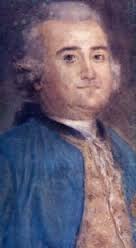
In the present moment, I am evolving a research focus in a family, the Bouligny family, between 1700 and 1830s. The Bouligny family members were settled in Marseille, Leghorn, Alicante, Madrid, Constantinople, New Orleans, Mexico, Naples, Granada, Barcelona, Valencia, Amsterdam, Stockholm and Copenhagen. A spread family whose social climbing took place between 1760 and 1800, so around the beginning of the 19th century, diverse Bouligny households inserted in local, regional and state socio-political realities on Madrid, New Orleans, Copenhagen, Paris or Corfu. However, at the same time they  developed cooperative actions along time and space.


There are some readings which are being basic in my research, especially those related to families studied from a global perspective. For instance, Emma Rothschild’s The Inner Life of Empires. An eighteenth century History or Francesca Trivellato’s The familiarity of strangersThe Sephardic Diaspora, Livorno, a Cross-cultural Trade in the Early Modern Period are excellent monographic studies about geographical spread and cooperative families.  In relation with this global perspective on family history research, I found quite important the reflections about the relation between macro- and micro- scales. This is the case of the Francesca Trivellato and Tony Andrade’s articles about ‘global microhistory’ or Bartolomé Yun Casalillas’ reflections about global history challenges.


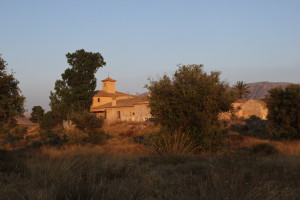
Lo Bolini (La Alcoraya, Spain)My P.h.D projects investigate the existence or not of ‘global families’ during the Early Modern Era by using the Bouligny social and family networks. This family which started as french emigrated merchants in the Spanish Mediterranean port of Alicante changed its location, work and social strata by holding administrative appointments from 1770s onwards and inserting its members in their respectives local realities. How did this take place? Can we see families as a new approach to understand history from a global perspective? Briefly, the objective of my P.h.D project is to understand the Bouligny family in its global context along the 18th century: their internal and external social links, their personal conception of the space, and the possibilities of the family history for global and transnational history.


My investigation on ‘global family’ concept allows to engage in different debates: firstly, the methodological difficulties of this study, specially how to relate micro- and macro- scale; secondly, the organic character of the family, in which multiple social realities coincided. Thirdly, the understanding of the role of commercial Diasporas in the developing of Early Modern global history, and their combination of formal and informal institutions and links. And last but not least, the insertion of Mediterranean commercial networks in the global flows and the self-conception of the Mediterranean Sea, which investigation is scarce at the present moment.


Bibliography:

Trivellato, Francesca. The familiarity of strangers:the Sephardic diaspora, Livorno, and cross-cultural trade in the early-modern period. Yale University Press. 2009

Rothschild, Emma The Inner Life of Empires. An eighteenth century history. Princeton University Press. 2011

Andrade, Tonio “A Chinese Farmer, Two African Boys, and a Warlord: Toward a Global Microhistory” Journal of World History v.21 – 4 (2010) pp. 573 -591

Trivellato, Francesca “Is there a future for Italian Microhistory in the Age of Global History?” Californian Italian Studies v.2 – 1 (2011)

Yun-Casalilla, Bartolomé “Localism, Global History and Transnational History. A Reflection from the Historian of Early Modern Europe” HISTORISK TIDSKRIFT. 127:4 (2007)


« Older posts Newer posts »