GRAINES Summer School, St Andrews, 7-10 June 2015

Author: Matthew Yilitalo

Representing transnational realities by connecting Relational Databases and GIS


Over the last three days, the Interconnected Conference and Unconference workshops placed an emphasis on several aspects of the digital humanities. Roberto Sala’s talk demonstrated the relevance of constructing relational databases in order to accurately trace networks. Konrad Lawson’s session on ‘Mapping’ stressed the importance of using maps effectively to represent transnational aspects of research. Traditional efforts to map the many histories of whaling have mirrored three historiographical perspectives to the subject: local history, national history and economic history. While each has its place, the result has neglected virtually all networks of interaction within this historical phenomenon. I desire to integrate the digital humanities into my project on 19th-century Dundee whaling so that I may map transmaritime whaling networks and transfers of knowledge.


However, mapping networks doesn’t come without its challenges. In some ways, GIS complicates the mapping of transnational issues. According to Ian Gregory’s article, ‘A Map is Just a Bad Graph: Why Spatial Statistics are Important to Historical GIS’ [Anne Kelly Knowles (ed), Placing History (Redlands, CA, 2008)], GIS can rarely present complex, multivariate maps that can be viewed by readers in an understandable way. Instead, GIS and its databases are best suited to support thematic univariate maps (such as chloropleths). Gail Langran suggests represented data relies on three components: space, time and theme (124). In this sense, most data themes and the space to which they are connected are largely derived from administrative zones tied to national systems. A paradox seems to exist here since GIS mapping databases rely on zones determined by the nation-state (and of course, these zones can shift with time) while the very nature of transnational topics defies the boundaries and spaces of these nation-based structures. Furthermore, transnational themes work complexly through space whether through correspondence, digital communications, the movement of goods and people or even direct meetings between people. For this reason, Ian Gregory advocates adding a spatial statistics dimension to GIS mapping as a viable work around for historians working across borders (126f). With regard to my topic, yet another challenge manifests itself with regard to chloropleth mapping in maritime environments. Whaling ships typically operated in peripheral, unregulated, and even unmapped regions, spaces that did not easily fall into nationally-defined administrative zones. For practical purposes, it would be easier to map whaling operations and contacts with points rather than in zones.


Here, Konrad Lawson and Roberto Sala have made important suggestions for incorporating relational databases and mapping into my transmaritime project. Maps are not always the best solution for representing networks. Sala suggests utilizing data tables (so long as the data does not skew reality), and Lawson includes other dynamic tools such as point-line charts. Instead of mapping the seasonal stop on whaling itineraries, a point-line chart strips away distractors and enables the project to prominently emphasize Dundee as the hub of numerous whaling networks that extend across a number industrial, economic and intellectual fields.


Day One Reflections: Rethinking Saunier’s scaled histories

During Monday afternoon’s session, Jakob Vogel and Alexander van Wickeren presented a group discussion question regarding Pierre-Yves Saunier’s approach to scaled histories. Saunier insists that traditional scaled histories are nested and hierarchical approaches which reinforce a ‘methodological nationalism’. He asserts that all historical scaling should be relational (hence, equitable) rather than hierarchical. Clearly, he supports transnational history at a micro, local, national or globe scale. But is Saunier also suggesting that local history simultaneously functions as global history? If so, this interpretation of scale accurately describes Dundee’s whaling efforts in the 19th century. This local industry operated within a transmaritime context with regard to geography as well as cultural, scientific, economic and environmental history. If Saunier is arguing for this point, then Dundee’s local-global whaling industry produced a subdued national scale of history.

Considering this, does Saunier’s scalar assertion necessarily fit all historical studies? Do instances exist in which a hierarchical local-national-global scale of history works more effectively than a relational perspective? What if there are instances in which traditional understandings of nationalism must be examined? For instance, take the issue of sport and Cold War politics in which countries like Czechoslovakia existed between two ideological superpowers. While an international game of hockey game was a local sporting event occurring in a specific arena and city, political authorities frequently appropriated results for propaganda purposes at any number of levels. Nationally, sports figures transformed into ideological heroes. At a transnational level, eastern or western blocs could leverage something as innocuous as a sport score to persuade people of the success of the victor’s own ideology and civilization and the failures of the other.

Tomas Vojacek & Matthew Ylitalo

Hunting Whales and Making Knowledge: Dundee’s Globalisation through Trans-Maritime Whaling, 1750-1914

My name is Matthew Ylitalo, and I am a first-year PhD student in Modern History at the University of St Andrews. Previously I studied in the United States before completing an MLitt at St Andrews. At Interconnected, I am keen to discuss processes by which one may identify existing networks ‘hidden’ within written sources and documentation. Furthermore, I desire to understand better how others are applying transnational and spatial history theories and methods to problems in their research.

Over the last fifty years, authors worldwide have contributed to a vast literature on whaling in the

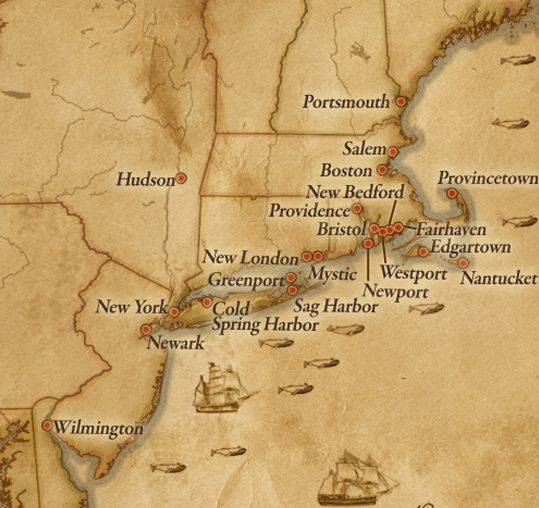
Whaling Map East Coast US

Whaling Map East Coast US

long nineteenth century. Many of these narratives are written from an almost exclusively national and/or economical perspective. This circumscribing approach has effectively relegated whaling narratives to the realm of niche histories mostly cut-off from the local-global frameworks which brought it about. As a result, the participation of non-Western and remote actors in transnational whaling networks, the globalising roles of artisan industries, and the resulting production, circulation and refashioning of knowledge are not well understood. My research endeavours to identify these transmaritime relationships, analyse its transfers and epistemic migrations and assess what impact these exchanges had on Dundee, Scotland, in comparison to other transatlantic whaling ports.

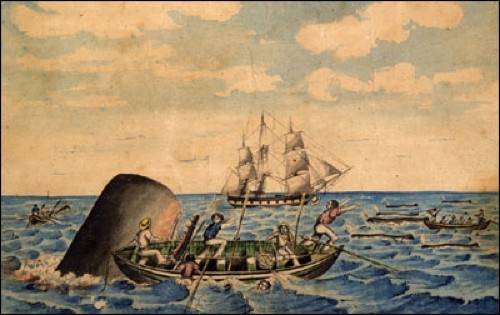
Whaling Ship

Whaling Ship

Many towns throughout coastal Scotland engaged in whaling during the nineteenth century. On a transatlantic scale, ports such a New Bedford, Massachusetts and later, Sandefjord, Norway far outstripped Dundee in the magnitude of their whaling operations. But while most whaling communities followed an ephemeral pattern of existence, which consisted of hunting whales intensively for several decades, falling into decline and then realigning to different locally- or regionally-oriented commercial orbits, Dundee’s wooden whalers plied the icy waters of the ‘northern fishery’ for over 160 years. During that time, Dundonians established strong economic and cultural links with Shetlanders, Newfoundlanders and the Inuit of the Arctic. The Scottish diaspora seems to have extended these connections even further to Australia, New Zealand and Canada. By the late-nineteenth and early-twentieth centuries, exploration committees of the ‘Heroic Age’ sought out Dundee’s whalers for support in polar expeditions. Furthermore, prominent scientists from Dundee and St Andrews, such as Sir D’Arcy Wentworth Thompson, became influential figures within the whaling and scientific communities. Through the agency of its whaling crews, Dundee’s transmaritime interconnections between local experience and global structures not only helped materially shape today’s city, but also it laid planks for how modern polar science and environmental conservation would develop. Although never the geographical ‘the gateway to the North’, by the early twentieth century, Dundee, even with its whale trade flagging, could claim that in many respects, it was the ‘City of Discovery’ for knowledge of the polar regions.


Key subject-matter texts used in research:

Burnett, D. Graham, The Sounding of the Whale: Science and the Cetaceans in the Twentieth Century (London, 2012).

Headland, Robert, ‘Geographical Discoveries in Antarctica by the Whaling Industry’ in Basberg, Bjørn; Ringstad, Jan Erik and Wexelsen, Einar (eds.), Whaling and History: Perspectives on the Evolution of the Industry (Sandefjord, Norway, 1993).

Jackson, Gordon, The British Whaling Trade (London, 1978).

Latour, Bruno, Reassembling the Social:  An Introduction to Actor-Network Theory (Oxford, 2005).

Russell, Lynette, Roving Mariners:  Australian Aboriginal Whalers and Sealers in the Southern Oceans, 1790-1870 (Albany, 2012).


Tomlinson, Jim, Dundee and the Empire: ‘Juteopolis’ 1850-1939 (Edinburgh, 2014).

Tønnessen, J. N. and Johnsen, Arne O., The History of Modern Whaling, trans. R. I. Christophersen (Berkeley, 1982).


Key transnational, spatial and transcultural readings and articles of interest:

Baker, Alan R. H., Geography and History: Bridging the Divide (Cambridge, 2003).

Clavin, Patricia, ‘Defining Transnationalism’, Contemporary European History 14/4 (2005), 421-39.

Clavin, Patricia, ‘Time, Manner, Place: Writing Modern European History in Global, Transnational and International Contexts’, European History Quarterly 40/4 (2010), 624-640.

Iriye, Akira, Global and Transnational History:  The Past, Present, and Future (Basingstoke, 2013).

Tyrrell, Ian, Transnational nation : United States history in global perspective since 1789 (Basingstroke, 2007).