There is Always More to Learn

Im finding it harder and harder to find something interesting to write about, or even speak about for that matter. As days start blending into weeks, I feel as though Im beginning to lack topics of conversation at the dinner table, that the silence between both the people I’m with and the people whom I speak with online has stretched and that no one can go for too long without mentioning the harsh reality of the world we are living in right now. See, i’ve done it myself, I’ve mentioned it without even saying its name. 

I have to say that I am glad I am a university student right now. I have no excuse to be bored because I have essays that need to get written, readings that need to get read and once i’m done with that there is always more that I can dive into. And yes, motivation is hard to find, but there is no excuse for boredom as there is always more to learn. This week I want to write about one of the readings that Bernhard put up, which reminded me of that exactly, there is always more to learn. 

‘Western Perversions’ at the Threshold of Felicity: The European Prostitutes of Gala Pera (1870-1915) by Malte Fuhrmann, was a reading about a topic that had never previously crossed my mind. It speaks about an international network of prostitution entered around Constantinople in the late 19th to early 20th centuries, otherwise known as ‘girl trafficking’ or ‘the white slave trade’. Now, I could have guesses that there were prostitution networks at the time (some of which we sadly still have today), but what had never crossed my mind where its relations to race, empire, nationhood and religion, as Fuhrmann eloquently illustrates. In this case, the trade of European girls in the Ottoman Empire was very much a question for the state, as several of these girls originated from the Habsburg Empire, Russia, Romania, and several other central and Eastern European countries. 

The demand for these European women lead to a vision of the European woman as being morally loose, or lacking female honour. Because of this, eve though Ottomans had made an effort into modernisation which included adopting certain ‘Western role models’ there grew a problem of othering in terms of European women and what they saw as ‘their women’. This in turn impacted the several European women who were living in the Ottoman Empire not as prostitutes, but as teachers, nurses and governesses for the upper class. But even the reputation of their chasity, and by large the reputation of European women was at stake, leading to a desperate attempt by the Austro-Hungarian empire to eradicate this trade and prostitution and thus restore the honour and reputation of the Empire in the eyes of the Ottomans. 

What I thought was particularly interesting about this is how prostitutes, which were considered to be the lowest of the lowest in regards to social standing (not only due to their economic conditions but because they were women, and more specifically morally loose women or women with no honour) could create a such an anxiety for the Austro-Hungarian empire in which they felt their reputation was being attacked too. This leads to the idea that a man’s honour was dependant upon a woman’s honour, and thus, in a bigger scale, a nations honour was dependant upon its women’s honour. 

The rejection of transnational connections

We’ve talked a lot over the course of the semester about the establishment and maintenance of transnational and global connections, but recently during my research for my project I have come across cases of the opposite: the rejection, dismissal and manipulation of such connections. 

Indeed, in Northern Ireland, the most vocal loyalist community, led by Reverend Dr. Ian Paisley, actively denied any real connections between the discrimination against African Americans in the Deep South of the United States and that experienced by the Catholic population in Northern Ireland, instead suggesting that such comparisons were fabricated by the Northern Irish civil rights movement leaders ‘in order to dupe ordinary Catholics out onto the streets in a deep conspiracy concocted by the remnants of the IRA and agents of international communism’.[1] (Indeed, he was rejecting one transnational connection that supplied favourable connotations to the Northern Irish movement, given widespread public support for the US civil rights movement, in favour of another that instilled fear and doubt about their politics and motives.) Paisley and his followers, in what has subsequently been recognised as an exaggeration of the threat they posed to loyalist hegemony, recognised the Northern Irish civil rights movement as an overtly nationalist plot that was only employing nonviolence as a guise for their true militant republicanism, and thus Northern Ireland had to be protected from their actions. 

In this week’s reading by Katrin Steffen & Martin Kohlrausch, we can see another example of the detrimental effects and limits of transnational connections, largely as a result of politics. Jan Czochralski, in his work in both Poland and Germany, participated in a transnational network of experts that, when it became embroiled in the politics of the period, became unfeasible, and Czochralski’s specific circumstances of working across enemy lines resulted in accusations of aiding the enemy in their production of materials for warfare. Czochralski was criticised on account of his transnational connections with Germany, at a time when Germany were the political and military enemy of Poland, much like the Northern Irish civil rights movement was vilified by Paisley and his followers as a result of their supposed communist and republican motives, beliefs contrary to the contemporary political structure. 

[1] Brian Kelly, ‘Transatlantic Affinities: King, Non-Violent Civil Disobedience and the Failure of Civil Rights Agitation in Northern Ireland’, p. 12

Christ in Concrete

I’ve been reading a fascinating book by the Italian-American author, Pietro di Donato. Its highly unusual language and foreign-sounding syntax, which seemed to blend multiple styles and registers into a composite narrative voice, intrigued me from the start. That, combined with the themes of migrant labour and diasporic identity made me want to read around the subject and learn about the history of this novel’s production, translation, circulation, and transnational significance.

Christ in Concrete was published in 1939 by Pietro di Donato – a second generation Italian-American whose experiences as a foreign worker on US soil informed the highly autobiographical content of his novel. It is both a testimony to the harsh lives led by migrants in twentieth-century America, and an ethnic narrative about ‘Italianness’ abroad. The surprising language of the novel wasn’t a stylistic choice, rather reflecting the multiple cultural influences the author was exposed to. Written in English, it nevertheless contains Italian expressions left untranslated, and has therefore been categorised by critics as a heterolingual work. As one critic put it, the language is what forms the bridge between the ‘lost and mythical Italy, and the real but never realised America.’ This novel is a curious case; translation was a part of its production, not just of its circulation. As a work of literature, it hangs somewhere in between the American and Italian canons, failing to fully qualify for either, occupying the niche category of ‘minor literature’ – a deterritorialised form of art. By relating the migrant experience of its author, both linguistically and content-wise, Christ in Concrete can be described as a transnational object that defines clear-cut cultural boundaries.

I was interested to note that the novel was subject to two different interpretations, both of which attempted to claim the work in service of a certain cause. The first of these interpretations labelled Christ in Concrete the ‘ultimate working-class novel’, focusing on the atrocious working conditions of manual labourers in 1930s America and adopting the novel for the proletarian cause. Unsurprisingly, early Italian translations of the novel, conducted under Mussolini’s fascist regime, were determined to downplay this socialist interpretation. Di Donatio’s labelling as a ‘bricklayer-writer’ and ‘worker-as-artist’ therefore did not travel across the Atlantic to the author’s ethnic homeland.

The other interpretation focused on the ethnic origins of the novel, celebrating it as a mediation of Italian cultural heritage: a homage to ‘Italian greatness in distress’. It is also interesting to appraise Italian translations of the novel from this perspective, since they reflect an effort to limit the American references and experimental language, foregrounding instead the ‘Italianness’ at its heart. In the 1990s, a new wave of translations and a growth in Italian American studies gave credit to the regional specificities of the novel. Christ in Concrete became seen as neither Italian nor American, but a masterpiece born from the collision of these two cultural spheres.

The Rhod(es) to success is long and winding

This time spent in isolation has made me reflective. I’ve considered starting a podcast, writing a novel, embarking on a cooking journey that I meticulously document (if you are looking for some light evening entertainment, the Making Perfect series on the Bon Appétit YouTube channel is delightfully bingeable, and has left me wondering if it be possible to make the entire Thanksgiving dinner by myself) . It proves that I am no closer to achieving the goals we set out at the beginning of the semester. I still procrastinate. Like the sticker on the back of Bernhard’s iPad, I have a word document that is full of eight things I have started with great intentions, but have very little motivation to continue or indeed finish. Therefore, I believe is no time like the present to address and break this habit (as in I have literally nothing else to do or more fruitfully occupy my days, as time and deadlines still march on). My point being, I have to write about my long project in this week’s blog. A Covid-19 rant or queries into the semantics of online dating will not cut it today, if I am to achieve my goal of staying on top of goals, and not leaving things to the last minute. I am also trialling honesty. I have not spent enough time trying to flesh out the strands of this project. I have not pulled the at the dough to see what sticks and what breaks (more cooking references!), so indulge me for a few moments.

I have found the starting point of my project, the Rhodes scholarship as a transnational connector, facilitator even, difficult to relate back to. This is because I have attempted to link the Rhodes scholarship to a creation of a black cultural identity, through the case studies of Alain Locke and Stuart Hall, both celebrated academics, both Rhodes scholars although separate by about half a century. They were both heavily influential in creating social movements in the US and UK respectively, that served to develop ‘blackness’ in their contemporary contexts. The Rhodes link was of particular interest therefore, both with its inherent colonial links and that of empire, but also because within both men’s biographies and summaries, the fact they were Rhodes scholars is constantly mentioned. Locke is famously the first African-American Rhodes scholar, and spent three years at Oxford from 1907-1910. He was turned away from many colleges, and was shunned by other Rhodes scholars who refused to live with him. When he passed away, his tombstone was funded by a group of Rhodes scholars who believed that he paved the way for future generations, was a pioneer. There wasn’t another African American chosen until 1960.

This narrative clearly places Locke as someone extraordinary, and while there were not many black men walking the streets of Oxford at that time, it is not clear he was the only one. The establishment of the Rhodes scholarship was initially under a different name while Cecil Rhodes was still alive. It was called the Empire scholarship, and was aimed at colonies. Jamaica has produced one scholar every year since 1903, and although there were black scholars chosen before 1960. The one of interest to me being Stuart Hall. He took up the scholarship in 1951, which interestingly coincides with the Windrush generation. This heavily influenced his work and conversations around a cultural diaspora and hybridity within the black identity. I guess what I hope to explore is which of these factors was more significant in influencing his/their work. Was Alain Locke spurred to edit The New Negro because of the prejudice he faced at Oxford and his home institution Harvard? Or was it because he found like-minded intellectuals and wanted to expose their voices? Was Hall influenced by the work of those before him, like Locke (who he has cited, which I thought was pretty cool but am unsure of how to work this in, bear with me), or rather the cultural context he found himself in? Many of his fellow West-Indians were raised to be British, but suddenly found themselves isolated in a country they thought would welcome them? Does his status as an academic raise him above, and allow the establishment to take his voice more seriously? Would the New Left Review have succeeded otherwise? These are open ended questions, and ones I think will be difficult to answer. But through this blog post, at least I’ve made them known to myself.

Additionally, I am aware my project still looks like I’ve thrown paint at a wall and am hoping it will stick. There are issues. How am I to prove that there is a global black cultural identity? Is this important for the project, and will I be able to cover this within my word count? Does their position as Rhodes scholars really provide them with legitimacy, or is this an outdated imperial lens I have just enforced on these concepts? I have presented myself with questions, and you with an evening’s distractions (perhaps a good reward for reaching a milestone or word count). I guess I’ll see you pixelated kids on Tuesday.

Meghan & Harry: ‘the trendy transnational couple’

Reading the news this morning, I (unsurprisingly) found that almost every article on the home page was about the coronavirus pandemic, ranging from a governmental crackdown on fake news to its potential impact on university admissions to a limited though important attempt at providing some positive spin on the crisis through an article entitled ‘Coronavirus: People making a difference’. However, there was one article on this page not about the coronavirus, featuring (again, unsurprisingly for the British media) the Royal Family, specifically Prince Harry & Meghan’s move to California, President Trump’s tweet refusing to pay for their security and their response that they had never intended to make such a request. Despite not having a particular interest in the activity of the Royal Family, but fatigued by the domination of the coronavirus across the internet, I found myself reading this article, and it had me thinking about the couple as transnational actors and their experiences on both sides of the Atlantic.

As we observed earlier in this semester in the cases of historical actors such as Eunice Connolly, one’s experiences of self can change quite significantly when moved across geographical borders. While, due to a more culturally contiguous relationship between the UK and the USA than, for example, Connolly experienced in her move from the USA to the West Indies in the 19th century, Meghan & Harry’s experiences of their gender, race and social class are unlikely to be as seismically impacted, their transnational movement could instead represent a more symbolic transformation. In the UK, as ‘senior royals’ within the British monarchy, the couple were entitled to certain luxuries as complete economic support from the British government and (limited) privacy from media and press intrusion, as generally exercised by the British media towards the Royal Family (although, particularly in Harry & Meghan’s case, this is becoming less respected and increasingly intrusive). However, their residence in the USA brings no such support and protection, as now formally confirmed by President Trump, and so financial independence is required to support both their lifestyle and their safety. Their transnational movement has facilitated this process of total emancipation, financial and otherwise, from the British Royal Family, and while they are unlikely to be stuck for opportunities to generate revenue in the USA, the move will likely mark a significant transition in Harry and Meghan’s lived experiences and an important event in the history of the institution of the British monarchy.

As their ‘Independence Day’ (as termed by the tabloid British media) approaches – the day where they officially no longer formally represent the Queen or act as senior royals – the Duke & Duchess of Sussex’s relocation to California and promise to divide their time between the UK and the USA becomes another cultural bridge connecting the UK and the USA; politically (and perhaps naively) interpreted as strengthening the ’special relationship’. Their hope, however, is that life in America will bring safety and security to them and their family, away from the spotlight of the British press. However, although they will not be performing public royal duties while they are in the UK, as once-senior royals, the British press, and thus the British public, will always remain interested in their activities. Therefore, the extent to which this transnational movement will mark a permanent change to their lives remains to be seen.

The Transnational Life of Madam C.J. Walker

This Spring Break has been unusual, to say the least. Like a lot of us I presume, I spent a large portion of my time heavily procrastinating and watching a lot of Netflix. A few days ago I came across Netflix’s new mini series starring Octavia Spencer, Self-made: Inspired by the Life of Madam C.J. Walker. Per its title, the series focuses on the life of Madam C.J. Walker (born Sarah Breedlove), an African American woman who started her own hair products and cosmetics line the Madam C.J. Walker Manufacturing Company in 1910, eventually becoming America’s first female self-made millionaire. 

Walker’s idea for her business arose from her own hair loss, and the lack of hair products available at the time for black women. Walker’s pitch was that of empowering black women through making them feel beautiful and advocating for more businesses owned and ran by black women. Hers was not only a fight for representation, but also a fight against Eurocentric beauty standards and breaking away from the traditional Gibson Girl image of the early 20th century. Beyond her business, Walker was a dedicated philanthropist and restlessly fought against racism, colonialism, imperialism and in favour of women’s rights. 

I was particularly drawn to this series as my project for this class is focused on first wave feminist movements, happening at the very same time as Walker is starting her own business and becoming an activist. I am very much a visual learner and although I know that historical films or series are almost never accurate (even in terms of costumes, setting, mannerisms etc), being able to see these movements on the screen really helped me imagine what the lives of these women were like. It was very interesting for me to see these meetings and female led organisations on screen because often the challenges Walker found in bringing African American women into organised activism were very similar to the challenges that the women I have been researching for my project faced. The task was to create female led organisations which acted for the needs and experiences of black women – questions of activism relating to identity –  which were dramatically different to those of white women in America at the time as in my project, the Latin American women I researched are searching for very much the same things.

With a little bit of research, I discovered that beyond her domestic endeavours, Madam C.J. Walker was very much a transnational actor, involved in projects of Pan-Africanism and self-determination. Walker provided much of the financial backing for the Universal Negro Improvement Association, founded in Jamaica, and contributed funds to education in African countries. Moreover, she founded the International League of Darker Peoples (ILDP) on January 2nd 1919, and international organisation committed to advocating the for the rights of marginalised people and fighting imperialism at a transnational level. Interestingly, the ILDP was not only committed to African Americans or Pan-Africanism but all racially marginalised people across the globe, leading a powerful initiative for Afro-Asian solidarity,  working with S.Kurowia, a Japanese delegate to the Paris Peace Conference in raising questions of colonialism in the conference.

Although I haven’t dug deep into the research surrounding the life and endeavours of Madam C.J. Walker, I can see that there is a lot of relevant scholarship that could be produced on her life. From a quick search I realised that although biographical accounts on Walker are plentiful, there are few chapters or articles on her transnational work. This would be a great way for me to build upon my work on transitional first wave feminism after I finish looking at Latin America. Perhaps watching Netflix this Spring Break wasn’t only procrastination!


100 Years of Solitude

Following up on Isabel’s blog post title, I thought I’d provide my own Marquez novel title, equally relevant to the unprecedented levels of seclusion and social isolation experienced by many during this corona crisis. ‘100 years’ is blatantly hyperbolic, but it does echo the uncertainty surrounding the end-date of this current state of affairs. When will things return to normal? – the thought on everyone’s minds. What people ought to be asking is the extent to which things will return to normal, as it seems unlikely that this event will fail to trigger some lasting shift in the status quo. Surely some positives can be drawn from this sudden slowing down of modern society’s frantic pace. Quarantine puts many aspects of life on pause, which is a shock but also an opportunity to breathe, take stock and recalibrate. Solitude can be difficult, a test of character, but it can also provide space in which to reflect, silence amidst the cacophony of everyday life in which, perhaps, some form of clarity can be attained.

Solitude is not necessarily the dominant force, however. It is counterbalanced by an equally important phenomenon during this pandemic: solidarity. I don’t wish to sound overly idealistic, but it is impressive the way people have rallied in the face of the corona threat. Even the economy, the driving force of our capitalist society built on the precept of competition, has been put to one side in a massive, near-unanimous effort to place human health as the number one priority. Simply by staying at home in self-isolation, people are protecting others who may be more at risk. Health-workers (including my aunt here in Geneva) are working day and night to provide support for patients who have contracted the virus, placing themselves at risk through their efforts to help. Musicians are providing free, live-streamed concerts from their living rooms to provide distraction for the quarantined millions. Solidarity is everywhere, linking people in spite of physical distance.

At this time, relationships between family members become more important than ever, a test which many households are sadly struggling with, as shown by the spike in domestic violence in the UK. This adds a bit of nuance to my idealistic diatribe; some people can’t deal with constant proximity to others, tensions rise, and violence ensues. But I’d argue that such reactions weren’t created by the corona crisis, but were instead revealed by it. In solitude, everything comes to the fore: the positive, the negative, the need to help, the need for change.

Love in the time of Corona

Excuse this week’s title, but it’s a phrase I’ve kept coming back to over the last week. I was in the short loan section of the library a couple weeks ago and saw a few people had put Love in the Time of Cholera on hold, which seemed apt and if anything, a little ironic. It perhaps goes hand in hand with other reports that Pandemic is one of the most watched shows on Netflix as of late. It made me think more about dating and long distance relationships in this uncertain time, which, although could be seen as a relatively modern phenomenon, is probably one of the most common types of transnational exchange. If we think about how much of our history is shaped by letters and correspondence, even within our own course and the microhistories, biographies and such we have read- a fair amount has been between people who were in love but could not be together at the time.

Artists, politicians, writers have become famous for the sonnets, songs and poems crafted remotely and because of distance. This reiterates the importance of space within a study of global history, how the fact we write history/books/letters apart shapes the way in which we behave together. It begs the question of what time and distance does to writing, and research and the way in which things are composed. For scholars to work together previously, they would have to relay their ideas between each other, copy out new findings before hoping that it reaches their colleague or friend. The same can be said for academia today perhaps. The situation we find ourselves in will surely change the dynamic of the class because we are no all sat around a table in St Katherine’s Lodge, instead waiting for the audio feedback on Microsoft Teams to die down, and avoid talking over each other from the comfort of our own homes.

But back to the issue of letters, and long-distance transnational relationships. James Joyce wrote famously raunchy letters to his wife Nora Barnacle (which are amusing but perhaps not entirely class appropriate), Frida Kahlo’s letters exposed her more sensitive side, even exposing Oscar Wilde’s forbidden romance with Lord Alfred Douglas. Even my own grandparents. One of my long-standing unfinished projects (maybe I’ll finally get round to it in isolation) is digitising the letters my grandparents sent each other when they were courting for a year in 1960. Having both been trained as librarians, the letters are very well catalogued. It brings up a question I routinely come back to within my research and these blogs, that transnational links are often personal ones. We learn more about these well-known individuals through their letters, as the sources are ones not originally intended for the public eye. In this context, we gain a better understanding of their personalities, which contributes to a more rounded social and cultural history.

A few days ago, a question was posed during one of Boris Johnson’s press conferences, following the call he made to essentially put the UK in lockdown. If one has a significant other, are they allowed to visit/hang out/go on as usual? The response that they should perhaps use this as an opportunity to test their relationship by moving with each other, seemed blunt. I wonder how many couples will plunge their relationships effectively into the deep end. It also made me think about people now separated, by different cities and countries. How will historians map correspondence in the time of coronavirus? Letters are a clear snapshot into how someone is feeling in a particular moment. Yet we cannot capture the videocalls, facetimes and other ways in which people date each other in this modern age in the same way. Zoom has recorded a spike in its downloads and usage, but these statistics tell us little about the sentiment around love in the time of corona. Are we able to link where these people are calling each other, whether or not there has been an increase in letter writing, the usage of online dating apps? How will we remember this pandemic in the future, in the romance novels, action films and memoirs that are written? I wonder if there will be micro historians who look back to our current social contexts and consider those who behaved and those who transgressed, and their reasons for doing so.  

Conjuring apples from the comfort of your home

Like so many others, the inspiration for my blog post this week comes from social distancing. This has been a hectic week. In the space of a few days, face-to-face teaching has been suspended at Universities and schools around the world – this includes St Andrews. Students have been nudged to go home, and to do so as soon as they can. Festivals, musicals, visits, and celebrations that we’ve been looking forward to for months – all cancelled. It’s a lot to digest, hence why so many people are writing about it. Writing, after all, ‘is a tool for thinking’; that’s what Bernhard said during our first seminar in February. So, if that’s the case, it makes perfect sense to see so many of my peers put their thoughts and feelings out on paper or on a blog. Writing helps people grasp the realities of their situations.

Contrary to the title, I’m not going to be teaching you any fancy spells, like the sort you see in Harry Potter. Instead, I’m writing because I wanted to provide you, the reader, some solace in these anxious times. And what better way to do this by applying some of the things we’ve studied in transnational history to our present situation? Although social distancing means that we won’t be seeing each other in person, this doesn’t mean that we’re alone. By teaching us to focus on the way people come to be entangled with one another, Transnational History teaches us that our lives are all connected, even if we do not realise it.

I hold this belief especially after reading about Global Intellectual History, which will be our topic of discussion after the break. After doing these readings, I’ve come to believe that the concept of ‘being transnational’ does not necessarily have to be a physical process, i.e. in the act of sending a postcard from Dundee to a village in the Czech Republic. In actuality, being ‘transnational’ can be an invisible process, something that can occur solely in our minds.

Consider the following thought experiment. If I told you to imagine an ‘apples’, you could do so without having seen one in person. In fact, most languages have a word for ‘apple’, so if I told a group of people to imagine a ‘manzana‘ or ‘蘋果’, they could also conjure up the image of a bright red, crisp, and juicy fruit. The concept of an ‘apple’, therefore, is arguably transnational as most people nowadays know what an apple is. Moreover, the fact that you can conjure up the image of an apple without seeing one in front of you demonstrates that people can access transnational concepts without moving to see them. For a more historical example, take a concept, like ‘colonialism’. Admittedly, you would be hard-pressed to conjure up an image of ‘colonialism’. Nevertheless, with a little bit of background knowledge, you could understand what that concept means, and how they have come to influence so many people in the world. Moreover, you could also learn how colonialism can ‘breathe the air of specific cultural locales’ it inhabits, shape-shifting to fit the specificities of a locality. [1] Overall, Global Intellectual History forces historians to consider that minds are not confined to the immediate physical space around us. Because so many people share the same concepts and types of experiences, one could develop a transnational history that looks critically at the way transnational concepts manifest in any specific context. As such, the mind can, and ought to be considered, another theatre through which transnational history takes place.

In turn, this opens up transnational history to some pretty radical arguments. If people can be transnational simply through the act of sharing concepts with others, then does this imply that people that have never travelled can be transnational? Indeed, Dominic Sachsenmaier takes this radical line of argument in his book, Global Entanglements of a Man Who Never Travelled: A Seventeenth-Century Chinese Christian and his Conflicted Worlds. In his monograph, Sachsenmaier takes Zhu Zongyuan 朱宗元, a Chinese-Christian who never left the core regions of Zhejiang province, as his focal point. [2]

Although not as well-travelled as his peers, Zhu engaged with and hybridised traditional Chinese concepts and Catholicism. ‘Christianity alone,’ he wrote. ‘Was able to show the proper way to understand the content of the [Confucian] classics’. [3] For Zhu, then, the West was superior to China. Not only did Christianity position the West above the East, but as the quote above demonstrates, Zhu also believed that Christianity and Confucianism were compatible, and that reading one could help your understanding of the other. In arguing for such positions, Zhu thus engaged in wider debates about the universality of Confucianism, China’s perception of itself as ‘zhongguo’ 中國, the ‘middle’ or ‘centre’ of the world, and thus China’s power vis-à-vis the West. Zhu’s intellectual engagement, therefore, is what leads Sachsenmaier to argue that he was a transnational individual despite the fact he never left his locality. By engaging with both Catholicism and Confucianism, Zhu acted as a connector between his local Catholic community and other Chinese Christian groups, and also between European missionary networks and his local circles in late Ming society. [4] Overall, Global Entanglements teaches us that transnationalism is thus as much a mental experience as it is physical. Even when confined to the limits of a specific locality, individuals can still be transnational by engaging with mental concepts and experiences shared by groups of people.

I find this message incredibly powerful. As I sit at home and watch the sun stream through my window, I find comfort in the fact that other people can conjure up images of apples in their minds. We may all be stuck at home, but the doesn’t mean that our connections with other people have been severed. Invisible transnational linkages still exist in my mind, and yours, and these linkages are ultimately what bind us and the wider world together. So, if you’re ever feeling down about social distancing, think of an apple; hopefully, that will make you smile.

Works Cited:

[1] Milinda Banerjee, ‘Transversal Histories and Transcultural Afterlives: Indianized Renditions of Jean Bodin in Global Intellectual History.’ In Engaging Transculturality: Concepts, Key Terms, Case Studies, edited by Laila Abu-er-Rub, Christiane Brosius, Sebastian Meurer, Diamantis Panagiotopoulos, and Susan Richter (2019), p. 155

[2] Dominic Sachsenmaier, Global Entanglements of a Man Who Never Travelled: A Seventeenth Century Chinese-Christian and his Conflicted Worlds (2018), p. 1

[3] Ibid, p. 97

[4] Ibid, p. 5

The Translation of Transnational Concepts

On the back of the purchase of Global Conceptual History: A Reader (thank you again, Bernhard), I thought it at least warranted a discussion in a blog post. In their introduction, Margrit Pernau & Dominic Sachsenmaier argue for the importance of a consideration of conceptual history on a global scale as part of the furthering of our historical understandings, suggesting that ‘it is through concepts… that actors make sense of their experiences and create the knowledge about the world they are living in, which in turn permits them to act meaningfully’.[1] While existing scholarship has traced the movement of these concepts, in the form of both language and pictorial representations, across geographic boundaries, Pernau & Sachsenmaier suggest that there has been little focus on the linguistic borders that exist to define and divide nation-states. These play a significant role in global conceptual history, as we must consider the role of translation in the movement, understanding and application of these concepts. Indeed, as Pernau and Sachsenmaier suggest, the translations of these concepts into the appropriate language ‘bring together the actors’ interpretations of the world they are living in and constitute the basis for all meaningful action’.[2] 

Most of the discussion throughout the book is focused on the importance of linguistics in the global movement of concepts, as the act of translation has been recognised as a fundamental process that heavily influences the perception of the concept, and thus places the translator as a central actor in globalisation. However, in the context of my project, considering the movement of concepts transnationally from the United States of America to Northern Ireland, two English-speaking locations, such acts of linguistic translation do not occur. However, I think there is something to be said for cultural translation, dictated primarily by social, economic and political factors (amongst others), that influences the reception and application of these concepts when they move transnationally. Indeed, as Jani Marjanen suggests, ‘transnational conceptual history can also debunk a more universalistic take on concepts by illustrating how the translation of concepts into new languages or political cultures always entails a reinterpretation and adaptation of the concepts’.[3]

One particular concept that moved transnationally from the United States to Northern Ireland and can be seen to have been reinterpreted and adapted, is ‘nonviolence’. While defining the term is challenging, Mahatma Gandhi referred to the ‘science of nonviolence’ and suggested that the best results for social change were to be achieved when ‘a mainly nonviolent action works as a catalyst for a mainly violent reaction’.[4] Such an approach can be seen in both the American and Northern Irish contexts, but ultimately the difference came down to control. Although the movement in Northern Ireland had begun as a nonpartisan class-based struggle against discrimination, challenging the status quo through nonviolent means, the variety of aims that existed within the sub-groups who had combined under the umbrella of organisations such as the NICRA, whether religious, nationalist or otherwise, led to inconsistent approaches across the movement and a descent into episodes of unprovoked violence, and there was no possibility of effective leadership to prevent such activity. While the leaders of the movement (the ‘translators’ of the transnational concept), such as Eamonn McCann, had intended their nonviolent activity to illustrate and advocate for equal civil liberties and the benefits of socialism against the current system, this was superseded, through a manipulation of the ‘translation’, by a concern for the age-old story about the sovereignty of Northern Ireland and its rightful place inside or outside the United Kingdom. As Simon Prince suggests, ‘the civil rights movement just became the current round in this struggle’.[5] 

So perhaps there is something to be said for the role of history, politics and social understandings of the past in the failure of an effective cultural translation of the concept of ‘nonviolence’ from the American civil rights movement? Given Northern Ireland’s violent past, were nonviolent methods, designed to provoke violent responses, ever going to work to achieve similar results to that they had achieved in the United States? These are questions that I want to explore further in my research. Prince argues that nonviolence ‘was parasitic on violence and was ultimately more overwhelmed by violence’ in Northern Ireland than in the United States and, as Martin Luther King said himself, ‘the aftermath of nonviolence is the creation of the beloved community, while the aftermath of violence is tragic bitterness’; a theory that very much found reality in Northern Ireland.[6]

[1] Margrit Pernau & Dominic Sachsenmaier, ‘Introduction’ in Margrit Pernau & Dominic Sachsenmaier (eds.), Global Conceptual History: A Reader (London, 2016), p. 3

[2] Ibid., p. 2

[3] Jani Marjanan, ‘Transnational Conceptual History, Methodological Nationalism and Europe’ in Willibald Steinmetz, Michael Freeden & Javier Fernandez-Sebastian (eds.), Conceptual History in the European Space (New York, 2017), p. 143

[4] Simon Prince, ‘Pushing Luck Too Far: ’68, Northern Ireland and Nonviolence’ in Daniel J. Sherman et al. (eds.), The Long 1968: Revisions and New Perspectives (Bloomington, 2013), p. 141

[5] Ibid., p. 161

[6] Ibid., p. 160

A Transnational History of International Schools

On Saturday during the Unconference, a group of us had quite an interesting conversation regarding International Schools, and the social implications they have as well as the transnational net that they build. International Schools are usually private, English speaking schools set up across the globe, they usually follow the International Baccalaureate curriculum or other English speaking curriculums such as A levels or Advanced Placement Classes. In most cases, they harbour a tight knit community of expatriates and children of Diplomats who move around the globe from International School to International School – In my personal experience, around 75% of the students at my school were expatriates. In an article published by the UNESCO Institute for Educational Planning, they described the emergence of International Schools lying in the need to form a schooling not available through national curriculums, that is schools which provided an ‘International Education’.

Historically, International schools emerged in the mid-late 19th century, mostly for the children of Diplomats who were living abroad. The school I personally attended in Brazil was called Fundaçao Anglo-Brasileira de Educaçao e Cultura (Anglo-Brazilian foundation for education and culture), more than a school it was also a cultural centre in which expats could communicate in English and build a somewhat isolated international community, which basically lived their lives as if they were still in the U.K. rather than in Brazil. With the creation of the International Baccalaureate in 1968 there was now a more or less formalised curriculum for International Schools, one which although highly flexible for teachers in different countries, was centred around building a global mindset. When you attend international school, although your own nationality remains deeply important personally (especially when put in a context where everyone comes from a different place), nationalism is not something which is perpetrated by the school itself. There are no national anthems, there is no national flag, the curriculum is focused on ‘Global History’ rather than the history of the country the school is set up on, and the language is English. In one way or another, students in International Schools somewhat loose their national identities, as they slowly transition to a ‘global’ identity.

But what are the social implications of International Schools? For one, International Schools are educating and building a transnational network of elites. There is mom definitely an issue of class, as International schools are not only costly but sometimes not open to residents which are not expatriates. Most of the time, if you attend and International School and meet someone who has attended even if it’s all the way across the globe, chances are you have a mutual friend. It is a tight knit community, woven by things such as Model United Nations and international sporting events, and in some way or another, the experience of growing up somewhere you are not actually ‘from’. Moreover, the curriculum taught in Intentional Schools remains somewhat Eurocentric. I barely got to learn about Brazilian history (the country where I was living in) but have written more essays than I can count on Russia, the United States, England and France. Does ‘International Education’ mean a Western or European Education? and if so, if ‘International’ the right terms for it, or does it perpetrate an Eurocentric ideal in which even in the International, the Global South remains forgotten?

I cannot fit into this blogpost all of the ideas that I have regarding this topic, or my experiences and opinions. Don’t get me wrong, I loved attending International School, and it has without a doubt made me more accustomed to and also curious about different cultures, nationalities and identities. I believe that after 150 years of the inception of International Schools, they are now most definitely a relevant topic of analysis for Transnational History.  The effect these international networks have had on students, as well as the experience of being removed from a ‘national’ framework to an ‘International’ one can help historians map the impacts of globalisation through the 20th century, and also question, what is truly ‘International’.

The transnationalisation of Nazism

When Hitler blew his brains out in the ruins of Berlin, this was commonly thought to be the end of Nazism as an ideology. The far right would remain, of course. There had been reactionaries, even fascists, before Hitler. The world did not have enough luck that they would follow Hitler into the abyss. But Nazism? That was, surely, a dead letter. Today, in 2020, this has been tragically proved wrong. Neo-Nazism has undeniably returned. It has returned to politics, in the form of open “national socialists” like Richard Spencer. It has returned to our streets, with large Nazi rallies taking place in areas like Charlottesville and Portland. And it has begun to kill again. Multiple mass-shootings have occurred in the last few years that were directly motivated by Nazi ideology, most infamously the series of Mosque and Synagogue attacks. So how is it that Nazism was able to survive the death of its founder, and the destruction of his state? The root of this lies in a transnational network of former Nazis and their allies, particularly a woman by the name of Savitri Devi.

Devi was born Maximiani Portas in Lyon, France. Initially attracted to Hitler’s politics through her love of animals (she is also one of the foremothers of Deep Green politics) by the time of his death and the end of World War Two she was a deeply committed Nazi. During the war she had acted as a spy for the Axis in the British Raj, most notably facilitating the connection between the Japanese and INA leader Subas Chandra Bose. The Nazism of Devi had something entirely absent from what Hitler had in mind. Devi was, as might be expected from her changed name, a deeply committed Hindu. A key part of this Hinduism was a belief that Hitler was a reincarnation of the god Vishnu, the “Man Against Time” who had been sent to restore the world to the Golden Age from the current jewish dominated world order. Hitler’s failure was, in her eyes, a result of his overly generous and merciful acts, and his promised successor would correct these flaws. While this might seem ridiculous on its face, she was a respected figure in the international neo-nazi community. She was a founding member of the World Union of National Socialists, which was led by the English Colin Jordan and the American George Lincoln Rockwell, the man who popularised Holocaust denial. She was an associate of exile German Nazis like Otto Skorzeny, Johann von Leers, and Hans-Ulrich Rudel. It was claimed that she had been lovers with Francoise Dior, niece of the famous designers and the financier for much of the neo-nazi underground. Of all these her friendship with Rockwell is most important. Seeking a religious element to draw in those who pure Nazi politics could not reach, Rockwell energetically pushed Devi’s “Esoteric Hitlerism” as the new party line. It was only his murder in 1967 by a disgruntled former comrade that prevented it from taking more roots than it did. Devi was on route to America to lecture on her beliefs at the time of her death, and her ashes finished the journey, being laid to rest on Rockwell’s grave.

So it is clear that Devi lived a transnational life, part of a deep network of former Nazi officials and sympathisers which survived and came to flourish after the war. But that is not the only way in which we can see her as a transnational figure. In a way, transnationalism is what allowed Devi to save Nazism. By removing Nazism from the purely Germanic context it had existed in while in power, Devi made it a syncretic belief. Any cultural context could be neatly slid in to Nazism now. This was the transnationalisation of Hitlerism. It has grown and grown in the intervening years, especially as the internet made cross cultural communication easier than ever before. When neo-nazis claim to be Knights Templar and cry “Deus Vult”, there is Devi. Where groups like Atomwaffen and The Base consciously evoke the aesthetics of Islamism, there is Devi. And when men like Brenton Tarrent leave behind manifestos full of impenetrable internet in-jokes, there is Devi. Nazism is no longer tied to a single culture or nation, is far ideologically potent than it has been since the end of the war, and it is in large part to a single woman.

How the Other Half Lives: Slums in Media, 1890 vs Present day

In the late nineteenth century, the size and number of poverty-stricken slums in American cities exploded at an alarming rate. These slums had grown out of both the country’s rapid transformation into an industrial power following the American Civil War and from the arrival of a massive wave of unskilled southern and eastern European immigrants – with over five million arriving in the 1880s alone. And since it contained America’s preferred port of immigration, Ellis Island, New York City became the epicentre of this demographic change as its population increased by over 25% in just over a decade. Even though slum dwellers made up a large portion of the population in cities like New York, they went almost unnoticed by members of the American middle and upper classes as cities who rarely ventured into their cities’ poor neighbourhoods. The conditions in which slum dwellers lived were crowded, unsanitary, dangerous, and often without access to basic amenities like electricity or clean water. Evidence of people living in this type of squalor could be found in nearly every major city, yet it was almost never mentioned in the media except to shed light on recent crimes. Its presence in popular culture was no different where the only attention paid to the urban poor could be seen in the more romantic novels of James Joyce and Charles Dickens. While there were some poverty relief programs in American cities at the time, they mostly operated on a local level and provided short-term solutions instead of drawing attention to larger systemic problems. With many of those in a position to help largely unaware of the conditions in slums and those living in them too disenfranchised to help themselves, American slums remained paradoxically both invisible and omnipresent.

Decades, these American slums continued to fester with little outside attention or intervention. But in 1890, a pioneering photojournalist and ‘muckraker’ named Jacob Riis published an in depth look at New York’s slums titled How the Other Half Lives. Riis’ book became popular almost immediately and received high praise from The New York Times and soon to be president Theodore Roosevelt. More important than praise, however, was the urban reform it helped inspire, including the formation of the Tenement House Committee in 1894 which provided a governmental body to represent slum dwellers and the New York Tenement House Acts of 1895 and 1901 which officially defined slums and outlawed rear tenement housing and put regulations on ventilation, light, fire safety, and general space for living areas.

See the source image
Inside a New York City Tenement – How the Other Half Lives (1890)

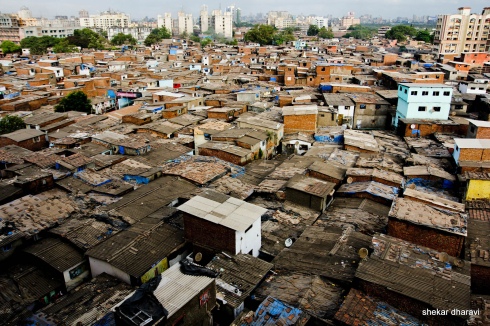
Today, urban poverty continues to exist in many of these same cities of the Northern Hemisphere like New York. These neighbourhoods, however, hardly resemble the slums of the nineteenth century. But slums are here to stay, and over the past seventy years slum-life has grown exponentially across the cities of the developing world and is estimated to contribute to around 95% of global population growth this decade. Not only are today’s slums growing at a rate unprecedented in any population in human history, but they are also a widespread and global phenomenon with over 15,000 unique slums existing in more than 600 cities across the Earth. Much like the American slums of the nineteenth century, many modern slums have been pushed to the least desirable and more isolated parts of cities, allowing them to be segregated from and easily forgotten by the cities’ ruling classes. And, much like the slums of the nineteenth century, today’s slums are almost without representation in media and popular culture. When we do choose to represent them visually, they are often seen in world news at grand, birds-eye views which not only make the slums difficult to distinguish, but also remove any agency from their inhabitants by effectively shrinking them to the size of ants. When there are ‘close-up’ depictions of slum dwellers which may attempt to give agency to their subjects, they are rely on the romantic traditions of Dickens and Joyce instead of the realist and voyeuristic ones of Riis.

See the source image
Dharavi, Mumbai India
See the source image
Caracas, Venezuela

Slum dwellers today are once again caught between living both everywhere and nowhere. We are partially aware of their existence, but only to the extent that it entertains us and almost never in its true scale or dereliction. Most importantly, it seems that little effort has been taken to fight modern global urban poverty. By undertaking a diachronic comparison of late nineteenth century and present day slums, this project aims to assess the successes and failures of these representations in attracting larger awareness and intervention.

COVID-19 as the Book of Revelations: Thoughts on the transnational reception of coronavirus

Coronavirus has shocked the increasingly interconnected global community to its core, perhaps even more so than the ebola epidemic five, the swine flu epidemic ten, or the bird flu epidemic fifteen years ago. While I consider a cynical approach to the postmodern history of pandemics not very helpful in itself, I must also admit that it does strike one as a bit ‘odd’ that global hysteria around diseases keeps resurfacing with such clockwork-like periodicity. Why could this be the case? Do epidemics have a genuine periodicity to them, or is it the socio-economic, and socio-psychological garnish that makes them appear so? Could perhaps this ‘garnish’ be more important than the supposed epidemic itself, and has more influence on the narrative we establish than numbers in lethality, contagion, etc. in any of the respective cases? These issues are the core of what I will be trying to tackle in this post.

Rousseau argues that in humanity’s natural, primordial state the individual is fundamentally good, and it is enclosure – the early capitalist practice of land division among yeomen, but in this case referring more broadly to the emergence of societies and their inherent corruption – that makes them evil. Marx diverges from this notion into a materialistic direction, however, he also alludes to the idea that the above-mentioned corruption manifests in inequality, the alienation of labour, and other socio-economic phenomena, all of which can be examined under the umbrella-term ‘class struggle’. However, in Marxist terms the current ruling class will also always implement reactionary measures to crack down on accumulated social frustrations, which often find their way into statecraft, as well as the social psyche of a given people.

On the one hand, Marx claims that under the feudal mode of production this ‘opium’ to tranquillise and keep the masses in check with was religion. On the other hand, however, if one takes a closer look at the teachings of Christ, Paul, or any of the saints, it seems rather apparent that ‘holding the other cheek’, and ‘loving thy neighbour’ are not only a fruitful basis for building civilisations, but in fact also very much in line with socialist principles, more projectable onto extracts such as ‘it’s easier for a camel to pass through the eye of a needle, than for a rich man to enter the Kingdom of G-d’. What is it then that makes the Bible and its respective institutions reactionary tools in the eyes of Marx?

The present post would argue, that it is indeed the chronological facet of Christianity that led Marx to his conclusions. Eschatology is the mindset that expects the end of times. It is present in many ancient texts that the world periodically gets dismantled and then put back together, reforming into an organic continuity. However, Armageddon – the expectation of the end of times as a great final event of judgement is a very characteristically Judeo-Christian notion. According to the Book of John (or Book of Revelations, as the modern English translations puts it), four horsemen will deliver the Apocalypse, amidst serenades of trumpeting angels and the famed second coming of Christ. This image burnt into the European social psyche so deeply, that we don’t even have adjectives to describe it, other than ‘apocalyptic’, which itself originates from the very text in question. John draws analogies with the ancient Battle of Megiddo between Egypt and Babylon, suggesting that the last war, the war between the Kingdoms of Heaven and the armies of evil will also take place near Megiddo, from which the term ‘Armageddon’ is derived.

The reason the Book of Revelations is so central to understanding our relationship to time as intellectuals groomed in the western hemisphere is that it establishes time as a linear phenomenon, as opposed to the cyclical worldview of ancient contemporary cultures around the world, most notably China. ‘Linear’ in our context refers to the chronological perception of existence within G-d’s material creation. Time and the material world had a beginning, when G-d created the cosmos, and it will have an end with Armageddon. Naturally, this highly sophisticated ontological thinking rarely filtered down to the wider social subconscious under feudalism, but the promise of the world ending some day, and the gargoyles, demons, and imps carved into their places of worship kept the population perfectly in check. This linear view of time proved so effective in sweeping social frustrations under the rug, that Christendom and its mode of production, feudalism prevailed up until the 20th century in some European peripheries. There was unrest in the Middle Ages per se, such as peasant revolts, heresy, and the corresponding brutal suppression of these, but it took the inventions of the printing press, the scientific method, and centuries of philosophy to question the Book of Revelations. Enter the Enlightenment.

Nowadays we can rationally explain through empiricism and observation that even if the cosmos will cease to exist one day, it is most probably an unfathomably distant prospect, and even if there will be an end of times, it will not be biblical, epic, or climactic, but rather cold, indifferent, and uncertain. Modernity gave us tools to accumulate rational knowledge, and to better our material lives significantly. But it also ripped us of the certainty that beyond our physical existence eternal life awaits us, be it for the better (Heaven) or the worse (Hell). What Marx misunderstood about religion is that it’s not simply an ‘opium’ to give people rest while they serve their overlords. Religion in the West was all of this, but also, most fundamentally it gave the medieval common man meaning in the face of an otherwise indifferent cosmos. The sophisticated ontology changed during the Enlightenment. G-d was no longer a benevolent father figure, but an indecipherable and indifferent universe. However, the social subconscious is lagging behind to this day.

Dei gratia referred to the notion that anointed by the Pope, medieval rulers were essentially installed by G-d, and out of his grace to be more precise. We no longer hold this notion to be sacred, nor did everybody at the time. But the things we do hold sacred, such as individual freedom, or the sovereignty of the self over that of the ruler – these are all ideas we derived from the same abstract deity. Just think of the American War of Independence. Arguably the greatest experiment ever undertaken in history. The people asked themselves the question: “Can we govern ourselves instead of a king?” The answer (so far) is a resounding ‘yes’. But the success of republics over monarchies in itself does not mean that the legitimacy of one system is not based on the exact same notions as that of its predecessor. King George III answered only to G-d, and was granted sovereignty by G-d. The modern individual’s freedom is also bestowed upon him by G-d. ‘In G-d, we trust.’

What is all this? What does a reductionist summary of hundreds of pages of Marx and the Enlightenment have to do with coronavirus? The main point of this post is that while we progress and develop, some things remain constant. In our postmodern space, sensationalism and mass hysteria are no longer the exception. They are the rule. Quite literally, and in both senses of the word. We could rationally overcome the G-d problem. But we could not change that it is enshrined in us, and that we still harbour the magical thinking that the overwhelming meaninglessness has a face. And given that the Christian G-d created a linear chronology, we cannot fully get rid of Armageddon either, at least not on a subconscious level. In other words, the world has to end.

We keep inventing more and more creative and scientific ways to explain how the world is going to end. We figured out viruses – the fact that they exist, as well as how they behave. This does not mean however, that the average person understands how viruses work any more than he did during the Black Plague. The average man must still rely on G-d for those answers. of course, nowhere in this text do I aim to even suggest that there is a single person alive today, who is religious in the same way most people were in the Middle Ages. There might be, but that kind of faith is lost for good in the West. But on a subconscious level we are yet to surpass this kind of thinking. And as long as the people believe that the world is going to end ‘eventually’, in the eyes of the people in power the world will have to end ‘right now’. In the postmodern space we live in a perpetual superposition between life and death. We are never really alive, as we lead not our personal lives, but that of our consumer baskets. And we are never really dead either, as the comfort and cushion of our consumer basket keeps us alive more than sufficiently. We simply exist. And for as long as we do, the world will have to end. After all, nobody will riot in the streets as long as there is imminent danger of the world coming to an end.

Human Trafficking is Everywhere: Analyzing The Crime and Why the Inherent Networks Matter for Organized Crime Transnationally

Despite the combative efforts of world superpowers, why do the different transnational networks of organized crime elements seemingly flourish around the globe? I propose that the crime of human trafficking, as it boasts complex linkages to transnational organized crime elements on a global stage, can serve as an excellent subject for analysis to potentially elucidate the aforementioned topic. The American Department of Homeland Security states that human trafficking “…involves the use of force, fraud, or coercion to obtain some type of labor or commercial sex act.[1]” Human trafficking, while being an affront to established human rights, has today become a multibillion-dollar industry spanning various networks beyond geopolitically specified borders.[2] As such, an examination of human trafficking as an ultimately economically driven crime effected by the various social and political factors of the countries it occurs lends itself to a comparative juxtaposition that, supplementary, can round out the preliminary examination of the overarching topic.

According to the US Dept. of State’s ‘Trafficking in Persons Report, June 2019’ Russia, China, Iran, Belarus, and Venezuela see more human trafficking activity than other countries.[3] As these countries differ cultural and geographical, for the most part, ample data should be accessible for a comparative analysis of effective transnational criminal networks. Furthermore, hypothesize that evaluation of the human trafficking activates that occur in countries whose governments are categorized as Tier 3 in the Trafficking in Persons Report, June 2019 – as they do not fully meet the minimum standards set by the American Government’s Trafficking Victims Protection Act of 2000 (TVPA) and are not making significant efforts to do so – alongside contemplation of the historical activity of associated criminal elements will reveal why human trafficking, as an exemplar of a transnational criminal network, flourishes contemporarily.[4] Supported by the comparative analysis of the documented causes of human trafficking in the Tier 3 countries, my argument is a complex and underreported series of transnational linkages inherent in both the internal and external social, political, and economic factors of the tier 3 countries allow for transnational organized crime networks to spread and operate relatively unobstructed.

The sources I hope will yield support this argument are data-driven overviews of human trafficking activities in tier 3 countries as written in the Transnational Organized Crime Journals, alongside writing such as Sally Cameron and Edward Newman’s Trafficking in Human$. The originality of the argument is that it combines a historical overview of the oft-underreported activities of transnational criminal elements in conjunction with analysis of aforementioned transnational criminal networks; in an attempt to contribute to the discussion on global criminology, a deeper understanding of why these networks flourish around the globe. Less of an alternative or a counterargument, but a more broadly accepted substitution for the methodological approach I proposed would be a more micro-historiographical approach, wherein the criminal networks associated with human trafficking would be analyzed within national contexts – stopping just short of exploring the transnational aspects of the networks. On the other hand, a potential issue facing analytical pursuit relating to Transnational Organized Crime comes from how complex the topic has become overtime with an ever-evolving slew of accompanying legislature.[5]


[1] Department of Homeland Security, ‘What Is Human Trafficking?’, US Gov., <https://www.dhs.gov/blue-campaign/what-human-trafficking> [accessed 4 March 2020].

[2]Patrick Belser ‘Forced Labour and Human Trafficking: Estimating the Profits’ SSRN Electronic Journal (March 2005), <https://digitalcommons.ilr.cornell.edu/cgi/viewcontent.cgi?article=1016&context=forcedlabor> [accessed 6 March 2020]

[3] Department of State, ‘Trafficking in Persons Report, June 2019’, US Gov., June 2019, <https://www.state.gov/wp-content/uploads/2019/06/2019-Trafficking-in-Persons-Report.pdf> [accessed 6 March 2020]

[4] Department of State, ‘Trafficking in Persons Report’, <https://www.state.gov/wp-content/uploads/2019/06/2019-Trafficking-in-Persons-Report.pdf> [accessed 6 March 2020].

[5] Valsamis Mitsilegas “From National to Global, Empirical to Legal: The Ambivalent Concept of Transnational Organized Crime” in Critical Reflections on Transnational Organized Crime, Money Laundering, and Corruption, Margaret E. Beare (ed.), (Toronto, 2003), p. 55.